
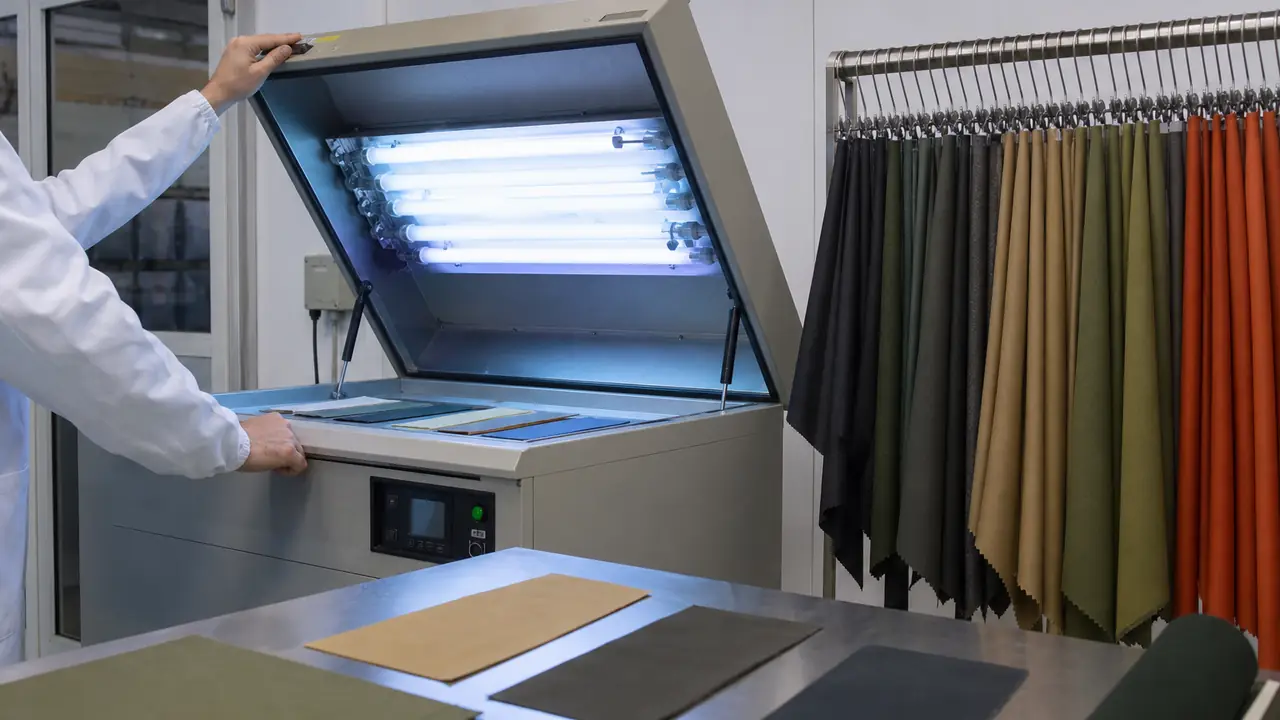
Test methods, not certificates
Flame resistance and UV protection are properties measured by a lab on a fabric or finished product, using a named test method. The result is a report on the tested material. A tent is not CPAI-84 or NFPA 701 in itself; its fabric was tested to that method and passed, per a report with a date, a lab and a sample description. That is why the desk words every claim as flame-resistant fabric tested to the method per report, or UPF-rated fabric per AATCC 183 report, and checks that the report matches the fabric in your order.
Flame resistance methods by product
| Method | Scope | Typical products |
|---|---|---|
| CPAI-84 | Industry specification for flame resistance of camping tent materials | Camping tents, some canopies where buyers ask for it |
| ASTM F3431 | Current edition F3431-25, taking over the camping tent part of CPAI-84 | Camping tents |
| NFPA 701 | Fire tests for flame propagation of textiles and films | Event and party tents, vendor canopies, printed canopies |
| California CSFM Title 19 | State Fire Marshal registration of flame-resistant products | Event tents and canopies used in California |
| EN 13782 | EU standard for temporary structures and tents | Temporary tents over 50 m2 in the EU |
| BS 7837 | UK flammability performance for textiles used in temporary structures | Marquees and event tents in the UK |
The methods are not interchangeable. A fabric that passes CPAI-84 has not thereby passed NFPA 701, and an event venue that asks for NFPA 701 will not accept a CPAI-84 report. Choose the method for the product and the use, then specify the fabric to meet it.
Camping tents: the rules have changed
Several US states once required flame-retardant treatment on camping tents. California removed its chemical treatment requirement for small synthetic camping tents with AB 267 from 1 January 2024; Michigan amended its rule in 2023 and Minnesota in 2024-2025. Some buyers and retailers still ask for CPAI-84 or ASTM F3431 testing, and some prefer untreated fabric. The desk confirms each buyer's and each state's requirement before testing, and does not draw legal conclusions; confirm with your test lab or counsel. For the EU, camping tents are tested to EN ISO 5912, and GPSR (EU 2023/988) labelling has applied since 13 December 2024.
Event tents and canopies: the fire authority decides
Event tents, market canopies and trade show booths are usually inspected by the local fire authority (the authority having jurisdiction). In the US they commonly expect fabric tested to NFPA 701 or registered with the California State Fire Marshal, with a label on the tent. Under the International Fire Code, tents over about 400 sq ft generally need a permit, and state versions differ. In the EU, temporary tents over 50 m2 fall under EN 13782; in the UK, marquee fabrics are often required to meet BS 7837. Confirm with the local fire authority or venue before ordering. See party and event tents.
UV protection: UPF and UVE
In the US, UV protection of shade fabrics is commonly measured to AATCC 183 and expressed as a UPF rating. In Australia and New Zealand, shade structures follow AS 4174:2018, which reports UV effectiveness (UVE) as a percentage; AS/NZS 4399 applies only to clothing, so a UPF 50+ claim should not be used for shade products sold there. Beach tents, sun shades and canopy tops therefore carry UPF-rated fabric per AATCC 183 report in the US and an AS 4174 UVE figure per report in Australia and New Zealand. Without a report, the listing makes no UV claim. See beach tents.
Kids tents
Kids play tents sold in the US need CPSIA work: lead and phthalate limits, ASTM F963 toy safety testing, a Children's Product Certificate and tracking labels. Canada requires permanent warning labels. These are handled per order with an accredited lab; see kids play tents.
Testing adds lab time to the sample stage, so the method is fixed in the brief. Quantities and timing are confirmed in writing on MOQ and lead time; send your markets and products through the quote form.