
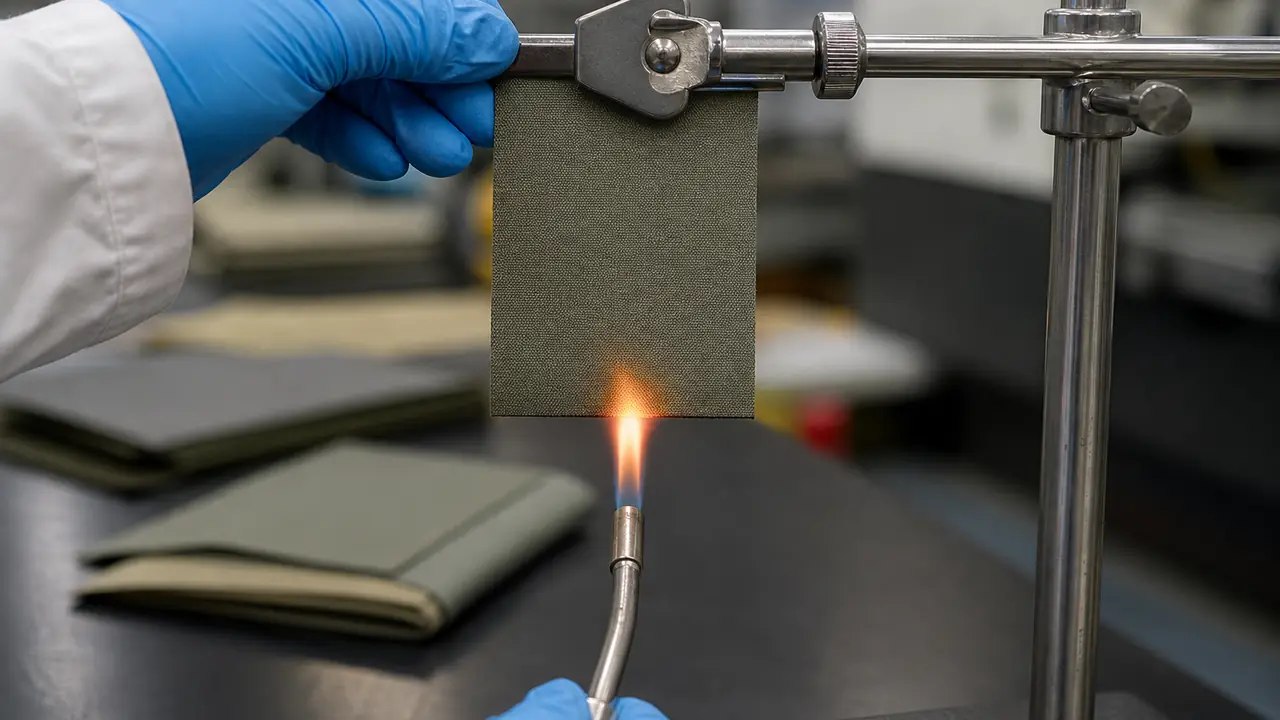
What NFPA 701 is
NFPA 701 is the National Fire Protection Association's standard method of fire tests for flame propagation of textiles and films. It does not describe a tent; it describes how a sample of fabric or film is exposed to a flame and how the result is judged. There are two test methods. Test Method 2 is the one used for fabrics in outdoor tents and membrane structures, and it allows the material to be weathered before the flame test so the result reflects fabric that has been outside, not only fabric fresh off the roll.
For event tents this matters because the fire code points to it. The International Fire Code, section 3104 in the 2018 edition, requires tents and membrane structures to meet NFPA 701 Test Method 2. NFPA 102, the standard for grandstands, folding and telescopic seating, tents and membrane structures, covers tents in its chapter 8 and, in its 2021 edition, references NFPA 701 (2019). Many local fire authorities adopt one of these documents, with their own amendments.
Which tents meet the question
NFPA 701 comes up for any tent or canopy where the public gathers or where heat sources are nearby: party and wedding tents, market stalls, trade show canopies, catering and food vendor tents, rental fleets and municipal events. Typical materials for these lines are 600D PU-coated polyester for 10x10 ft pop-up canopy tops and 500-650 gsm PVC-coated polyester for commercial party tent covers, with PE covers on consumer party tents. Each fabric, coating and colour combination needs its own report; a white top and a dye-sublimated top are separate samples.
Camping tents usually follow a different route (see tent flame resistance rules), but a bell tent or a large cabin tent used as a public venue at a festival may be treated as an event tent by the local authority. Agree the use case before choosing the test.
Test report, label, permit: three separate items
| Item | What it is | Who checks it |
|---|---|---|
| Test report | Lab report on the fabric to NFPA 701 TM2, per fabric code and colour | Buyer, desk at inspection, sometimes the venue |
| Flame resistance label | Sewn-in label naming the test and, in California, the CSFM registration number and seal | Fire inspector on site |
| Flame resistance document set | Copy of the report and label details supplied with the tent, in the form the local authority asks for | Permit office |
| Fire permit | Permission for a specific tent at a specific site and date | Local fire authority (AHJ) |
The report proves the fabric passed. The label lets an inspector confirm it on site without paperwork; in practice inspectors look at the label sewn on the canopy. The permit is about the installation, not the product, and is issued by the authority having jurisdiction for that event. A supplier can deliver the first two; only the event organiser can obtain the third.
Labels and California CSFM registration
California keeps its own register. Under Title 19 (19 CCR 332 and 19 CCR 335), the State Fire Marshal lists registered flame-resistant fabrics and products, and the registration number and seal appear on the label. Local California practice, for example in city canopy guidance, is that where cooking or open flame is used under a tent or canopy, the top, walls and floor need a CSFM seal or NFPA 701 compliance. Industry practice for canopies sold across the US is to show NFPA 701, CPAI-84 and CSFM on the same label where reports exist for all three.
A label is only as good as the report behind it. The desk checks that each label claim matches a report on the same fabric code and that the label is sewn into each top and wall, not only into the carry bag. Sidewalls are separate items; if they are sold for enclosed events they need their own report and label. More on label content is in tent labels and instructions.
Where NFPA 701 meets the permit
Under the IFC, temporary tents and membrane structures larger than 400 sq ft generally need a fire permit, with exceptions that differ between code editions and states. A 10x10 ft canopy covers 100 sq ft; a 20x40 ft pole tent reference model covers 800 sq ft, about 74 m2, and holds about 144-160 people standing. The permit file usually asks for the flame resistance documents, the site plan and the anchoring method. The full threshold logic, including the open-sided exceptions, is in tent permits and fire codes.
Common gaps we see
- A report on the base fabric, but the order uses a different coating or a printed version.
- A report that is several years old for a fabric code the mill no longer makes.
- Labels printed with test names that have no report behind them.
- Walls and banners treated as accessories with no flame resistance documents.
- Listings that say NFPA 701 approved, which suggests an approval body that does not exist; the accurate phrase is tested to NFPA 701 per report.
Building an event tent order around NFPA 701
- List each fabric part: top, walls, half walls, banners, flags, floor if any.
- Name the markets. For California add CSFM registration to the brief.
- Ask partner factories for reports on the exact fabric codes and colours, or budget for new tests and allow for them in the sample stage of 7-15 days and the custom lead time of about 45-60 days.
- Approve the label artwork with the report numbers on it before bulk.
- Verify reports per order at inspection and pack copies with the shipment documents.
Reports are issued to partner factories or brands per order; the desk does not hold or issue them. Typical starting quantities for 10x10 canopies and printed kits are 20-50 sets per style, confirmed in writing for each order; see MOQ and lead time, the party and event tents line and the quote form. For questions about a specific event, confirm with your local fire authority.