
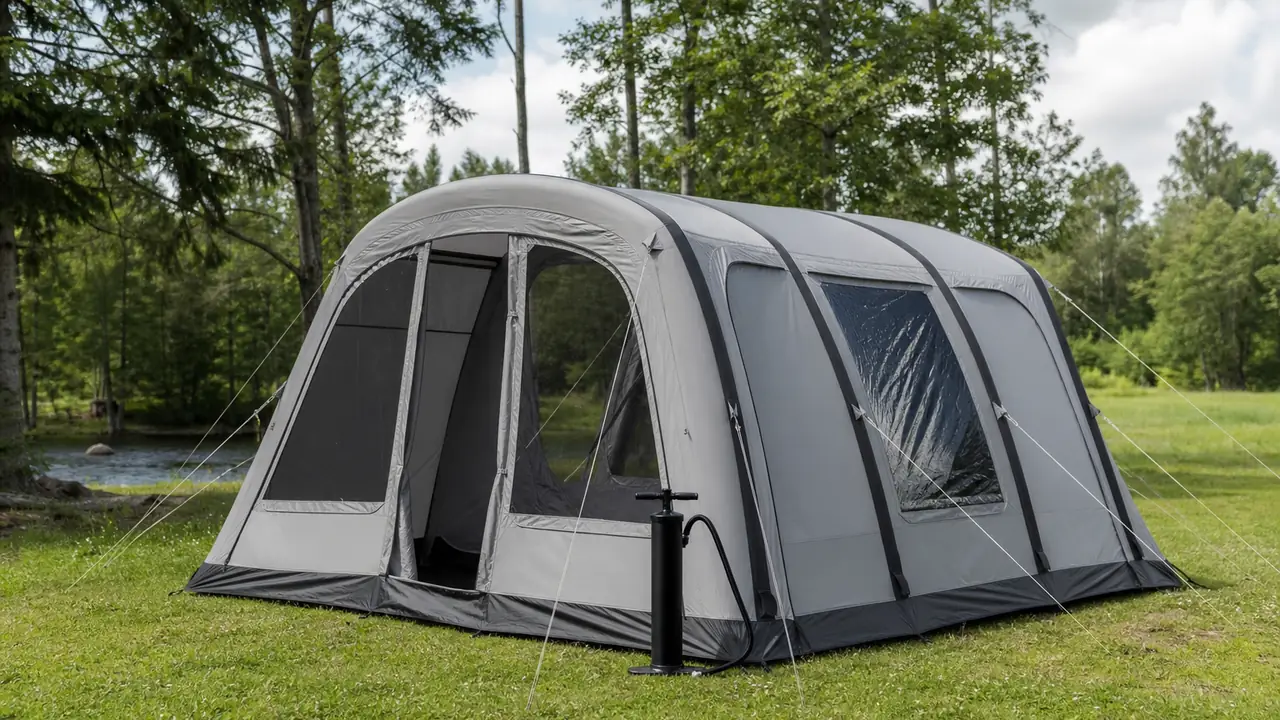
What this line covers
An inflatable air tent replaces flexible poles with air beams: TPU bladders inside fabric sleeves, inflated through valves with a hand or electric pump. Lay the tent out, stake the corners, pump the beams and the structure stands up in one step. That speed, and the absence of poles to snap, is the selling point for families and car campers. The trade-off is weight, packed volume and a new set of things that can fail: valves, bladders and seams under pressure.
The reference model on the pitch plate is a five-person air tent from public listings: 465x320 cm on the ground and 195 cm high, about 14.9 m2, with a 70D polyester fly on TPU air beams, listed at about 16 kg. A smaller factory catalogue model measures 390x250x150 cm in 210T PU-coated polyester at about 9.6 kg. Weights differ between listings, so the order file records the weight measured on your approved sample.
Sizes and beam count
Air tents scale by the number of beams. Across the category, models run from two to eight persons with two to six beams depending on the design. The table shows the two reference points and how the category typically steps.
| Model | Size | Fly fabric | Weight (listed) |
|---|---|---|---|
| Factory catalogue model | 390x250x150 cm | 210T polyester, PU | About 9.6 kg |
| 5-person reference model | 465x320x195 cm, about 14.9 m2 | 70D polyester | About 16 kg |
| Category range | 2-8 persons, 2-6 beams | Polyester, PU coated | Per model and sample |
More beams mean more standing area and a stiffer structure, but also more valves to check and more weight in the bag. For family listings, the sizing guide explains how to state capacity honestly.
Air beams, valves and pressure
The beam is the frame, so it gets the attention a pole set would on a dome. The spec sheet should fix bladder material and thickness where stated by the factory, sleeve fabric, valve type, the working pressure printed on the beam and whether each beam can be deflated and replaced on its own. Replaceable bladders matter for after-sales: a puncture becomes a spare part rather than a returned tent. Every tent should ship with a repair kit, and the manual should state the working pressure and warn against over-inflation in hot sun.
Fabric, seams and rain
Hydrostatic head is a fabric test under ISO 811; it does not mean the finished tent stays dry. On an air tent the beam sleeves add long seams along the roof line, so seam taping and the fly cut around the sleeves matter more than on a pole tent. Listings should say waterproof-rated fabric with the hydrostatic head per test report, and inspection should include a water spray check on taped seams. See seams and waterproofing.
Anchoring and stability
Air beams flex under gusts rather than breaking, but a large air tent has a lot of wall area and still depends on its anchoring. The desk does not publish wind speed ratings. The order fixes the number of steel stakes, the guy-out points on each beam and the tensioners, and the manual tells users to stake every point and take the tent down when strong wind is forecast. Compare frames on the poles and frames page.
Pumps, reports and ordering
The pump is a separate product inside the box. Hand pumps keep documentation simple; electric pumps may need their own electrical safety and battery documents depending on the target market, so confirm with your test lab before choosing one. EU buyers test the tent to EN ISO 5912 and apply GPSR labelling; US flame resistance requirements vary by state and buyer, so the desk confirms them before testing to CPAI-84 or ASTM F3431. Reports are issued to partner factories or your brand per order and verified by the desk. Existing styles with your logo and colours typically start at 300-500 tents per style, with samples in 7-15 days and bulk in 30-45 days, confirmed in writing. Send your size, beam count and pump choice through the quote form.