
Fabric, seam and pitch
A tent sheds rain through three layers of decisions. The fabric must resist water: that is the coating, measured as hydrostatic head. The seams must not let water through the needle holes: that is seam construction and sealing. And the tent must be pitched so that water runs off rather than pooling or wicking inside: that is geometry, tension, zips and the floor. A failure in any one of the three gives a wet customer, a bad review and a return. A strong fabric figure cannot make up for an untaped seam.
What hydrostatic head measures
Hydrostatic head is measured on a fabric sample under ISO 811:2018. The fabric is clamped under a column of water whose pressure rises until drops appear, and the result is reported in millimetres of water column. Figures of 1,500 mm and 3,000 mm are industry conventions for tent flies and floors, not legal thresholds. The test says nothing about seams, zips, ageing of the coating or how the tent is pitched. Listings should therefore say waterproof-rated fabric, hydrostatic head per ISO 811 test report, and should not turn a fabric figure into a promise about the finished tent.
Seam construction and sealing
| Treatment | How it works | Typical use |
|---|---|---|
| Untaped stitched seam | Needle holes left open | Inner tents, mesh panels, shade products |
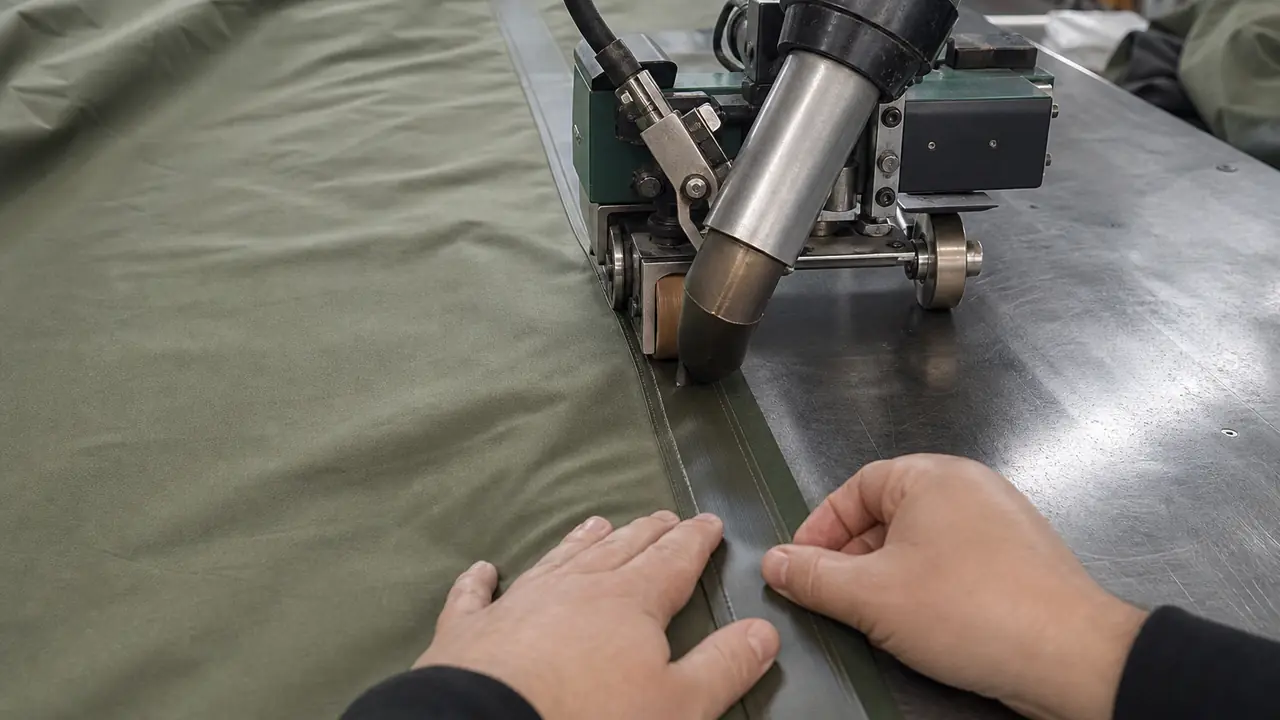
| Heat-sealed seam tape | Tape bonded over the stitching with hot air | PU-coated polyester flies and floors |
| Liquid seam sealer | Sealant applied by hand along the seam | Silicone-coated nylon, where tape will not bond |
| Welded seam | Fabric fused without stitching | PE and PVC floors, PVC party tent covers |
Heat-sealed taping is the common choice for PU-coated polyester. The tape must match the coating; standard tape does not bond to silicone, which is why silicone-coated tents are sealed by hand or use a hybrid coating. Seam allowance, stitch density and the position of the seam all matter: a seam on the top of the fly takes more water than one on a vertical wall. Instant tents in the reference model use a welded PE floor; PVC party tent covers are typically welded rather than sewn.
Floors, zips and vents
A tub floor rises up the walls so the floor seams sit above ground water; the floor is PE on entry tents and 150D-210D oxford on better ones. Zips should be covered by a storm flap or fitted with a coated zip, and the fly should extend far enough over the door that rain does not fall straight onto the zip. Vents need hoods so they can stay open in rain. Condensation inside a tent is often reported as a leak; ventilation and the gap between fly and inner reduce it. These are design choices fixed at sample stage, not things inspection can add later.
Water checks at sample and inspection
- Confirm the ISO 811 report is on the fabric lot used for your order.
- Pitch the sample and check that the fly is taut, clear of the inner and that guy-out points work.
- Run a water spray check on taped seams, door zips and the floor corners, and record the result with photos.
- Fix the approved sample as the golden sample and include the seam check in the pre-shipment inspection plan.
- At inspection, sample to ISO 2859-1 general level II and repeat the pitch and seam checks on the sampled tents.
For EU camping tents, buyers often ask for testing to EN ISO 5912, which covers requirements and test methods for camping tents. Reports are issued to partner factories or to your brand per order and verified by the desk; see the compliance guide.
Care, mildew and coating life
PU coatings break down faster when a tent is stored wet or warm. Mildew appears on canvas and synthetic tents packed damp. The manual should tell users to dry the tent before storage and to re-seal seams if needed, and the desk makes sure tents are packed dry at the factory. These points reduce returns that look like waterproofing failures but start with storage.
Seam method, tape coverage and the water check plan are confirmed in writing for each order with the quantities and lead times. For the fabric side, see tent fabrics and coatings, and send a brief through the quote form.