
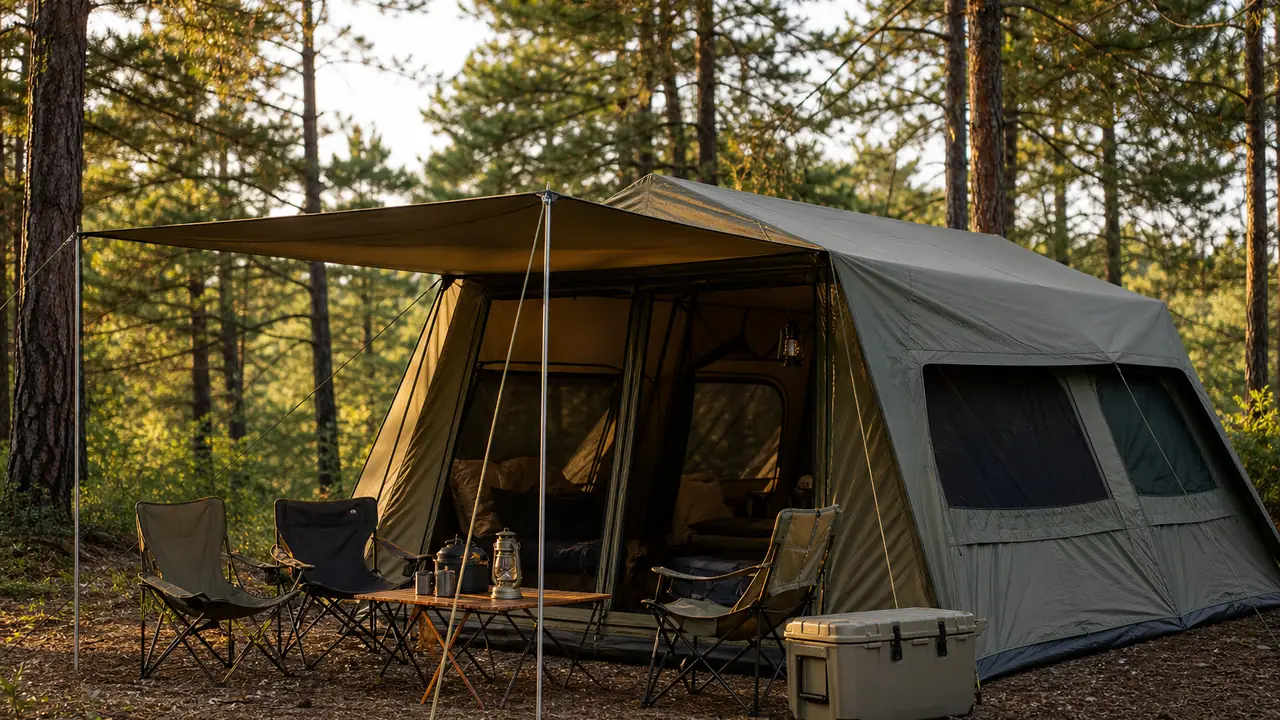
What a family tent has to survive
A family tent spends most of its life in a carton and a few weekends a year on a campsite. It is pitched by people who may never have pitched a tent before, often late in the day, sometimes in rain. It has to keep a family and their bags dry through a night of steady rain, cope with condensation from four or six people breathing inside, and stand up to children running guy lines over. Then it is packed away damp more often than the manual suggests.
The returns in this setting follow a pattern: water through seams or a door zip, a fiberglass pole split during a hurried pitch, a carry bag that will not take the tent back, and a listing that promised more space than the floor delivers. A good family program addresses all four in the specification rather than in after-sales.
Recommended lines and reference specs
| Line | Reference model | Fabric and frame | Weight (reference) |
|---|---|---|---|
| Dome | 4-person, 274x213x150 cm, about 5.9 m2 | 68D 190T polyester fly, PE floor, 8.5 mm fiberglass poles | About 4-4.5 kg |
| Cabin | 10-person, 427x305x218 cm, about 13 m2 | 68D polyester, PE floor, steel poles | About 14-15 kg |
| Pop-up instant | 6-person, 305x274x183 cm, about 8.4 m2 | 150D polyester, welded PE floor, steel and fiberglass pre-attached poles | About 11 kg |
| Inflatable air | 5-person, 465x320x195 cm, about 14.9 m2 | 70D polyester, TPU air beams | About 16 kg |
Dome tents carry the entry and mid price points; cabin tents add standing height and room dividers for larger families; instant tents trade weight for a quick pitch; air tents pitch fast with a pump and suit premium ranges. Across the category, family tents run from 4 to 12 persons, with fly fabric in 68D or 75D polyester at 185T to 210T and floors in PE or 150D to 210D oxford.
Staying dry: fabric, seams and pitch
Ask for waterproof-rated fly fabric with the hydrostatic head per ISO 811 test report on the actual fabric lot, and treat 1,500 mm or 3,000 mm as fabric conventions rather than promises. What keeps a family dry is the build: taped seams on the fly and floor, a tub floor whose seams sit above the ground, storm flaps over door zips and a fly that reaches close to the ground. Add ventilation to the spec too, because condensation running down an inner wall is reported by customers as a leak. The seams and waterproofing page lists the checks.
Anchoring and pitching
Family tents are tall and broad, so they catch wind. The order specifies stake count and type (the reference dome ships with nine stakes and two guy lines; older cabin kits list 18 steel stakes), guy-out points on every side of the fly, tensioners and a colour-coded pole and sleeve system. The manual shows the pitch sequence with numbered steps. There is no wind rating on the listing; the honest statement is the anchoring kit and the advice to guy out fully in exposed sites.
Reports and rules
For the EU, buyers ask for testing to EN ISO 5912, the camping tent standard, plus GPSR labelling and an EU responsible person since December 2024. In the US, California dropped its chemical flame treatment requirement for small synthetic camping tents from January 2024 and Michigan and Minnesota have amended theirs, so the desk confirms what each buyer and state requires before testing to CPAI-84 or ASTM F3431. Reports are issued to partner factories or to your brand per order; see the compliance guide.
How to brief a family program
Send the sizes in the range, the capacity you want to state and how you measure it, fly and floor fabric preferences, pole material, colours and carry bag, the markets you sell into and the season you are buying for. State the capacity rule up front: person ratings assume sleeping pads side by side with no gear inside, and many family brands list one size up. Existing styles with your logo, colours and bag typically start at 300-500 tents per style, with samples in 7-15 days and bulk in 30-45 days, confirmed in writing for each order. Use the quote form.