
Who this program serves
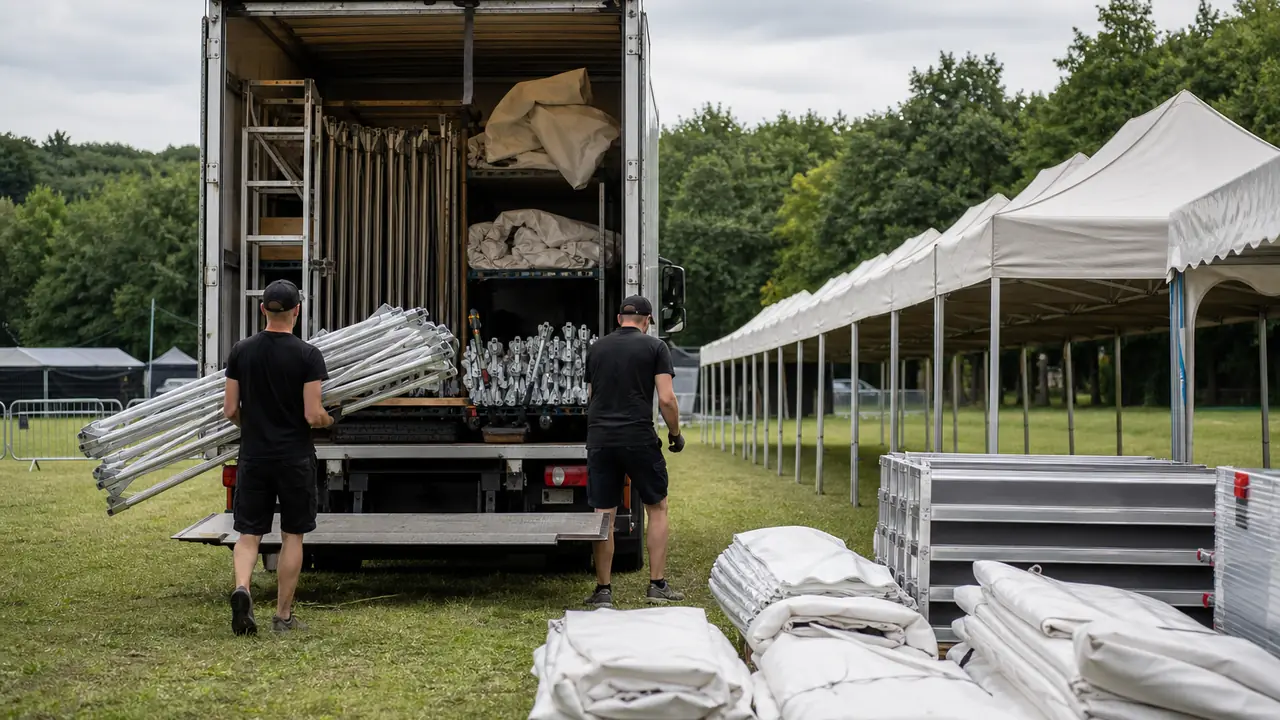
Event and project buyers share one constraint: a date that does not move. Rental companies need a fleet that survives a hundred set-ups and passes inspection at every venue. Event and trade-show organisers need branded canopies and walls that match the artwork and arrive before build-up. Markets and sports events need dozens of identical vendor or team canopies with anchoring that works on grass and pavement. Institutional buyers, such as schools, councils and relief or community programs, need documented specs, reports and a tender-ready file. The common pain points are fire reports, leg weights, print accuracy and lead time.
Recommended lines and reference specs
| Line | Reference model | Typical buyers |
|---|---|---|
| Pop-up canopy | 10x10 ft, 300x300x330 cm, 40 mm hex aluminium legs, 1.1-1.2 mm wall, 600D PU polyester top, about 20-24 kg | Markets, sports events, rental fleets |
| Custom printed canopy | 10x10 ft kit: top, 301x217 cm back wall, two 301x91 cm half walls, two 11 ft flags, dye-sublimation on 600D oxford | Trade shows, sponsors, brand activations |
| Party and event tent | 20x40 ft pole tent, 1219x610x452 cm, about 74 m2, 16 oz PVC vinyl; frame option 6x12 m, 550 g/m2 PVC, 50 mm galvanised steel | Rental companies, weddings, festivals |
| Bell tent | 5 m diameter, 300 cm centre pole, 285 gsm cotton canvas, about 35 kg | Glamping sites, festivals, rental fleets |
Canopies come in 10x10, 10x15 and 10x20 ft; rental fleets usually choose 40 mm hex aluminium as standard or 50 mm hex for heavy use. Party tents are sourced from factories in Changzhou, Zhuhai and Shanghai, canopies from Linhai in Taizhou.
Fire reports, permits and standards
Event tops and sidewalls in the US are usually asked for flame-resistant fabric tested to NFPA 701 per report, or California CSFM Title 19 registration; the local fire authority decides what it accepts. CPAI-84 covers camping tents, and passing it does not mean passing NFPA 701. Under the International Fire Code, tents above about 400 sq ft generally need a fire permit, with state versions differing. In the EU, temporary tents over 50 m2 fall under EN 13782, and UK marquee fabrics are often asked to meet BS 7837. Reports are issued to partner factories or to your company per order and verified by the desk; confirm permits with your local fire authority. See NFPA 701 for event tents.
Anchoring and leg weights
No canopy has an honest wind rating. Each order includes an anchoring plan instead: one stake and one guy line per leg on soft ground, and weights of about 40 lb or 18 kg per leg as an industry convention on hard surfaces, with the manual telling crews to take canopies down in strong wind. Party tents ship with their stake set, such as 16 steel stakes of 3/4 x 30 in on the 20x40 ft pole tent reference, and bell tents with 12 guy lines and about 24 stakes. The anchoring and wind page sets out the options.
Printing, quantities and dates
Printed canopies use dye-sublimation for full colour or screen print for a single-colour logo. The desk works from your artwork template, sends a colour proof and approves a first printed piece before bulk, so the fleet matches the sponsor's colours. 10x10 canopies and printed kits typically start at 20-50 sets per style; tents at 300-500 per style for existing styles; new structures are assessed per project; all confirmed in writing. Samples take 7-15 days, bulk 30-45 days and custom work 45-60 days, and sea freight about 15-25 days to the US West Coast or 30-45 days to Europe. Event dates are planned backwards from build-up day. See canopy printing.
Checkpoints for fleet and project orders
- Frames: leg profile and wall thickness, joints, rivets, telescoping locks, rust checks on steel.
- Tops and walls: fabric weight, seams, fit on the frame, fire report label where specified.
- Print: colour against the approved proof, position, and rub and fade checks agreed per order.
- Kit count per set: stakes, guy lines, weight bags, flags, carry bags.
- Party and bell tents: pitch test on sampled units, stake and guy line count.
- Sampling to ISO 2859-1 at general level II; ISTA 1A carton drop test.
Illustrative example and how to start
An illustrative, anonymous case: a rental company adds printed 10x10 canopies for a sports event client and two bell tents for a festival. The desk specifies 40 mm hex aluminium frames, NFPA 701 tested tops per report, weight bags for each leg and a colour proof against the client's artwork, orders within the typical 20-50 sets per style and plans production backwards from the event date with a buffer for freight.
To start, send the event or fleet use, lines, sizes, artwork, fire report needs, quantities and the date the tents must be on site through the quote form. The desk replies with a spec, a print and sample plan and a dated timeline.