
Why there is no wind rating
Many listings print a wind speed on the box. The desk does not. There is no common test method that rates a camping tent or a pop-up canopy for wind, the figures sellers publish are not comparable, and the real outcome depends on ground, anchoring, pitch and gusts more than on the product. A wind figure on a listing also creates a claim that a buyer cannot defend after a canopy is lifted at a market. What can be specified, inspected and explained to users is the anchoring kit and the pitch method, and the instruction to take canopies down in strong wind.
Anchoring kits by line
| Line | Reference anchoring kit | Notes |
|---|---|---|
| 4-person dome tent | 9 stakes and 2 guy lines | More guy-out points help on exposed sites |
| 10-person cabin tent | 18 steel stakes (earlier listing) | Tall walls make guy lines important |
| Pop-up beach tent | 4 sandbags and 8 stakes | Sandbags for sand, stakes for firm ground |
| 4-pole stretch shade | Sandbags at the corners | Stakes do not hold in loose sand |
| Shower tent | 8 stakes and 4 guy lines | Light frame, always staked |
| Hub ice fishing tent | 6 ice anchors | Screw anchors into the ice |
| 5 m bell tent | 12 guy lines and about 24 stakes | Footprint about 7 m across with lines out |
| 10x10 ft canopy | 1 stake and 1 guy line per leg, plus leg weights | About 40 lb (18 kg) per leg by convention |
| 20x40 ft pole tent | 16 steel stakes, 3/4 x 30 in | Staking plan per site and installer |
Canopies: weights on every leg
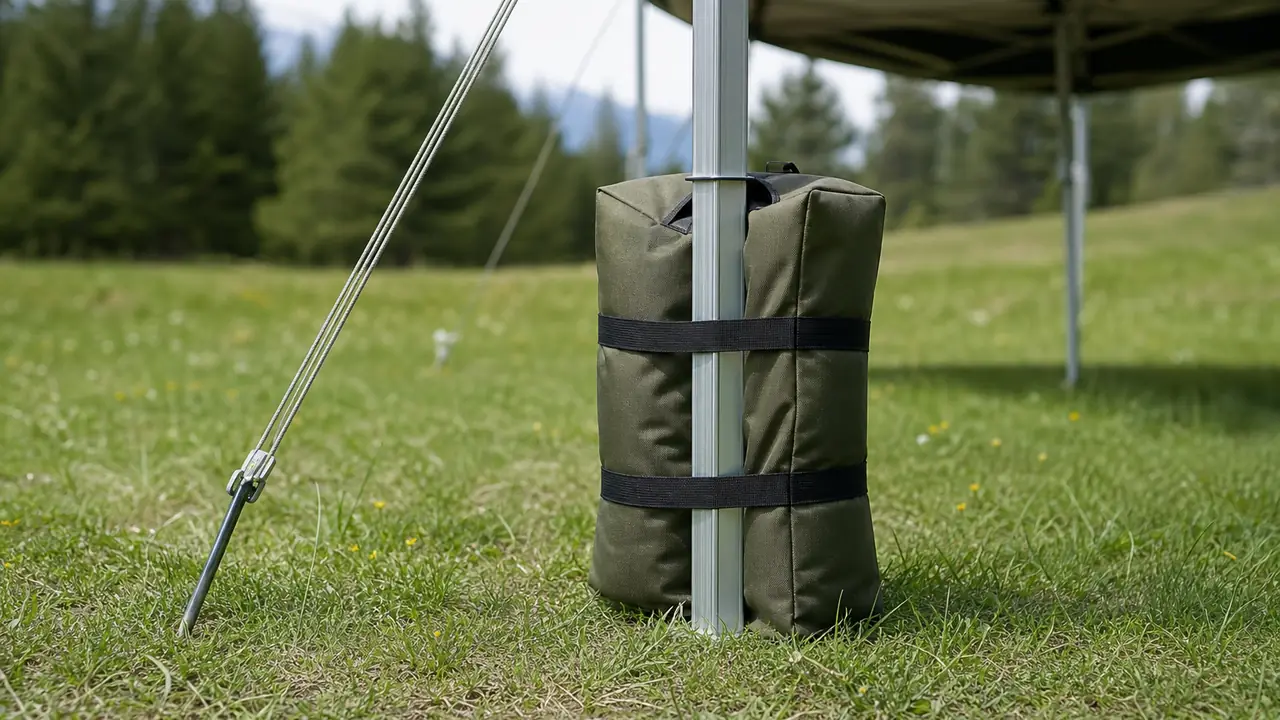
A pop-up canopy has a large roof on a light frame with no floor, so it acts like a sail. On grass it is staked at each leg and guyed; on paved ground, where stakes cannot go in, it relies on weights. The common industry convention is about 40 lb (18 kg) per leg; this is a convention used by vendors and event organisers, not a regulation, and some venues set their own rules. Weight bags filled with sand, plates or water weights hang from each leg close to the ground. Walls add wind load, so the plan for a canopy with three walls is not the same as for an open top. The frame grade matters too; see poles and frames.
Tents: stakes, guy lines and pitch
Tents stand better in wind when every stake point is used, the guy lines are out and tensioned, and the narrow end faces the wind. Stake type should match the ground: steel or aluminium pegs for firm soil, longer or wider pegs for soft ground, sandbags for sand and ice anchors for ice. The spec sheet fixes the number and type of stakes, the number of guy-out points on the fly, the guy line length and the tensioners. Inspection counts them against the kit list, because missing stakes are a common complaint on first use. A pitched sample with every line staked out is also the best way to check that guy-out points are sewn where the load actually falls.
Beach, events and local rules
Beach tents and shades are anchored with sandbags and stakes, and many beaches limit size or ban tents outright; listings should tell users to follow local beach rules. Party and event tents are staked or ballasted by the installer to a site plan, and over certain sizes they need permits from the local fire authority. Confirm event requirements with the venue and the authority; see party and event tents and beach tents.
How to describe stability on a listing
- List the anchoring kit: stakes, guy lines, sandbags or weight bags, and their counts.
- Show the pitch sequence and every guy-out point in the manual.
- For canopies, state the leg-weight convention of about 40 lb (18 kg) per leg.
- Tell users to take canopies down and secure tents in strong wind.
- Avoid wind speed figures and absolute stability claims.
Anchoring kits are confirmed with the spec sheet and the quantities on MOQ and lead time. Send your lines and markets through the quote form.