
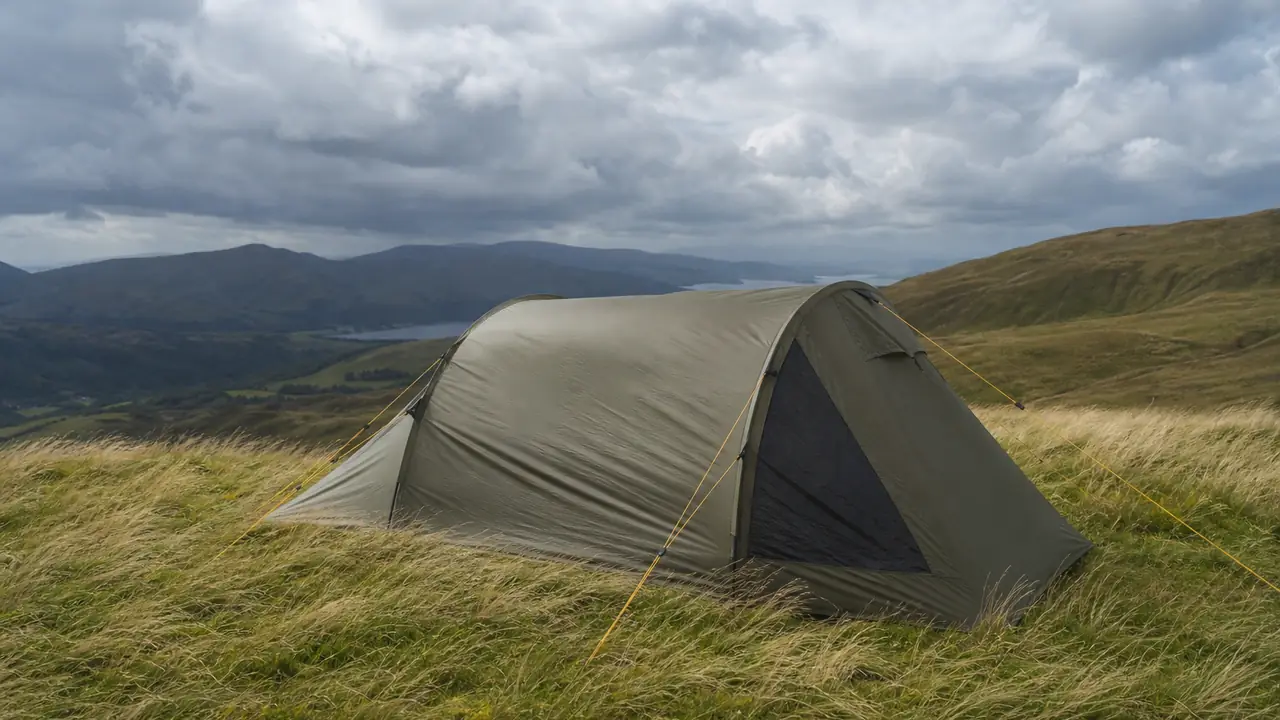
Rain: fabric, seams and pitch
A tent keeps rain out only when four things work together: the fabric, the seams, the openings and the pitch. The fabric is rated by hydrostatic head under ISO 811, in millimetres of water column. Figures of 1,500 mm and 3,000 mm are industry conventions for tent fabric, not legal thresholds and not a promise about the finished tent. Most leaks come from elsewhere:
- Seams. Every needle hole is a path for water. On PU-coated fabric the seams on the fly and floor should be heat-sealed with tape; on silicone-coated fabric they are sealed by hand. Untaped seams leak regardless of the fabric figure.
- Zips and openings. Zips on the fly need a storm flap or a coated zip; vents need hoods.
- Floor. A tub floor brings the floor seams up off the ground; corners are a common failure point.
- Pitch. A slack fly touches the inner and wicks water through. Guy lines and tensioners keep it apart.
Condensation is often mistaken for a leak. Ventilation, mesh panels and a gap between fly and inner reduce it. On the listing, the honest wording is waterproof-rated fabric with hydrostatic head per ISO 811 test report and taped seams, not a promise that the tent stays dry in every condition. See why tents leak.
Wind: an anchoring plan, not a rating
Many listings quote a wind speed a tent or canopy can handle. The desk does not publish wind ratings. There is no common test, seller claims are not comparable, and the outcome depends on the ground, the anchoring, the user and the gusts. Instead the order specifies an anchoring plan, and the listing describes it.
For tents, the plan states the number, length and type of stakes for the ground, the guy-out points on the fly, the guy line length and tensioners, and the pitch sequence in the manual. The dome reference model ships with nine stakes and two guy lines; the bell tent reference with twelve guy lines and about 24 stakes; the ice fishing reference with six ice anchors.
For canopies, which have no floor and act like a sail, the plan is one stake and one guy line per leg on soft ground, and leg weights on paved ground. The industry convention is about 40 lb (18 kg) of weight per leg, more when walls are fitted. It is a convention, not a regulation, and event organisers may set their own rules. Users should take canopies down when strong wind is forecast, and the manual should say so. See tents in wind.
Sun and UV
Sunlight fades colour and weakens coatings and yarns over time. Polyester holds up to UV better than nylon; silver-coated polyester on beach and shower tents reflects heat; printed canopies fade depending on ink and exposure. Protection claims follow the market: in the US, UPF-rated fabric per AATCC 183 test report; in Australia and New Zealand, UVE percentage per AS 4174. Without a report, no UV claim. Beach use also follows local beach rules on size and placement.
Cold and snow
Cold changes materials. Fiberglass poles can split when bent in the cold, so aluminium is preferred for cold-weather tents. PVC stiffens and should be folded carefully at low temperatures. Ice fishing tents use 300D fabric, insulated versions with a quilted layer, metal hubs and ice anchors; the reference model is a three-person hub at 178x178 cm with a 203 cm peak and about 10-12 kg. Condensation rises sharply in cold, closed tents, so vents remain on the spec. Heaters and stoves bring their own safety rules; bell tents with a stove jack need a heat-resistant surround specified per model.
Weather checks by line
| Line group | Rain | Wind and anchoring | Sun and cold |
|---|---|---|---|
| Dome, cabin, instant | PU fly, taped seams, tub floor | Stakes at every corner, guy lines out | Polyester for UV; aluminium poles for cold |
| Backpacking | Silicone or PU nylon, sealed seams | Guy-out points, light stakes | Retension nylon when wet |
| Beach and shower | Not designed for heavy rain | Sandbags on sand, stakes on soil | UV per report; local beach rules |
| Pop-up and printed canopies | 600D PU top, corner seams | Stake and guy line per leg, about 40 lb per leg, take down in strong wind | Print fading checks |
| Party and bell | PVC welds, canvas care | Full stake and guy line plan per layout | Dry canvas before storage |
| Ice fishing | Snow load on roof | Ice anchors | Insulation, ventilation |
Inspection and next steps
Weather performance is checked on the sample and at pre-shipment inspection: a pitch test, a water spray check on taped seams, guy-out and stake count against the kit list, and frame and joint checks on canopies, sampled to ISO 2859-1 at general inspection level II. Send your markets and use cases through the quote form; typical timings are on MOQ and lead time, confirmed in writing for each order.