
What this line covers
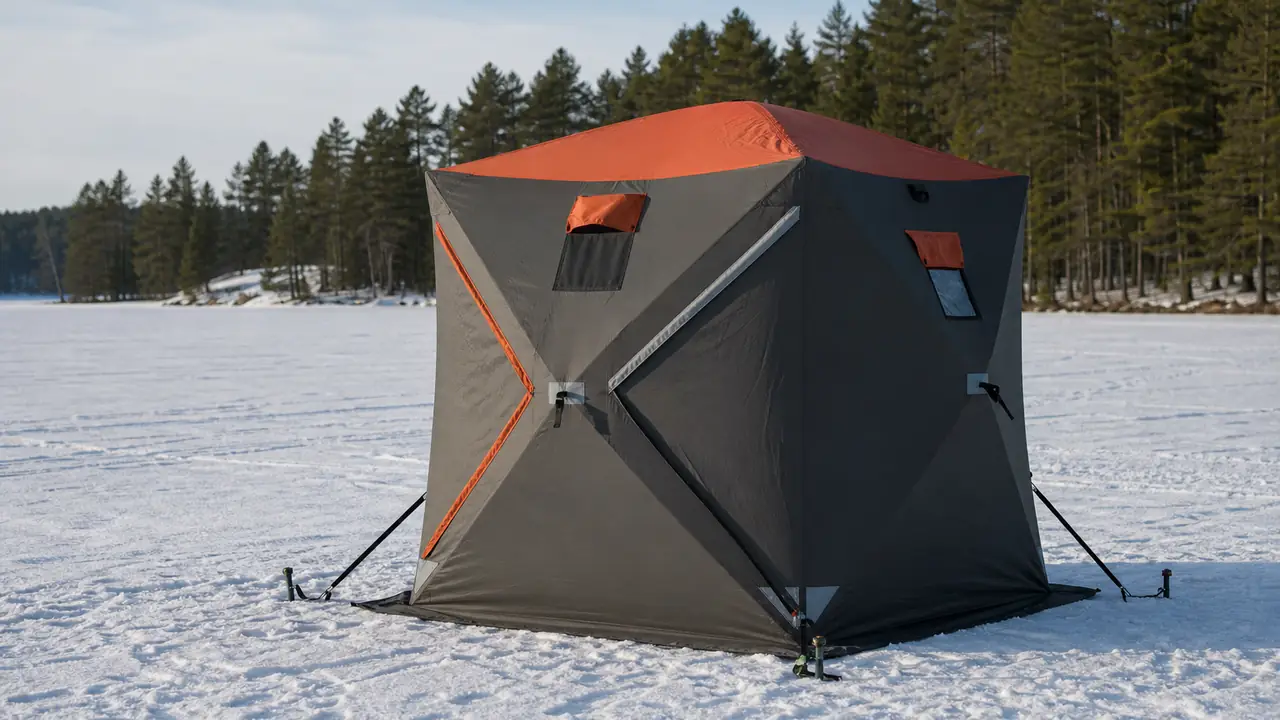
An ice fishing tent is a portable shelter for anglers on frozen lakes. Most designs use the hub principle: each wall carries a metal hub at its centre, connected to fiberglass poles that spring the wall outward when the hub is pushed open. A shelter goes from bag to standing in a few minutes, with no floor so anglers can drill holes inside. Snow skirts at the base seal the gap to the ice, and ice anchors screwed into the surface hold the shelter in place where tent stakes would not grip.
The reference model on the pitch plate is a three-person hub shelter from public listings: 178x178 cm on the ice and 203 cm high (70x70x80 in), giving about 3.2 m2 of fishing area. It uses 300D fabric, with a cotton insulation layer on the insulated version, metal hubs and fiberglass poles, and comes with six ice anchors. Listed weights are about 10-12 kg depending on version; the weight measured on your approved sample is the one that goes into the order file.
Insulated or non-insulated
The main decision in this line is whether to insulate. Insulated models sandwich a cotton layer between the outer shell and an inner lining; non-insulated models use a single coated wall. The table compares the two as they appear across the category.
| Factor | Insulated | Non-insulated |
|---|---|---|
| Wall build | 300D shell, cotton layer, inner lining | Single coated wall |
| Warmth and condensation | Holds heat better, less frost inside | Cools quickly, more condensation |
| Weight and pack size | Heavier and bulkier | Lighter, smaller bag |
| Typical buyer | Long sessions in deep cold | Short trips, mobile anglers, entry price point |
| Cost driver | Insulation, lining and extra sewing | Fabric and hubs only |
Many brands carry both at the same size so a buyer can trade up. Warmth claims should describe the construction, not a temperature figure, unless the brand holds a test report that supports one. Dark exterior colours are common because they absorb sunlight on bright days.
Ice anchors and stability
On open ice, wind meets nothing but the shelter, so anchoring is the core of this line. The reference model ships with six ice anchors; the spec sheet should fix their number, thread type and whether they can be driven with a drill adapter. Tie-down points on each wall, guy lines and the snow skirt all contribute. The desk does not publish wind speed ratings for any shelter. The manual should tell users to anchor every point, pile snow on the skirts where possible and take the shelter down when strong wind is forecast. The anchoring and wind page explains the approach.
Heaters, ventilation and flame resistance
Many anglers use portable heaters inside, so ventilation matters. Specify the number and position of vents and windows, and have the manual tell users to keep vents open and follow the heater maker's instructions. Where a buyer asks for flame resistance, the order specifies flame-resistant fabric tested to CPAI-84 or ASTM F3431 per report; reports are issued to partner factories or your brand per order and verified by the desk. The flame and UV standards page lists what each test covers. Hydrostatic head under ISO 811 still applies to the shell fabric for wet snow and thaw days.
Season, buyers and ordering
Ice fishing tents sell into northern markets for a winter season, which moves the shipping window away from the spring peak of other camping lines. That suits distributors and specialist retailers who want to keep partner factories busy in the second half of the year and brands adding a cold-weather product. For use cases, see overlanding and winter use. Existing styles with your logo and colours typically start at 300-500 tents per style, with samples in 7-15 days and bulk in 30-45 days, confirmed in writing. Plan sea freight early enough for the winter shelf: a late container misses the season and turns into a year of stock. Insulated models are bulkier, so fix carton size before the freight booking. Send your sizes, insulation choice and anchor count through the quote form.