
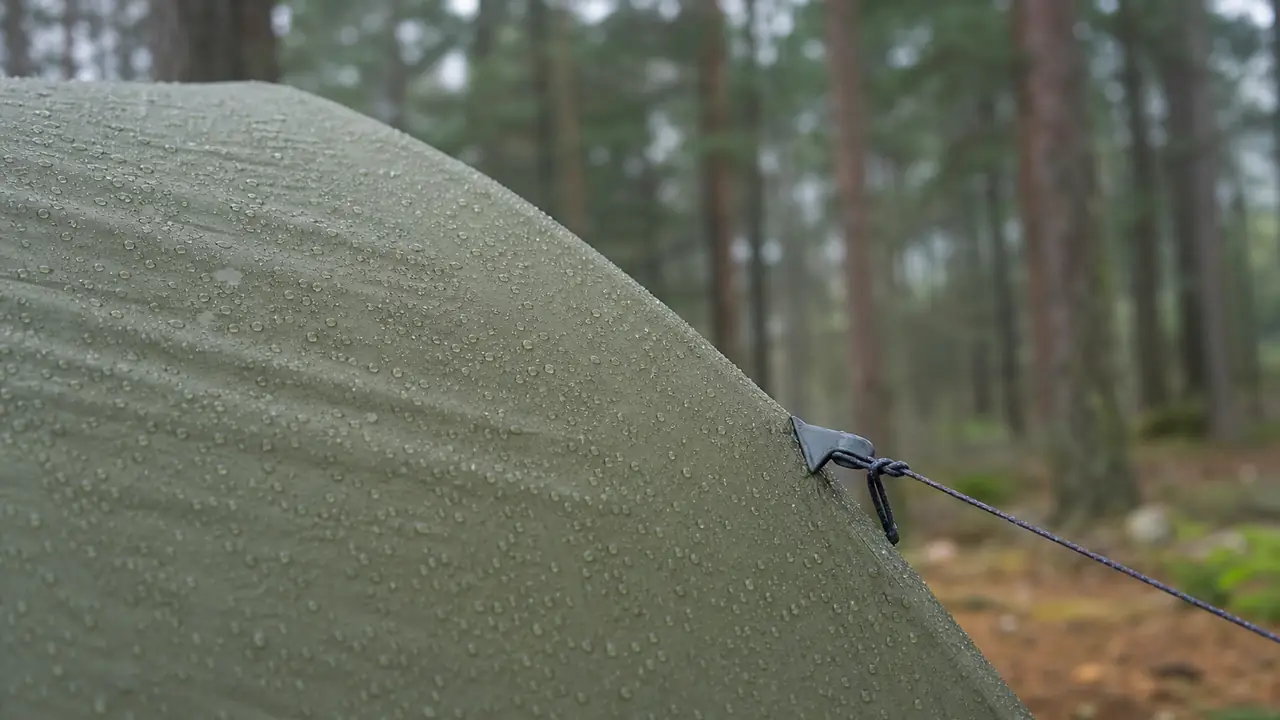
Why the desk does not quote wind figures
Wind figures on tent listings look precise and are almost never traceable to a shared method. The same tent behaves very differently depending on how it is pitched, which way it faces, the ground it is staked into, how many guy lines are used, whether gusts come in steady or sudden, and how worn the poles and fabric are. A figure quoted by one seller for one model cannot be compared with another seller's figure, and neither tells the end user what to expect on their own pitch.
For a brand or distributor, a printed wind figure is also a liability. If a customer relies on it and the tent or canopy fails, the seller holds a claim that no test report supports. The desk therefore writes anchoring plans and take-down rules, never wind figures, and recommends buyers do the same on their listings and packaging. Absolute words that suggest a tent cannot be affected by wind or storms belong in the same bin.
What decides how a tent behaves in wind
- Shape: low, rounded shapes shed wind; tall, flat walls catch it. A dome with crossing poles spreads load across the frame better than a cabin tent with near-vertical walls.
- Pole layout: more pole crossings and shorter unsupported spans make a stiffer frame. Pole sleeves spread load more evenly than clips on some designs.
- Pole material: 7001-T6 aluminium flexes and recovers; fiberglass is lower cost and heavier and more prone to snapping under repeated load; steel is common on cabin tents and consumer canopies. See fiberglass vs aluminum tent poles.
- Guy-out points: the number and placement of reinforced points that can take guy lines.
- Stakes: whether the kit holds in the ground the product is sold for.
- Fabric tension: a taut fly flaps less and loads seams less than a slack one.
- Pitch and orientation: pitching the low end or narrow side into the wind, using natural shelter and avoiding exposed ridges.
Tent types and wind behaviour
| Type | Wind behaviour | What to specify |
|---|---|---|
| Dome | Low, rounded shape, load spread across crossing poles | Pole alloy and diameter, guy-out points on each pole line |
| Backpacking | Low and light; relies on tension and stakes | Stake type, extra guy points, lightweight tensioners |
| Cabin | Tall walls catch wind; frame carries large loads | Steel or upgraded poles, more guy lines, corner straps |
| Instant | Pre-attached frame and tall walls; quick but exposed | Guy lines included and pre-attached, stronger stakes |
| Air tent | Beams flex and recover rather than snap | Beam count, valve quality, guy points along each beam |
| Bell tent | Conical canvas wall sheds wind when fully guyed | All 12 guy lines used, strong stakes, re-tension advice |
| Pop-up canopy | Large roof on a light frame acts like a sail | Stake and guy line per leg, leg weights, take-down rule |
The table is a guide to design choices, not a ranking of strength. A well-pitched cabin tent with every guy line in use can be steadier than a dome pitched with two stakes and no lines.
The anchoring plan
An anchoring plan is the practical answer to the wind question. It lists, for each model, how the tent is held to the ground and how the user should respond as the weather changes:
- Stake count, type and length matched to the ground the product is sold for.
- Number of guy lines supplied and pre-attached, and the guy-out points available for more.
- For canopies, a stake and guy line per leg on soft ground, and leg weights on hard surfaces; about 40 lb (18 kg) per leg is a common industry convention, not a regulation.
- Pitching advice: orientation, use of shelter, sequence of staking and guying.
- Take-down advice: when to lower, remove walls or take the tent or canopy down.
Each item goes on the spec sheet and into the manual. Stakes are covered in tent stakes guide, guy lines in guy lines and tensioning and weights in canopy weights per leg.
Canopies and event tents need the strictest rules
Canopies are used where people gather: markets, sports days, trade shows and weddings. A 10x10 ft commercial reference model weighs about 20-24 kg as a set under a roof of about 9.3 m2, which is a light structure for the area it covers. Walls and banners add surface. The rule printed in the manual should be plain: anchor every leg, watch the forecast, remove walls as wind builds and take the canopy down when wind is strong. Event organisers and local fire authorities may set their own anchoring and permit rules for larger event tents, and buyers should confirm them locally; see tent permits and fire codes.
What to say on listings and packaging
Honest copy describes the kit and the method. Examples of wording that works: includes 9 steel stakes and 4 pre-attached guy lines; reinforced guy-out points on every pole; anchor every leg with stakes and guy lines or leg weights, and take the canopy down in strong wind. Wording to avoid: any wind figure, absolute claims of wind or storm resistance, or promises that a tent will stand in any weather. Marketplace listings are a frequent source of these claims, often copied from one seller to the next, so check every bullet point and image caption before a listing goes live.
Testing in sampling
There is no shared lab test for whole-tent wind behaviour that buyers can order like a fabric test, but sampling still tells you a lot. Pitch the sample outdoors with its own stakes and lines, leave it overnight, check that the fly stays clear of the inner and that no pole sleeve or guy point shows strain, and repeat after re-tensioning. Note any weak points and fix them in the spec before the golden sample is approved. The same pitch test carries into pre-shipment inspection; see tent pitch test procedure.
From brief to order
A brief that asks for a wind figure usually gets an invented one. A brief that asks for a structure, a pole specification and an anchoring kit gets a product that can be checked. Existing styles with your branding typically start at 300-500 tents per style and canopy sets at 20-50 sets per style, confirmed in writing per order; see MOQ and lead time. Send your anchoring plan with the rest of the brief through the quote form.