
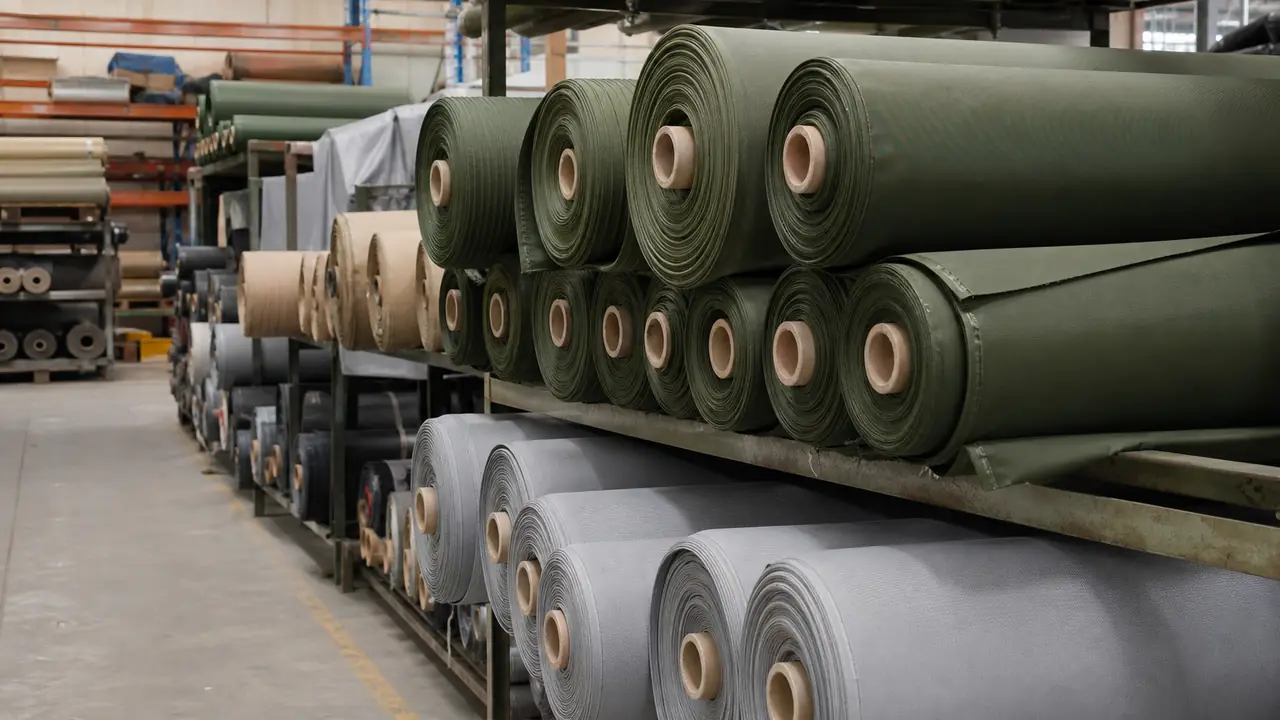
How tent fabric is described
Woven tent fabric is described by four parameters: fibre, denier, thread count and coating. Fibre is usually polyester or nylon for camping tents, cotton or polycotton for canvas tents, and PVC-coated polyester for commercial covers. Denier (D) is the weight of the yarn: a higher denier means a thicker yarn, a heavier fabric and generally better abrasion resistance. Thread count (T) is the number of yarns per square inch of the weave; a higher count gives a tighter, smoother fabric that takes coating more evenly. Coating is what gives the fabric its water resistance, and it is measured separately.
Canvas and PVC are described by weight instead, in grams per square metre (gsm), because their yarns and weaves vary too much for denier to be meaningful on its own.
Typical fabrics by part
| Part | Typical fabric | Typical coating or finish |
|---|---|---|
| Camping tent fly | 68D or 75D polyester, 185T, 190T or 210T | PU coating |
| Lightweight tent fly | 20D-40D nylon ripstop | Silicone or PU |
| Tent floor | PE, or 150D-210D oxford polyester | PU on oxford |
| Instant tent body | 150D polyester with welded PE floor (reference model) | PU |
| Beach and shower tents | 190T polyester | Silver coating |
| Canvas bell tent | 285-360 gsm cotton or polycotton canvas | Water-repellent finish per spec |
| Pop-up canopy top | 600D polyester | PU coating |
| Party tent cover | PVC, 500-650 gsm | PVC coating |
Polyester or nylon
Polyester stretches less when wet and holds up better in sunlight, which is why it dominates family camping flies and canopy tops. Nylon is stronger for its weight and is the base of most lightweight tents, but it stretches when wet, so the fly needs tensioners and a re-tension after rain. Ripstop weaves add a grid of heavier yarns that stops small tears from running. For a family tent, 68D or 75D polyester is the common choice; for a backpacking tent, 20D-40D nylon ripstop. The choice belongs on the spec sheet with the denier and thread count, not just the word polyester.
PU and silicone coatings
PU coating is applied to one side of the fabric and is cheap, easy to seam-tape and widely used on polyester flies, floors and canopy tops. Silicone is impregnated into the fabric, gives higher tear strength on light nylon and sheds water well, but standard seam tape does not bond to it, so silicone-coated tents are usually seam-sealed by hand or use a hybrid coating with PU on the inside. This is why the coating and the seam method must be specified together. PU coatings can break down with heat and humidity over years of storage; packing dry and storing dry are part of the care instructions.
Hydrostatic head is a fabric test
Water resistance of the coated fabric is measured as hydrostatic head under ISO 811 and reported in millimetres of water column. A 1,500 mm or 3,000 mm figure is an industry convention for the fabric, not a regulation and not a statement about the finished tent. Listings should say waterproof-rated fabric with the hydrostatic head per ISO 811 test report. The finished tent's performance depends on seams, zips and pitch; see seams and waterproofing.
Canvas, oxford and PVC
Cotton and polycotton canvas at 285-360 gsm breathes, reduces condensation and is quieter in wind, which suits bell and glamping tents, but it is heavy and must be dried before storage to avoid mildew. Oxford polyester is a basket weave used for floors at 150D-210D and for canopy tops and printed kits at 600D. PVC covers at 500-650 gsm are the material of party and event tents, chosen for durability and for flame-resistant formulations tested to NFPA 701 per report.
Finishes and chemical claims
Durable water repellent (DWR) finishes help water bead on the outer face. Where a market restricts fluorinated chemistry, the desk specifies a fluorine-free DWR option verified by test report; the EU restriction on PFHxA for non-clothing textiles applies from October 2027. The desk does not use sweeping absence claims about chemistry, and asks for the test reports your market requires. Flame-resistant and UV-rated fabrics are covered on flame and UV standards.
New fabrics, colours dyed to order or special coatings are assessed per order; existing fabrics in a new colour usually sit within the 300-500 tents per style range on MOQ and lead time. Send the fabric parameters with your brief through the quote form.