
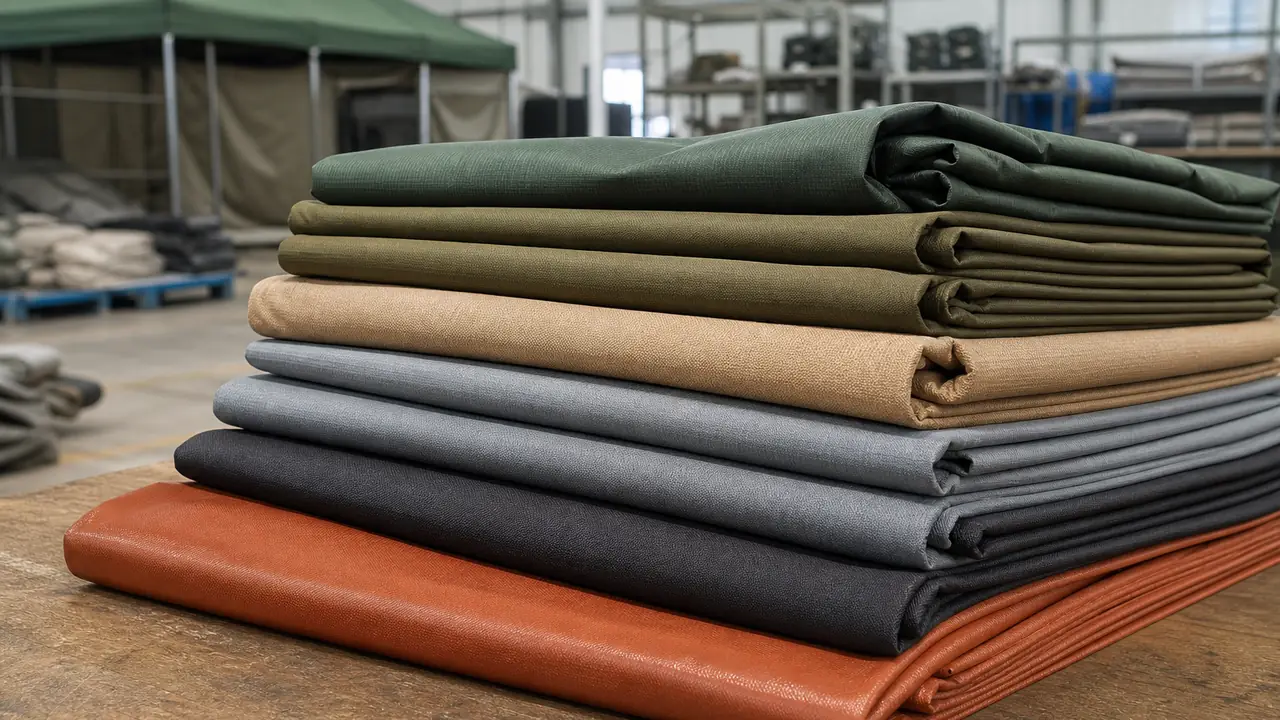
What a coating does
A woven tent fabric on its own lets water through the gaps between yarns. A coating fills or covers those gaps. On a spec sheet the result is reported as hydrostatic head: the height of a water column, in millimetres, the fabric holds before water passes, measured to ISO 811. Figures such as 1,500 mm and 3,000 mm are industry conventions for fabric, not legal thresholds, and they describe the coated fabric in a test rig, not a pitched tent in the rain.
The coating also changes tear strength, weight, handle, how the fabric packs, how seams are sealed and how the fabric ages. Those are the properties buyers should compare when two quotes list the same base fabric with different coatings.
PU coatings
Polyurethane (PU) is the standard coating across family, dome, cabin, instant and air tents. It is applied to one face of polyester or nylon, usually the inside of the fly and the top or bottom of the floor, in one or more passes. More passes give a higher hydrostatic head and a heavier fabric.
- Bonding and seams: PU accepts heat-sealed seam tape well, which suits volume production on taping machines. That is the main reason family tents use it.
- Cost: lower than silicone, and widely available from fabric mills in Jiangsu and Zhejiang.
- Aging: PU can break down over years through hydrolysis, especially when a tent is stored damp and warm. The coating turns sticky, smells and peels. Storage instructions matter as much as the coating itself.
- Tear strength: PU adds little to the fabric's tear strength and can make it slightly stiffer.
Silicone coatings
Silicone is impregnated into the fabric, often on both faces, rather than laid on one side. Silicone-coated nylon, often called silnylon, and silicone-coated polyester are typical of lightweight backpacking tents, including the 20D reference model from public listings.
- Bonding and seams: very little sticks to silicone, including standard seam tape. Seams are usually sealed by hand with a silicone-based sealant, which takes labour and needs instructions for the user to re-seal later.
- Tear strength: silicone lets yarns slide and share load, which raises tear strength noticeably for a given weight. That is the main reason it suits thin fabrics.
- Aging: silicone does not hydrolyse in the way PU can, so it generally ages better in storage.
- Handle: slippery, which makes the fabric pack small but harder to handle on a sewing line and when pitching.
- Cost: higher, and fewer mills run it.
Hybrid coatings
A common middle route is silicone on the outside face and PU on the inside face. The outside gets silicone's tear strength and water shedding; the inside takes seam tape like a PU fabric. These fabrics suit brands that want a lighter tent without moving to hand-sealed seams. They cost more than straight PU and should be specified clearly, because a quote that says silicone-coated could mean either a full silicone or a hybrid fabric.
Floors follow their own logic. Most floors use PU-coated polyester or oxford, or a PE sheet on entry models, because the floor takes abrasion and ground pressure and needs taped corner seams. Silicone floors appear only on the lightest tents, and buyers should expect a footprint to be recommended alongside them. See tent floor materials.
The coatings side by side
| Property | PU | Silicone | Silicone outside, PU inside |
|---|---|---|---|
| Seam method | Heat-sealed tape | Hand-applied sealant | Tape on the inside face |
| Tear strength added | Low | High | Medium to high |
| Storage aging | Can hydrolyse if stored damp and warm | Generally stable | Inside face behaves like PU |
| Typical lines | Dome, cabin, instant, air, floors | Backpacking | Lighter dome and trekking tents |
| Relative cost | Lower | Higher | Between the two |
These are general tendencies across the category. The coating on an order is defined by type, face, number of passes, finished fabric weight and the hydrostatic head per test report.
Seams decide more than the coating
A high hydrostatic head fabric with untaped or poorly sealed seams still leaks at the seams. Needle holes go through the coating, and water follows the thread. On PU fabrics the inspection plan should include a check on tape adhesion and a water spray on taped seams; on silicone fabrics it should check that sealant has been applied along every stress seam and around the stake loops. Zips, the floor corners and a taut pitch matter just as much. The seam taping note and the seams and waterproofing page explain the checks.
Storage and care instructions
Most PU coating complaints come from storage, not use. A tent packed wet and left in a car boot or garage is the classic case. The manual and hangtag should tell users to dry the tent fully before storing it, store it loosely in a cool, dry place and avoid washing machines and solvent cleaners. The same advice protects against mildew; see tent mold and mildew prevention. Distributors holding stock across a summer should store cartons off the floor and away from heat.
Water repellent finishes are a separate layer
A DWR finish on the outer face makes water bead and roll off; it is not the waterproof coating. Many flies carry both. DWR chemistry is changing as markets restrict fluorinated substances, and the honest wording is a fluorine-free DWR option, verified by test report where the market requires it. See DWR and fluorine-free finishes.
Choosing a coating for a range
Most family and car camping ranges should stay with PU on polyester: it tapes well, costs less and suits machine production. Backpacking lines justify silicone or a hybrid, with the seam method and care instructions written into the spec sheet. Whatever the choice, the listing should say waterproof-rated fabric with the hydrostatic head per ISO 811 test report, and not describe the whole tent as watertight.
Changing the coating on an existing style is usually assessed per order because it can change the fabric supplier and the seam process. Typical starting quantities and lead times are on MOQ and lead time; send your line and target weight through the quote form.