
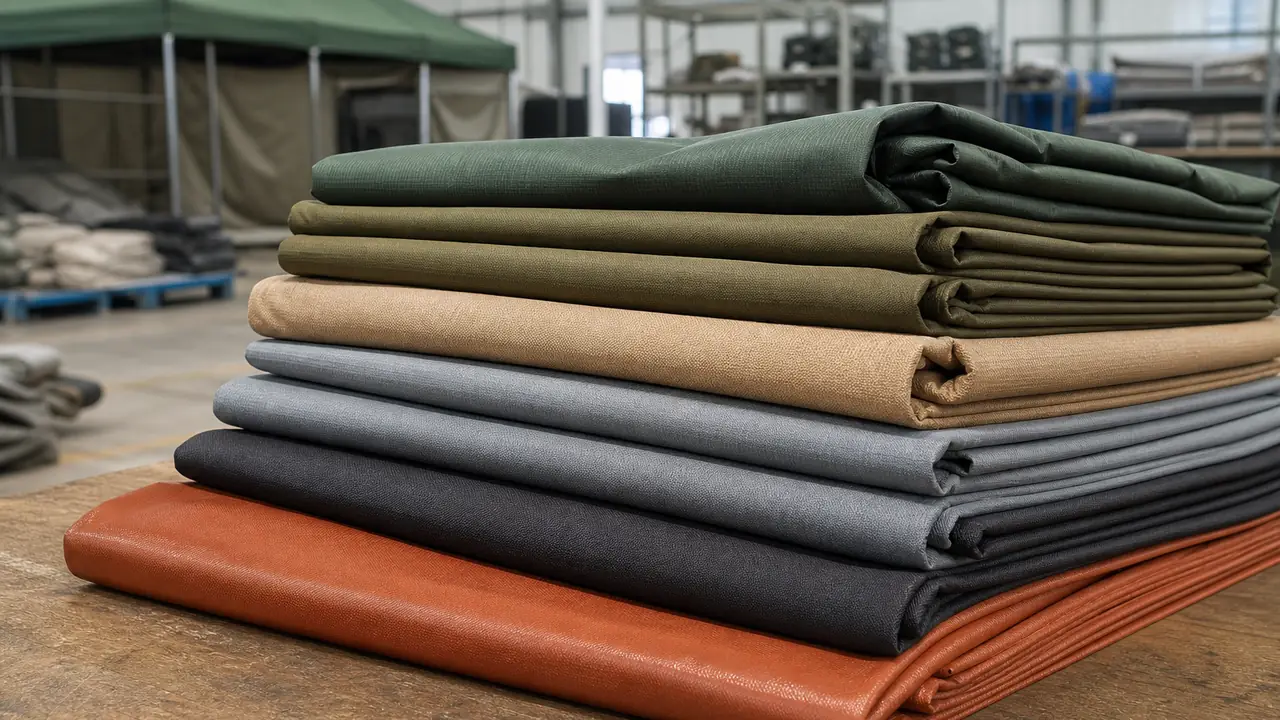
Where canvas sits in a range
Canvas and polycotton are the fabrics of bell tents, safari-style glamping tents, some rooftop tents and indoor kids teepees. In a tent range they occupy the heavy, comfortable end: the products are pitched for days or weeks, often on a site rather than carried, and are judged on interior climate and appearance more than pack weight.
The bell tent reference model from public listings is a five-metre tent with a 300 cm centre pole and 60 cm walls in 285 gsm cotton canvas, with a 540 gsm PVC tub floor. It weighs about 35 kg and packs to about 96x33x33 cm. The three-person soft-shell rooftop reference uses 280G polycotton or 600D oxford for the body, and the indoor teepee reference uses cotton canvas on pine poles. See bell and glamping tents.
What gsm means on canvas
Canvas is specified by grams per square metre (gsm), the finished weight of the fabric, rather than by denier or thread count. Across the category bell and glamping tents use 285-360 gsm cotton or polycotton canvas. A heavier canvas is denser, more durable and slower to wet through, but it adds weight to an already heavy tent, packs larger and costs more in both fabric and freight.
The gsm figure should be stated as a finished weight with a tolerance, so an inspector can weigh a swatch. A canvas sold as 320 gsm that weighs noticeably less at inspection is a substitution, and the order file should say how far it may deviate.
Cotton, polycotton and treated canvas
| Fabric | Typical weight | Strengths | Watch points |
|---|---|---|---|
| Cotton canvas | 285-360 gsm | Breathes, quiet, natural look | Heavier, shrinks and swells, mildew if stored damp |
| Polycotton canvas | Around 280 gsm on rooftop bodies; 285-360 gsm on bell tents | Lighter, dries faster, less shrinkage | Slightly less breathable than all-cotton |
| Treated canvas | Per spec sheet | Water repellent and mildew resistant finishes | Treatments need test reports and market checks |
| PVC tub floor | 540 gsm on the bell reference | Waterproof-rated, wipe clean | Heavy; check welds and corner seams |
Polycotton blends cotton with polyester to reduce weight and shrinkage and to speed drying. Treated canvas carries water repellent or mildew resistant finishes; any chemistry used has to be declared and, where the market requires it, backed by test reports. See DWR and fluorine-free finishes.
Why canvas feels better inside
Cotton fibres absorb and release moisture, so a canvas wall passes water vapour from breath and cooking to the outside instead of condensing it on the inner face. The thick fabric also blocks more direct sun and dampens noise from wind and rain. That is the comfort story behind glamping. It is real, but it should be described in plain terms on a listing: breathable cotton canvas, cooler in sun and less condensation than a single-layer synthetic tent. Avoid numerical temperature claims unless a test supports them.
Weathering and water resistance
New cotton canvas often lets small amounts of water through along the stitching the first time it rains. As the cotton gets wet, the fibres swell and close the needle holes. This is known as weathering or seasoning, and the manual should tell users to pitch the tent and wet it, then let it dry fully, once or twice before the first trip. Polycotton weathers less noticeably but benefits from the same step.
Canvas does not normally carry a hydrostatic head claim the way coated polyester does. If a buyer wants a water resistance figure on a listing, it must come from an ISO 811 test on the actual canvas, and it still describes the fabric, not the pitched tent. Seams, the door zip, the stove jack and a taut pitch decide what happens in rain.
Mildew, storage and care
Cotton is a natural fibre and will grow mildew if packed damp. That is the main after-sales risk on canvas lines and the main reason glamping operators ask about treated fabrics. Care instructions should cover drying fully before packing, storing in a breathable bag in a dry place, brushing off dirt rather than washing with detergents, and re-proofing with a product suited to canvas when water starts to soak in. For sellers holding stock, cartons should be stored off the floor in a dry warehouse. The mold and mildew note covers the factory and warehouse side.
Flame resistance and site use
Canvas tents used commercially on glamping sites or at events may need flame resistance documentation. Flame-resistant treated canvas is available; it is tested to a standard such as CPAI-84 or NFPA 701 per report, and the local fire authority decides what applies to a site. Reports are issued to partner factories or brands per order and verified by the desk. Treated and untreated canvas look the same, so the report must name the fabric lot. See tent flame resistance rules.
For buyers weighing canvas against coated polyester for a glamping or family line, the trade is comfort and appearance against weight, drying time and care. The canvas vs synthetic tents note compares the two directly.
Stove jacks and accessories
Many bell tents offer a stove jack, a heat-resistant ring sewn into the wall or roof for a stove pipe. It is an option, not a default, and adds fire safety obligations for the user. The manual should show clearances and require a heat-resistant mat and ventilation. Buyers should also decide on mesh doors, zip-out floors and the number of wall vents, because each one changes the pattern and cost.
Spec and order notes
Write canvas into the spec sheet as fibre content, finished gsm with tolerance, colour, treatment and its test report, floor material and gsm, pole material, and the guy line and stake count. The five-metre reference model ships with 12 guy lines and about 24 stakes and needs a pitched diameter of about 7 m with lines out, which belongs on the listing too. Standard styles with your branding typically start at 300-500 tents per style, confirmed in writing; see MOQ and lead time, or send a brief through the quote form.