
Lab tests and lot inspection are different things
A lab report tells you how a material or a model performed in a defined test: hydrostatic head of a fabric to ISO 811, flame resistance to CPAI-84, UV protection to AATCC 183. A pre-shipment inspection tells you whether the lot in the warehouse matches the approved golden sample and the spec sheet. Both are needed. A tent made from fabric with a good hydrostatic head report can still leak if its seams are badly taped, and a perfect lot inspection says nothing about flame resistance. The desk plans both together.
Pitchmere is a sourcing desk and not a test lab. Lab reports are issued by accredited labs to partner factories or to your brand per order; the desk checks that each report matches the fabric, model and market before it goes into the order file. See compliance and certifications.
What is checked at pre-shipment inspection
| Check | Method | Typical defect found |
|---|---|---|
| Pitch test | Sampled tents or canopies pitched in full | Fly and inner mismatch, pole fit, frame lock faults |
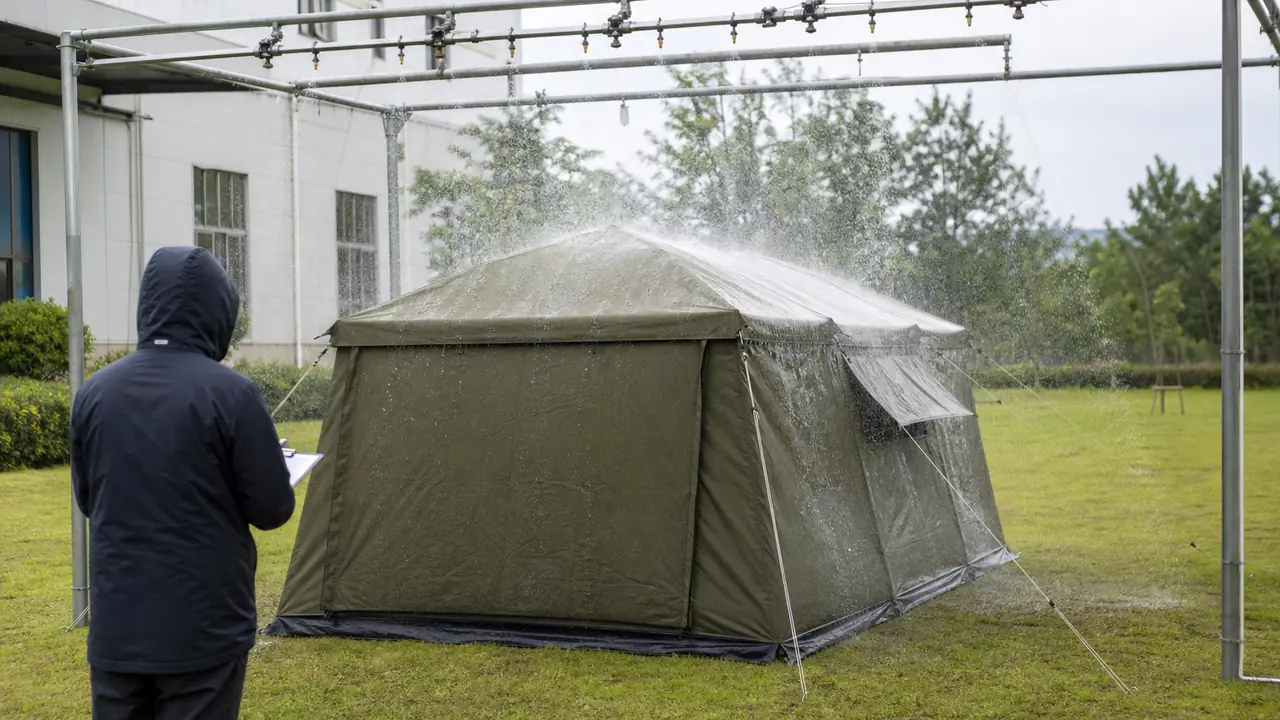
| Water spray check | Spray on taped seams and zips of sampled units | Gaps in seam tape, leaks at corners and zip ends |
| Dimensions | Footprint, peak height, pole and leg lengths against spec | Undersized floor, wrong canopy height settings |
| Fabric | Fabric weight and denier against spec, colour against swatch | Lighter fabric, shade variation between panels |
| Seams and taping | Visual and peel checks on sampled seams | Lifting tape, skipped stitches, missing reinforcement |
| Zips | Size and type check, operation under pitch tension | Wrong zip size, sliders that split or jam |
| Poles and frames | Material, diameter, wall thickness, joints and coating | Cracked fiberglass, loose rivets, coating gaps |
| Colour against the approved proof, position, rub check | Colour shift, misaligned logos, poor fastness | |
| Accessories | Count of stakes, guy lines, bags, weights and manuals | Missing stakes or guy lines |
| Labels and marks | Product labels, warning labels, barcodes, shipping marks | Wrong barcode, missing warning or tracking label |
AQL sampling
Inspecting every tent in a lot is rarely practical, so inspection follows statistical sampling. The desk's stated working default is ISO 2859-1 or ANSI/ASQ Z1.4 at general inspection level II, with an acceptable quality limit of 2.5 for major defects and 4.0 for minor defects. Critical defects, such as a missing warning label on a kids play tent, are usually set at zero tolerance. The sample size depends on the lot size, and each defect found is classed against the defect list agreed before production. All of these levels are a working default and are confirmed per order. The AQL sampling note shows how sample sizes and accept numbers work.
Carton drop test
Tents travel through ports, warehouses and parcel networks. Sampled cartons are drop-tested following the ISTA 1A procedure, then opened to check for torn bags, broken poles, crushed canopy frames and split cartons. A carton that fails is a packing problem, not a product problem, and is fixed in the packing spec before the next order. See packaging and palletizing.
Lab tests by market
- Fabric water resistance: hydrostatic head to ISO 811, reported in millimetres for the fabric lot.
- Flame resistance: CPAI-84 or ASTM F3431 for camping tents where the buyer or state requires it; NFPA 701 or California CSFM registration for event tents, as the local fire authority decides.
- UV protection: AATCC 183 for UPF claims in the US; AS 4174 UVE for Australia and New Zealand.
- EU camping tents: EN ISO 5912; EN 13782 for temporary structures above 50 m2.
- Kids play tents: CPSIA and ASTM F963 testing for the US.
Which tests apply is confirmed with your test lab for each market; the flame and UV standards page explains them.
The inspection report
Each inspection ends with a report: lot size, sample size, the checks performed, the defects found by class with photos, the carton test result and a pass or fail against the agreed AQL. The report goes to you and into the order file. The shipment moves only after you accept the result. Book the inspection when you confirm the order; send your brief through the quote form.