
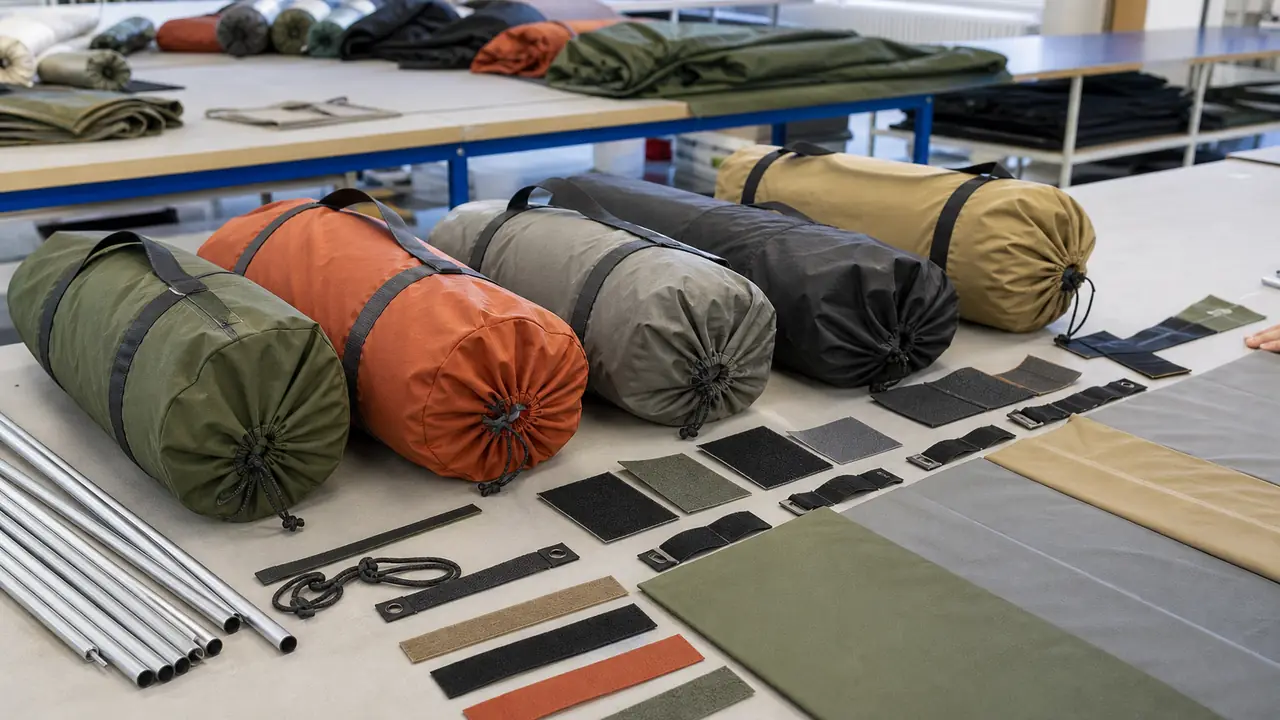
Three levels of private label
Most tent and canopy programs fall into one of three levels, and the level decides the MOQ, the sample rounds and how much of the design the brand ends up owning. Naming the level at the start keeps the quote honest and stops a simple logo order from drifting into a new development without anyone saying so.
| Level | What changes | Typical MOQ | Sample rounds |
|---|---|---|---|
| Logo and colour | Logo print, fabric colourway, carry bag, carton and labels on an existing style | 300-500 tents per style; 20-50 sets per canopy style | Usually one, plus a colour approval |
| Private trim | Existing structure with changed fabric grade, mesh, zips, vents, pockets or accessories | Typically within the standard range, confirmed per order | One or two |
| Private structure | New pole geometry, new mould or hub, new fabric development | Assessed per project | Two or more, then a golden sample |
All quantities above are typical ranges from partner factories, not fixed terms. The figure for your order is the one confirmed in writing after the spec sheet is agreed; the MOQ and lead time page shows the full table.
What you can brand
- Fabric and colour: fly, inner, floor and canopy top colourways, matched to a physical swatch or a colour reference agreed in the spec sheet.
- Logo application: screen-printed or heat-transferred logos on flies, woven or printed labels, and full-colour dye-sublimation on canopy tops and walls. The canopy printing page explains the print routes.
- Carry bags and packing: bag fabric, print, handles and compression straps, retail cartons, inserts and carton marks.
- Labels and instructions: care labels, warning labels where the market needs them, pitching instructions and GPSR information with an EU responsible person for EU sales.
- Accessories: stakes, guy lines, tensioners, repair kits, footprints, sidewalls and leg weights, packed to your list.
OEM, ODM and who owns what
In an OEM program the brand supplies the design or the specification and the partner factory builds to it. In an ODM program the brand picks an existing factory design and changes the parts it is allowed to change. Both are normal; the important point is to write down ownership before samples start. The desk records in the order file who owns the artwork, the pattern files, any new mould or hub and the approved golden sample, and whether the factory may sell the same structure to others. Exclusivity on an existing style is rarely available; exclusivity on a private structure is a commercial term agreed per project. The blog post on tent OEM vs ODM goes into the detail.
How a private label order is run
- Brief: target market, buyer channel, line, size series and the level of change.
- Match: the desk shortlists partner factories that already build the line, by cluster and capacity.
- Spec sheet: fabric, coating, poles, fittings, branding positions, packing and the test reports required.
- Samples: a first sample in 7-15 days, then corrections until one sample is signed as the golden sample.
- Bulk: production against the golden sample, typically 30-45 days, or 45-60 days for custom builds.
- Inspection and shipping: pre-shipment inspection against the spec sheet, then freight booking.
The full sequence is on the sourcing process page.
Claims that travel with your brand
Once your logo is on the tent, the claims on the listing are yours. The desk keeps them tied to documents: waterproof-rated fabric with the hydrostatic head per ISO 811 test report, flame-resistant fabric tested to CPAI-84 or NFPA 701 per report where the market or buyer asks for it, and UPF-rated fabric per AATCC 183 report for US shade products, or AS 4174 UVE for Australia and New Zealand. Wind behaviour is described through the anchoring plan with stakes, guy lines and leg weights, never as a wind rating. Reports are issued to the partner factory or to your brand per order and verified by the desk; final compliance questions go to your test lab.
Next step
Send the line, the size series, the target market and a rough quantity per style through the quote form. The desk replies with the program level it reads from your brief, the questions that need answers before a spec sheet, and a typical MOQ and lead time range to be confirmed in writing.