
Start with the venue, not the canopy
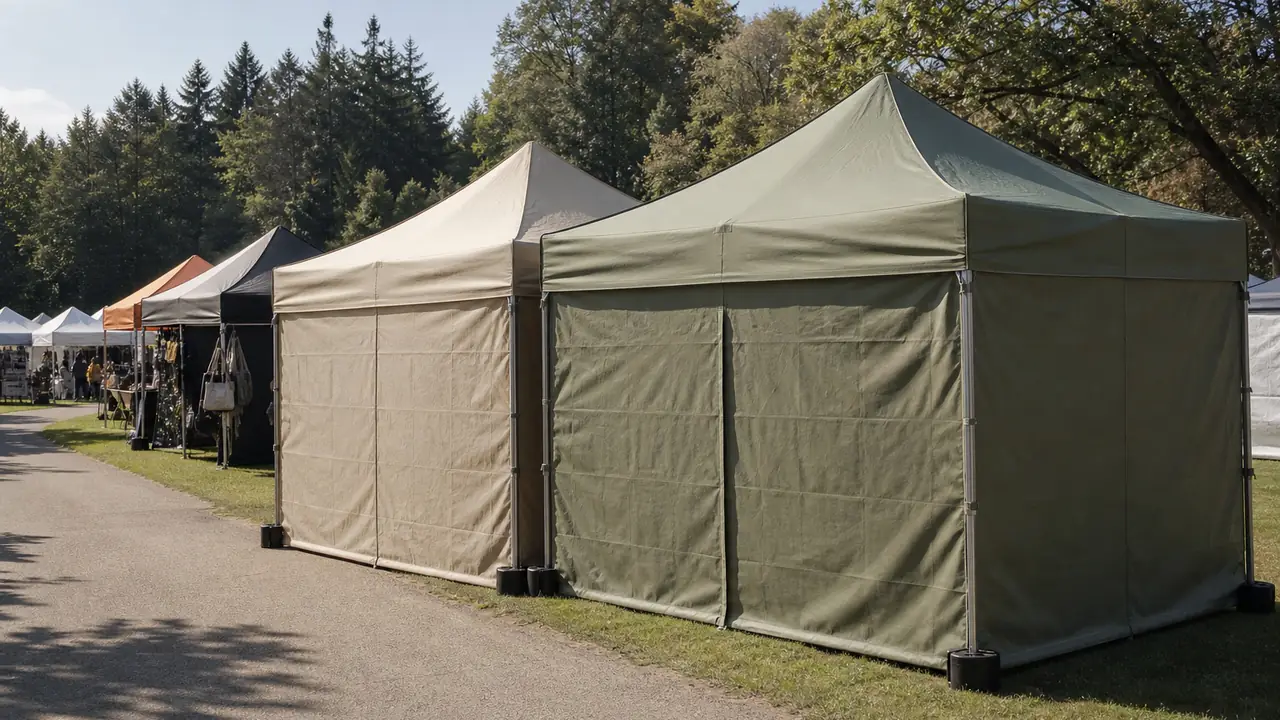
Outdoor shows, expos, fairs and sponsor villages each publish exhibitor rules, and those rules decide more of the canopy specification than the brand does. Before briefing a partner factory, collect the exhibitor manual for the shows on the calendar and note four things: the booth unit size, the maximum height, the fire documentation the organiser or local fire authority expects, and the anchoring rule for the surface. Many outdoor shows sell space in 10x10 ft units; some require a minimum weight per leg; some do not allow stakes on paved or turf areas. A canopy that fits one show and fails the rules of the next is an expensive mistake for a program brand.
Brands that supply canopies to distributors, franchisees or regional teams face a second question: who sets up the booth. A kit that a trained crew pitches in minutes can defeat a sales team that sees it twice a year. Clear manuals, labelled parts and a kit that is no larger than the shows require matter as much as the frame itself.
The checklist
| Item | Decide | Typical reference |
|---|---|---|
| Size | Booth unit from the exhibitor manual | 10x10 ft, 300x300 cm; 10x15 or 10x20 ft for larger booths |
| Frame grade | How often the canopy is set up | 40 mm hex aluminium for commercial use; 50 mm for frequent heavy use |
| Top | Fabric and print method | 600D polyester oxford, dye-sublimation or screen print |
| Walls | Back wall, half walls, full walls with doors | Back wall 301x217 cm, half walls 301x91 cm (reference kit) |
| Flags and banners | Visibility above the crowd | Two 11 ft flags in the reference kit |
| Fire documents | What the show and fire authority ask for | NFPA 701 report or CSFM registration; CPAI-84 where specified |
| Anchoring | Surface and show rule | About 40 lb (18 kg) per leg as industry convention; stakes on soft ground |
| Packing | Transport between shows | Wheeled bag, outer carton about 158x27x27 cm for a 10x10 |
| Spares | What breaks on the road | Spare top fasteners, a leg, truss connectors, stakes |
Size and height
The commercial reference 10x10 canopy stands about 330 cm at the peak, with adjustable leg heights. Check the show's maximum height and whether flags count toward it. For double booths, compare a single 10x20 frame against two 10x10 frames: one roof gives a clean look with no gap, two frames give flexibility when the next show only sells single units. The 10x10 vs 10x20 comparison covers the trade-offs.
Frame grade for a touring booth
A booth that travels to a dozen shows a season is set up and struck far more often than a market vendor's canopy, often by different crews. Consumer steel frames are not built for that. The commercial standard is 40 mm hexagonal aluminium legs with a wall of about 1.1-1.2 mm; heavy-duty 50 mm hex frames suit brands and rental partners with very frequent use. The reference 10x10 commercial kit weighs about 20-24 kg, frame about 16 kg. See canopy frame grades.
Print and walls that read from the aisle
Visitors see the back wall first, the valance second and the roof last. Put the brand mark and the one message that matters on the back wall at eye height, repeat the logo on the front valance, and keep half walls simple because tables and products will cover them. Full-colour layouts use dye-sublimation on polyester; one-colour logos on a stock-colour top can be screen printed. Build every file on the factory template for the exact frame. The artwork files note lists what a print-ready file needs.
Fire documents
Show organisers and local fire authorities often require flame-resistant canopy fabric, typically evidenced by an NFPA 701 test report or California State Fire Marshal registration under Title 19, and some ask for CPAI-84. A CPAI-84 result does not mean the fabric passes NFPA 701. The report must cover the printed fabric construction actually supplied, and some venues expect a label on the canopy. Reports are issued to the partner factory or the brand per order and verified by the desk; the fire authority makes the final call, so confirm the requirement with each show before the fabric lot is ordered. See NFPA 701 for event tents.
Anchoring at the show
Most outdoor show floors are asphalt, concrete or protected turf, so stakes are often not allowed. Leg weights are the usual answer: about 40 lb (18 kg) per leg is an industry convention, and some shows set their own minimum. Sandbags, water weights and steel plates all work if they reach the required weight and attach securely to the leg. The desk does not quote wind ratings; exhibitor instructions should say to take the canopy down in strong wind and follow the organiser's instructions. Weights are bulky and heavy to ship, so many exhibitors buy fillable bags and fill them locally.
Packing and travel
A touring booth needs packing that survives repeated handling: a wheeled bag for the frame, separate bags for the top and walls so prints are not crushed by the frame, and a labelled bag for weights and stakes. The reference 10x10 kit ships in an outer carton of about 158x27x27 cm. Ask for the carton to pass a drop test to ISTA 1A where the program ships through parcel networks. A short checklist card inside the bag, listing every part, saves time at strike.
Spares and repeat orders
Trade show canopies fail at the same few points: truss connectors and slider brackets bent during set-up, a leg dented in transit, a top torn at a corner pocket, a zip on a wall door. Ordering a small spare set with the first batch keeps the program running. For repeat orders, keep the approved colour proof and template version in the order file, so a replacement wall printed next year matches the walls already on the road.
Timing and quantities
Work back from the first show date. Artwork approval, then samples or first-article prints in typically 7-15 days, then bulk in 30-45 days, or 45-60 days for custom builds, plus sea freight of roughly 15-25 days to the US west coast or 30-45 days to Europe. Ten by ten canopies and printed kits typically start at 20-50 sets per style, confirmed in writing for each order. Details are on MOQ and lead time; send the show list and kit through the quote form.