
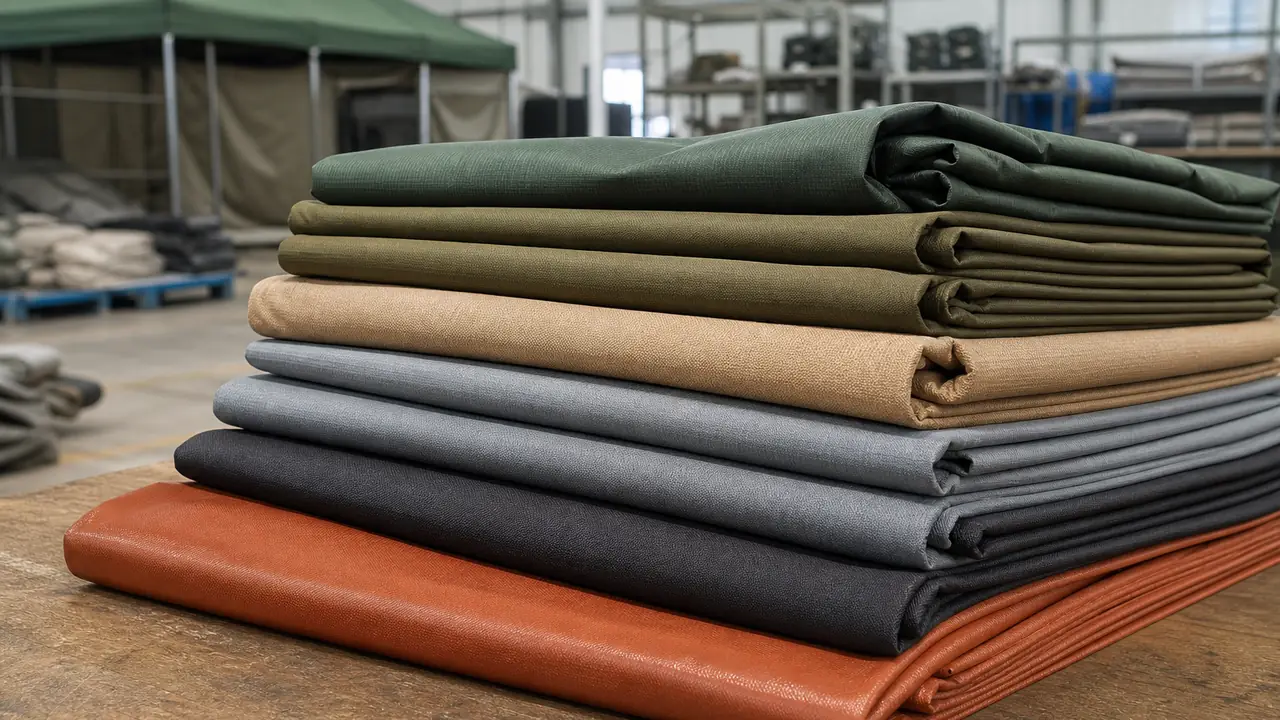
Why the fibre choice comes first
Fibre is the first fabric decision on a tent brief, before denier, coating or colour. Polyester and nylon are both synthetic filament yarns, both can be woven as taffeta or ripstop, and both take PU or silicone coatings. They still behave differently in the field, and those differences show up in reviews and returns: a fly that sags overnight, a colour that fades after one summer, a pack that weighs more than the listing said.
In practice the split across a range is clear. Family, dome, cabin, instant and air tents mostly use polyester. Backpacking tents mostly use nylon. Canopy tops, printed kits and floors use polyester oxford. The sections below explain why, so a range can be planned around the right fibre for each line.
Stretch when wet
Nylon absorbs more water into the fibre than polyester does, and it relaxes as it does so. A nylon fly pitched tight in the afternoon can sag by morning after dew or rain, and the user has to re-tension the guy lines. Silicone coatings reduce the effect but do not remove it. Polyester absorbs very little water and holds its shape better through a wet night, which is one reason family tents, where users rarely re-tension, use it.
The practical answer for nylon tents is design and instructions rather than a different fibre: adjustable tensioners at each corner, guy-out points on the fly and a manual that tells the user to re-tighten after rain. Those belong on the spec sheet and in the inspection plan. The guy lines and tensioning note covers the hardware.
UV exposure and fading
Both fibres lose strength in sunlight over time, and both fade. Polyester is generally more resistant to UV degradation than nylon, which matters for tents that stand for days in the sun: family camping holidays, festival sites, beach shelters and canopies. Nylon tents are usually pitched for a night and packed away, so the exposure pattern is different.
Dye, coating and colour also change the picture. Darker shades and solution-dyed yarns tend to fade less visibly, and some coatings include UV stabilisers. None of that should become a listing claim without evidence: a UPF figure needs an AATCC 183 test report, and for Australia and New Zealand the reference is AS 4174 UVE. See tent UV protection and fading.
Weight and strength
For a given weight, nylon is generally stronger and more tear resistant than polyester, which is why it dominates backpacking tents. A two-person backpacking reference model from public listings uses 20D silicone-coated nylon and weighs about 1.7-1.8 kg in total. Building the same tent in polyester at a comparable strength would usually mean a heavier fabric. For a family tent, the weight difference matters much less than shape retention and price, so polyester wins.
The two fibres side by side
| Property | Polyester | Nylon |
|---|---|---|
| Stretch when wet | Low; holds pitch through rain | Higher; fly may need re-tensioning |
| UV resistance | Generally better | Generally lower; coating and dye help |
| Strength for weight | Good | Higher; suits 20D-40D ripstop |
| Typical tent use | 68D/75D flies, 150D instant tents, oxford floors, 600D canopy tops | 20D-40D backpacking flies and inners |
| Usual coatings | PU, silver coating on beach shelters | Silicone, silicone outside with PU inside |
| Relative material cost | Lower | Higher |
These are general tendencies across the category, not test results for a specific fabric. The fabric for an order is defined by its fibre, denier, weave, coating, finished weight and test reports.
Which lines use which fibre
- Dome, cabin and instant tents: polyester. The dome reference model uses a 68D 190T polyester fly; the instant reference model uses 150D polyester. See dome camping tents.
- Air tents: polyester, such as the 70D fabric on the five-person reference model.
- Backpacking tents: nylon ripstop at 20D-40D with silicone or PU coatings.
- Beach shelters: 190T silver-coated polyester for pop-ups; stretch shades use nylon or lycra stretch fabric because the stretch is the point.
- Canopies and printed kits: 600D polyester oxford, which takes dye-sublimation print well.
Seams and coatings follow the fibre
The fibre choice also decides the seam method. PU-coated polyester can be seam-taped with heat-sealed tape, which suits volume production. Silicone-coated nylon does not bond well with standard tape, so it is usually seam-sealed by hand or built with a PU coating on the inside face to take tape. That changes labour, inspection and care instructions, and it is covered in PU vs silicone tent coatings.
Whatever the fibre, water resistance is a hydrostatic head figure on the coated fabric, tested to ISO 811. It does not describe the finished tent: seams, zips, the floor design and the pitch decide that.
Checking the fibre at inspection
A fibre substitution is hard to see in a finished tent, so the order file should make it checkable. The desk records the fabric code, finished weight in gsm with a tolerance and the coating type for each panel, and the inspector weighs a swatch cut from a spare roll or an off-cut against that figure. The approved sample keeps a labelled fabric swatch so colour and handle can be compared at the line. Where a market needs flame, UV or chemical reports, the report must name the same fabric code and lot as the bulk order; a report on a different fabric does not cover the tent. Those checks take minutes and catch the most common shortcut, a cheaper fabric with the same printed code on the bag.
Choosing for your range
Start from the user. A family that pitches once for a week wants polyester that holds shape and resists sun. A trekker who pitches every night and carries everything wants nylon and will re-tension. Brands that sell both usually keep the fibres split by line rather than offering the same tent in two fabrics, which keeps stock and spare parts simple.
Existing styles in a new colour or with your logo typically start at 300-500 tents per style; a change of fibre or coating is assessed per order and confirmed in writing; see MOQ and lead time. Send the line, market and target weight through the quote form and the desk will shortlist fabrics from partner factories.