
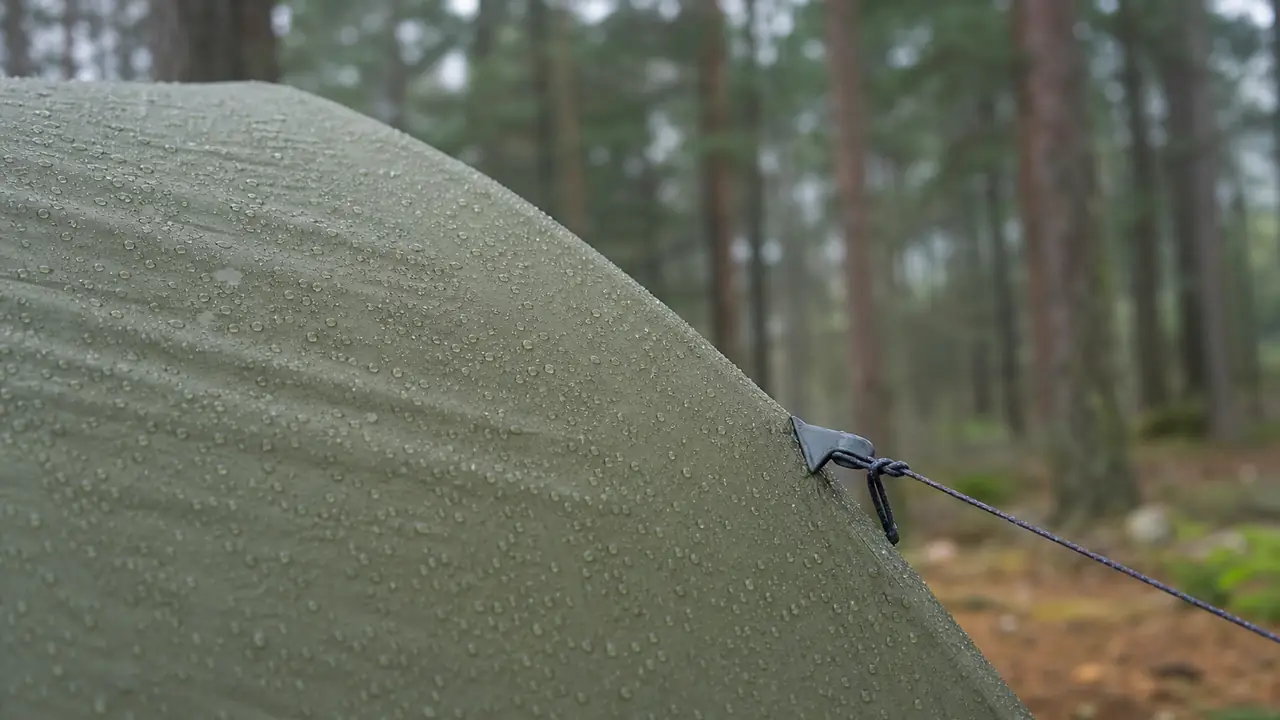
Why mold matters to a tent business
Mold and mildew are fungi that grow on damp organic material: dirt, plant matter, body oils and natural fibres. On a tent they leave black or grey spots, a musty smell and, over time, damage to coatings and fabric. For a seller, the damage is commercial as much as physical. A customer who opens a new tent to find spots or a musty smell returns it at once, and a pallet of affected stock can be hard to sell. A tent stored wet for a winter can come out unusable in spring, and the review usually blames the product.
Synthetic fabrics such as polyester and nylon do not feed mold themselves, but dirt and moisture on them do, and PU coatings can be damaged by long damp storage. Cotton and polycotton canvas, used on bell and glamping tents, are natural fibres and need the most care.
Where moisture gets in
| Stage | Risk | Prevention |
|---|---|---|
| Fabric storage at the factory | Rolls absorb humidity in damp seasons | Raised, covered storage; rolls wrapped until cutting |
| Sewing and taping | Long work-in-progress in humid air | Short time between sewing and packing, clean work areas |
| Pitch and water spray tests | Tested tents packed while still damp | Full drying before tents are folded and bagged |
| Packing and cartons | Moisture sealed into poly bags and cartons | Dry goods only, desiccant sachets, breathable bags for canvas |
| Sea freight | Container condensation over 15-45 days | Dry cartons, desiccants in the container, sound pallets |
| Warehouse | Damp floors and poor airflow | Off the floor, ventilated storage, stock rotation |
| End user | Tent packed wet after a trip and left | Clear care card, drying instructions on the bag |
At the factory
Eastern China, where the Zhejiang and Jiangsu tent clusters sit, has long humid spells, particularly in early summer, which overlaps with the period when many factories are still shipping for the northern hemisphere season. Fabric, cartons and finished goods all absorb moisture from the air if they are left exposed. Good partner factories store fabric rolls off the floor and wrapped, keep work in progress moving and control the time between sewing and packing. Pitch tests and water spray checks are essential for quality, but every tent that is pitched and sprayed must be fully dry before it is folded. The desk includes that point in the inspection plan: any tent used for a water check is dried and inspected again before it goes back in its bag, or it is set aside.
Canvas is the special case. Cotton and polycotton canvas at 285-360 gsm absorbs moisture and holds it in the weave. Bell tents and glamping tents should be packed bone dry, in breathable bags where the design allows, and never sealed in plastic straight after a pitch test.
Packing and freight
Sea freight to the US West Coast typically takes about 15-25 days and to Europe about 30-45 days. Over that time, temperature swings inside a container cause condensation, often called container rain, which can drip onto the top cartons and soak through. Moisture already sealed inside poly bags has nowhere to go. Practical controls:
- Pack only dry goods, and check moisture on canvas products before packing.
- Add desiccant sachets in each product bag for canvas and long-transit orders.
- Use container desiccants hung along the walls for humid routes and seasons.
- Use sound, dry pallets and avoid stacking cartons directly on a damp container floor.
- Mark cartons with keep-dry symbols and check carton condition at loading.
Packaging specifications are covered in packaging and palletizing and shipping routes in logistics and shipping.
Anti-mildew treatments
Some fabrics, especially canvas, are offered with an anti-mildew finish. A finish of this kind can slow mold growth, but it does not replace drying and ventilation, and its chemistry may be restricted in some markets. Any treatment claim should be backed by a test report for the fabric, and buyers should confirm with their test lab which substances are acceptable in their target market. The wording on a listing should describe the finish and the report, not promise that mold cannot grow.
In the warehouse and on the shelf
Distributors and retailers should store tents off the floor, away from external walls that collect condensation, and in ventilated space. Stock that has sat through a humid season should be checked before dispatch, starting with canvas lines. First in, first out rotation keeps old stock from sitting in a corner for years. If a carton arrives damp, open it and dry the contents promptly rather than waiting.
The care card
Most mold on tents grows after the customer packs a wet tent at the end of a trip and forgets it. The care card and the label on the bag are the best defence. Useful instructions are short and specific:
- If the tent is packed wet, unpack and dry it fully within a day or two.
- Dry it pitched or hung, inside and out, including the floor and the corners.
- Clean off mud and plant matter with water and a soft brush; avoid strong detergents.
- Store it loosely in a dry, ventilated place, not in a damp garage or a hot car boot.
- For canvas, air the tent through the season and before long storage.
The same message works in listings and in after-sales replies. See tent labels and instructions for what to print, and canvas and polycotton tents for canvas care in more depth.
Bringing it into the order
Moisture control belongs on the spec sheet and in the inspection plan: drying after pitch tests, desiccants, bag type, carton marks and a damp check on canvas lines at loading. These are simple items that a partner factory can follow when they are written down. Existing styles with your branding typically start at 300-500 tents per style, confirmed in writing per order; see MOQ and lead time. Send your target markets and shipping route with your brief through the quote form.