
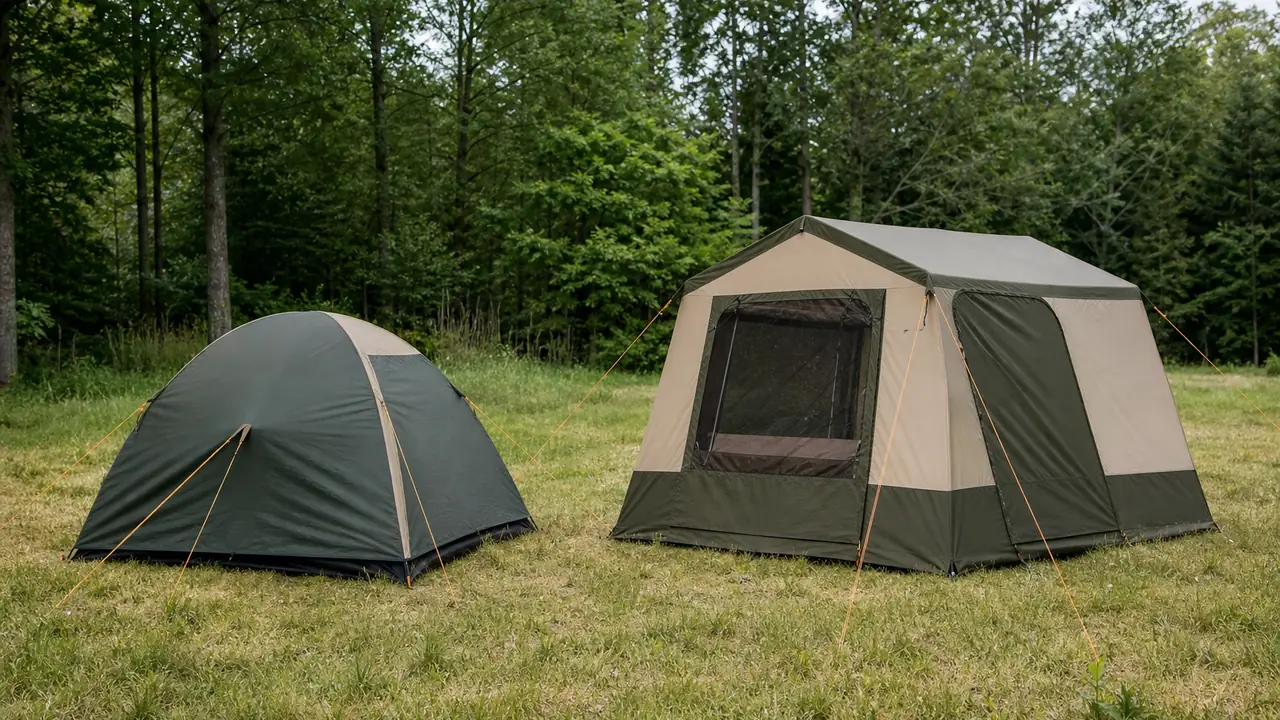
Two structures, two promises
A dome tent is built from flexible poles that cross over a freestanding inner tent. The poles bend into arches, the arches share the load, and the result is a low, rounded shape that pitches on almost any ground. A cabin tent uses near-vertical walls on a steel or fiberglass frame, so the roof stays high from wall to wall and adults can stand up inside. The dome promises a forgiving pitch and a compact pack; the cabin promises living space.
Both belong in a camping tents range, and many brands sell both. The question for a buyer is not which one is better, but which customer each one serves and what each one costs in weight, cartons and after-sales effort. This note compares them on the reference models used across this site, which come from public listings and factory catalogues. Weights are ranges, because sellers of the same model often list different figures.
The reference models side by side
| Item | Dome tent | Cabin tent |
|---|---|---|
| Reference model | 4-person, 274x213x150 cm (9x7 ft) | 10-person, 427x305x218 cm (14x10 ft) |
| Floor area | About 5.9 m2 | About 13 m2 |
| Main fabric | 68D 190T polyester fly, PE floor | 68D polyester, PE floor |
| Poles | 8.5 mm fiberglass | Steel |
| Weight (reference) | About 4-4.5 kg | About 14-15 kg |
| Anchoring supplied | 9 stakes and 2 guy lines | 18 steel stakes on an earlier version of the listing |
| Category range | 2-8 persons | 6-12 persons, room dividers common |
The two reference models are not the same capacity, and that is the honest comparison: cabin tents start where domes start to struggle. A six or eight person dome exists, but at that size the arches get long, the peak stays low near the walls and the cabin shape begins to make more sense.
Wind: shape and anchoring, not a rating
The title says wind, so it is worth being precise about what can and cannot be said. Neither structure has an honest wind speed rating. There is no common test that seller claims are measured against, and the desk does not publish one for any line. What can be compared is shape and anchoring.
A dome is low and rounded. Wind flows over the arches, and the crossing poles spread the load into the stakes at every corner. When the fly is staked out and the guy lines are tensioned, a dome sheds gusts well for its weight. Its weak points are usually fiberglass poles, which can split if the tent is left pitched loosely, and a single pair of guy lines on entry models.
A cabin tent presents a large flat wall to the wind. The steel frame is stiff, but stiffness is not the same as stability: a vertical wall catches more wind, and the load goes straight into the corners and guy lines. That is why cabin tents ship with more stakes and need every guy-out point used. A cabin tent pitched with half its guy lines is the most common source of bent frames and torn pole sleeves in this category.
The anchoring and wind page sets out how the desk writes this into an order.
Space: floor area is not the same as usable room
The dome's sloping walls cost usable space. On the four-person reference model, the floor is about 5.9 m2, but headroom falls quickly from the 150 cm peak toward the walls. Four adults on sleeping pads fit; four adults with bags inside do not. Families usually buy one size up, and listings should say how capacity was measured.
The cabin's near-vertical walls keep the roof high to the edge of the floor. On the ten-person reference model, about 13 m2 of floor sits under a 218 cm peak, so adults can stand, camp beds and furniture fit against the walls, and dividers can split the tent into rooms. That is the cabin's selling point, and it is real. The trade is that ten-person ratings assume sleepers packed edge to edge; a family of five with gear is the more realistic load. The capacity ratings note explains how to state this on a listing.
Setup and packing
A dome pitches with two or three poles through sleeves or clips, then the fly over the top. One person can do it, and the sequence is the same across sizes, which keeps manuals and returns simple. Packed, the four-person reference model is a short bag a buyer can carry with one hand.
A cabin tent has more poles, more joints and a heavier frame. Two people make the pitch easier, and the manual has to show the sequence clearly, because frame parts that look alike but fit only one position are a frequent complaint. At about 14-15 kg, the cabin tent is a car camping product; it is not carried far from the car. Carton size and weight also change freight: tents ship by volume, so a cabin tent takes several times the space of a dome per unit. The pitch sequence note shows how to specify both.
Strengths and limits at a glance
| Factor | Dome tent | Cabin tent |
|---|---|---|
| Shape in wind | Low and rounded, sheds gusts when staked | Tall flat walls, depends on full guy-out |
| Headroom | Peak only, falls toward walls | Standing height across most of the floor |
| Pitch | One person, few poles | Two people easier, more frame parts |
| Carry | Short bag, carried by hand | Car camping only |
| Freight per unit | Small carton | Large, heavy carton |
| Typical return causes | Split fiberglass poles, seam leaks | Bent frame parts, missing parts, sleeve tears |
Water and fabric
Both reference models use 68D polyester with a PE floor, so the fabric does not separate them. In both cases the hydrostatic head figure is a fabric test under ISO 811, not a promise about the finished tent. Taped seams, covered zips, a tub floor with seams above ground and a taut pitch decide whether the inside stays dry. Cabin tents have more seams and more zipped doors and windows, so the seam water check in the inspection plan matters even more. Listings should say waterproof-rated fabric with the hydrostatic head per test report.
Which one to put in a range
- Brand owners building a first range usually anchor on domes in two or three sizes and add one cabin tent as the space option.
- Retailers and distributors want both: domes for volume and price points, a cabin tent for the family shelf and the display pitch.
- DTC brands often lead with a cabin tent, where standing room makes a clear story, but should budget for larger cartons and a clearer manual.
Existing styles with your logo and colours typically start at 300-500 tents per style, with samples in 7-15 days and bulk in 30-45 days, confirmed in writing for each order; see MOQ and lead time. Send the sizes and the customer you are building for through the quote form, or compare the lines on dome tents and cabin tents.