
Where the 400 sq ft figure comes from
The International Fire Code (IFC) is a model code published by the International Code Council. States and cities adopt an edition of it, often with local amendments, and the local fire authority, the authority having jurisdiction (AHJ), enforces it. Chapter 31 of the IFC deals with tents and other membrane structures. In the 2012 and 2015 editions, section 3103.2 requires a permit for temporary tents and membrane structures with an area over 400 sq ft, which is about 37 m2.
Because the IFC is adopted edition by edition and state by state, the same tent can need a permit in one town and not in the next. The figures below show how the rule is commonly written; the version that applies to an event is the one adopted where the event takes place.
The exceptions in the base rule
The 2012 and 2015 text gives two exceptions to the permit requirement:
- Tents used only for recreational camping.
- Tents open on all sides, where each tent is 700 sq ft or less, the total of adjacent tents without a 12 ft fire break is 700 sq ft or less, and a minimum of 12 ft is kept to other structures and tents.
Some states using later editions add a third exception. Connecticut, for example, references text that exempts tents with a total area of 900 sq ft or less, an occupant load under 50, no heating or electrical equipment, and erected for less than 72 hours. North Carolina sets the threshold at 400 sq ft for membrane structures and 800 sq ft for tents, with open-sided tents exempt up to 1,800 sq ft. These are examples, not a map; confirm the adopted text with the local fire authority.
Common tent sizes against the threshold
| Tent | Footprint | Area | Against 400 sq ft |
|---|---|---|---|
| 10x10 ft pop-up canopy | 300x300 cm | 100 sq ft, 9.3 m2 | Below |
| 10x20 ft pop-up canopy | about 300x600 cm | 200 sq ft | Below on its own |
| Four 10x10 canopies side by side | joined row | 400 sq ft combined | At the threshold; adjacency rules matter |
| 5 m bell tent | 500 cm diameter | about 19.6 m2, about 211 sq ft | Below; use as venue may change treatment |
| 20x40 ft pole tent | 1219x610 cm | 800 sq ft, about 74 m2 | Above |
| 6x12 m frame tent | 600x1200 cm | 72 m2, about 775 sq ft | Above |
The row of four canopies is the case event organisers miss. Market streets and trade fairs often place canopies edge to edge, and the code looks at adjacent tents together unless a fire break separates them. A vendor who brings one 10x10 may be part of a group that the organiser has to permit.
What else the code asks for
Beyond the permit itself, the tent chapter sets conditions that affect how tents are specified and installed:
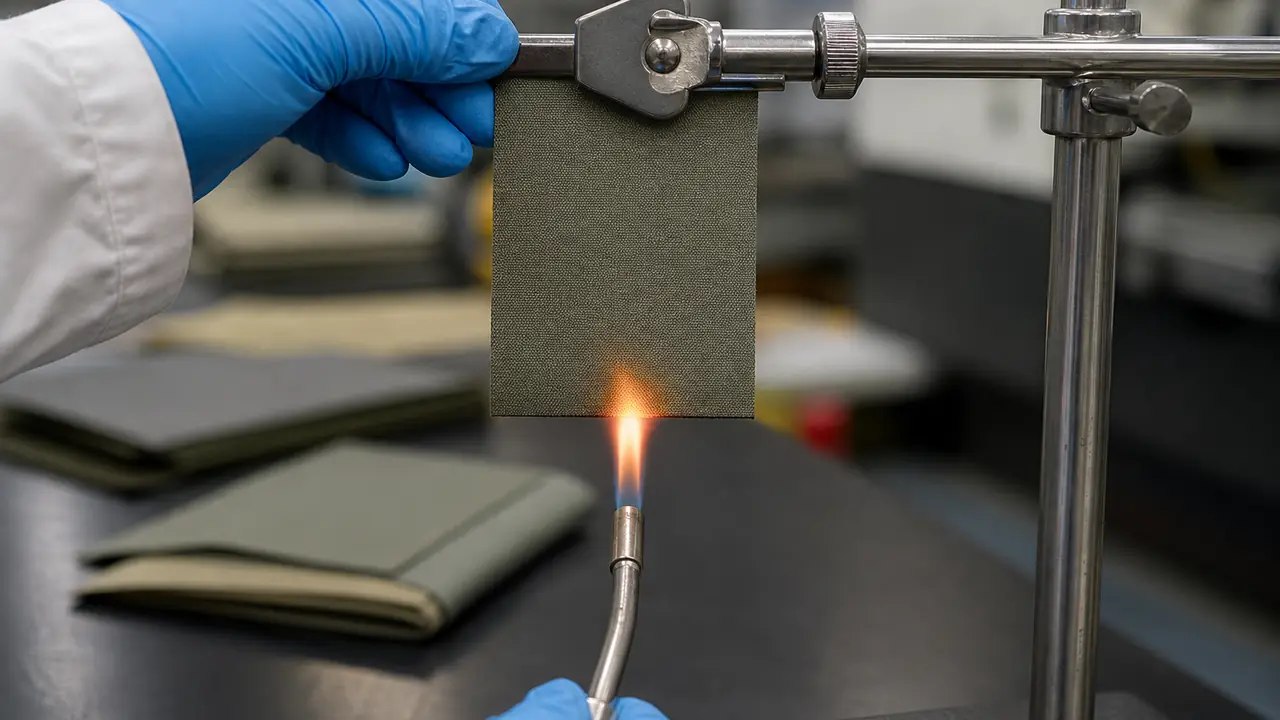
- Flame resistance. IFC section 3104 requires tents and membrane structures to meet NFPA 701 Test Method 2. The permit office usually asks for the documents; see NFPA 701 for event tents.
- Site plans. Tents with an occupant load of 50 or more usually need a site and floor plan with the permit application.
- Separation. The 2012 IFC (3103.8.2) calls for 20 ft between a tent and lot lines, buildings, other tents, parked vehicles and internal combustion engines, with conditions.
- Anchoring and stability. The structure must be held down against wind. Suppliers provide the anchoring kit and instructions; the installer applies them to the site.
NFPA 102 also covers tents, in its chapter 8, including structural loads and flame spread performance, and some jurisdictions use it alongside the IFC.
Europe and the UK
In the EU, temporary tents with a floor area over 50 m2, or combinations that add up to more than 50 m2, fall under EN 13782, which covers design, calculation, manufacture, installation and maintenance, including checks against overturning, sliding and uplift. In the UK, marquee fabrics are commonly specified to BS 7837 for flame resistance. Event permits in both regions are handled by local authorities, with their own forms and inspections.
What a supplier provides, and what it cannot
| Supplier and desk | Event organiser or rental company |
|---|---|
| Flame resistance reports per fabric, issued to the partner factory or brand per order | Permit application to the local fire authority |
| Sewn-in labels with test names and, for California, CSFM number | Site plan, occupant load, exits and separation |
| Dimensions, area and drawings of each tent | Choice of site and layout of adjacent tents |
| Anchoring kit: stakes, guy lines, leg weight points, instructions | Installation, ballast on site, wind monitoring and take-down |
Why permits do not belong on a listing
Product pages sometimes describe a canopy as permit-ready or fire code approved. Neither phrase holds up. A permit depends on the site, the layout, the occupant load, the use of heaters, cooking or electrics, and the edition of the code adopted locally, none of which the seller controls. What a listing can say accurately is the area of the tent, the fabric and the test it was tested to per report, and the anchoring kit included. That gives the event organiser what the permit office will ask for without suggesting an approval the product cannot carry. The same wording discipline applies to sales sheets for rental companies and to catalogue copy for distributors.
Practical steps for rental fleets and event buyers
- List each tent size you will deploy and its area in sq ft and m2.
- Decide whether walls will be used; enclosed tents change both the exceptions and the flame resistance documents.
- Collect NFPA 701 or CSFM documents for every top, wall and banner fabric.
- Keep a document pack per tent model: drawing, area, report copies, label photo, anchoring instructions.
- Ask the local fire authority early for each new venue.
The desk prepares the supplier side of that pack for each order. For fleet planning see event rental and projects; for line options see party and event tents; to start, send your size list through the quote form. None of this is legal advice: confirm with your local fire authority.