
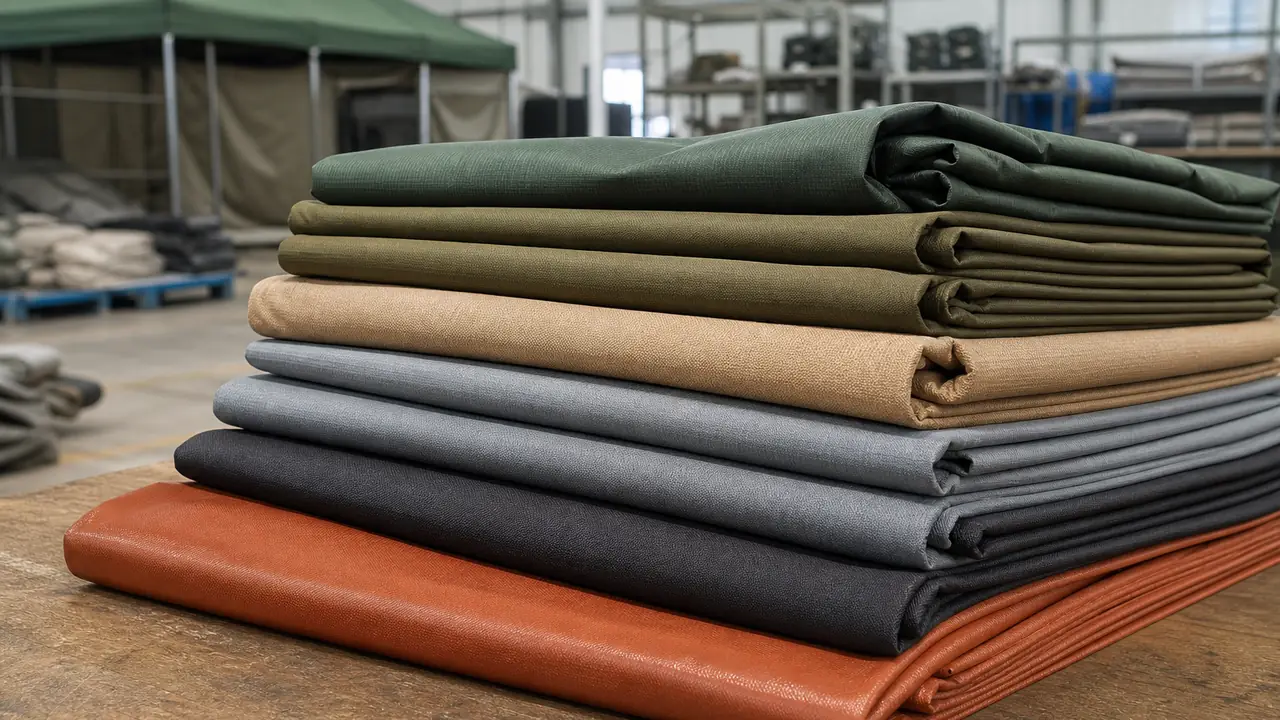
Two very different materials
PVC-coated polyester, often called vinyl, is a woven polyester base fabric coated on both sides with PVC. It is the standard cover for commercial pole and frame party tents. Across the category commercial PVC runs from about 500 to 650 gsm. The 20x40 ft pole tent reference model from public listings uses 16 oz vinyl, and a common European 6x12 m frame tent configuration uses 550 g/m2 PVC on 50 mm galvanised steel tube.
PE covers are woven polyethylene tape laminated with a PE film, the same family of material as a utility tarpaulin. They are light, inexpensive and common on entry-level party tents and garden gazebos with thin steel frames. They are specified by weight per square metre on the supplier's sheet, and figures vary widely between listings.
The materials side by side
| Property | PVC-coated polyester | Woven PE |
|---|---|---|
| Typical weight | 500-650 gsm; 16 oz vinyl on the pole tent reference | Much lighter; per spec sheet |
| Typical buyer | Rental companies, event venues, project buyers | Consumers, occasional private use |
| Joining | High-frequency or hot-air welded seams | Sewn or heat-bonded seams |
| Fire test documents | Flame-resistant grades tested to NFPA 701, CSFM registration, BS 7837 per report | Flame-resistant grades less common; confirm per report |
| Wear in repeated rental use | Built for repeated pitching, cleaning and repair | Cracks and tears sooner under UV and handling |
| Repair | Patchable by welding | Usually replaced |
| Packed weight and volume | Heavy; covers handled by crew | Light; one or two people can handle |
These are general tendencies across the category, not measured values for an order.
Weight and handling
PVC covers are heavy. For a 20x40 ft tent of about 74 m2 the top alone is a crew lift, and listings for the same tent quote conflicting total weights, so the desk does not publish a single figure; weight is recorded from the approved sample and the packing list. That weight is part of the product: it drapes, holds tension on the frame and resists flapping. PE covers are light enough for a household to pitch a garden party tent, which is the point of them, but the same lightness makes them noisy and quick to wear in wind.
Service life in rental use
Rental companies measure covers by how many pitches they survive, and the answer depends on handling, cleaning, storage and UV exposure as much as on material. PVC-coated polyester is built for repeated pitching: it can be cleaned, dried, folded and repaired by welding a patch over a tear. PE tends to become brittle and crack under sun and repeated folding, and it is usually replaced rather than repaired. No honest supplier can promise a number of seasons for either material; the desk records the fabric grade and coating weight so a rental fleet can be replenished with matching covers. See building an event rental tent fleet.
Fire test documents
For events this is often the deciding point. Event tents in the US are commonly asked for fabric tested to NFPA 701 or registered with the California State Fire Marshal (CSFM, Title 19), and the International Fire Code generally requires a permit for tents above 400 sq ft, with state and local versions differing. In the EU, temporary structures over 50 m2 fall under EN 13782; in the UK, marquee fabrics are often asked to meet BS 7837. The local fire authority decides what applies to each event.
Flame-resistant PVC grades are standard in the commercial market and are documented per report, often with a label sewn into the cover. Flame-resistant PE options exist but are less common, and an entry PE cover should be assumed untreated unless a report says otherwise. The claim is always flame-resistant fabric tested to NFPA 701 per report, never a broader statement. Reports are issued to partner factories or brands per order and verified by the desk. See NFPA 701 for event tents and tent permits and fire codes.
Seams, windows and accessories
PVC covers are joined by welding, which produces a seam as water resistant as the fabric itself. Inspection should check weld width and peel at sample seams, the grommets or webbing at the valance, and the reinforcement at pole and stake points. Windows on sidewalls use clear PVC sheet, which can stiffen in cold weather and should be folded carefully. Whether a party tent sheds rain depends on the welds, the top tension, the pitch and drainage at the valance, not only on the fabric's hydrostatic head.
Frame and pole tents
Pole tents use tension: the cover is the structure, pulled up by centre poles and staked out with heavy stakes, such as the 16 steel stakes of 3/4 x 30 in on the 20x40 ft reference. Frame tents carry the cover on a rigid frame and need no centre poles. Both use PVC on commercial models; the difference is how the cover is loaded. See party tent frame vs pole tents. Anchoring follows the structure and the surface, with stakes, ballast and a plan to take the tent down in strong wind; the desk does not publish wind ratings.
Storage and cleaning
PVC covers should be cleaned with mild soap, dried fully and stored rolled or loosely folded off the floor; folding sharp creases in the cold and storing damp both shorten life. PE covers should be kept out of sun when not in use. Both belong in the care sheet shipped with every order.
Which to choose
For rental fleets, venues and any event that needs fire documents, PVC-coated polyester is the practical choice. PE suits consumer garden tents sold on price and light weight, where the buyer accepts shorter wear and no fire documentation. Party and event tent quantities are assessed per project and confirmed in writing; see MOQ and lead time, compare options on party and event tents or send the size, cover grade and fire documents needed through the quote form.