
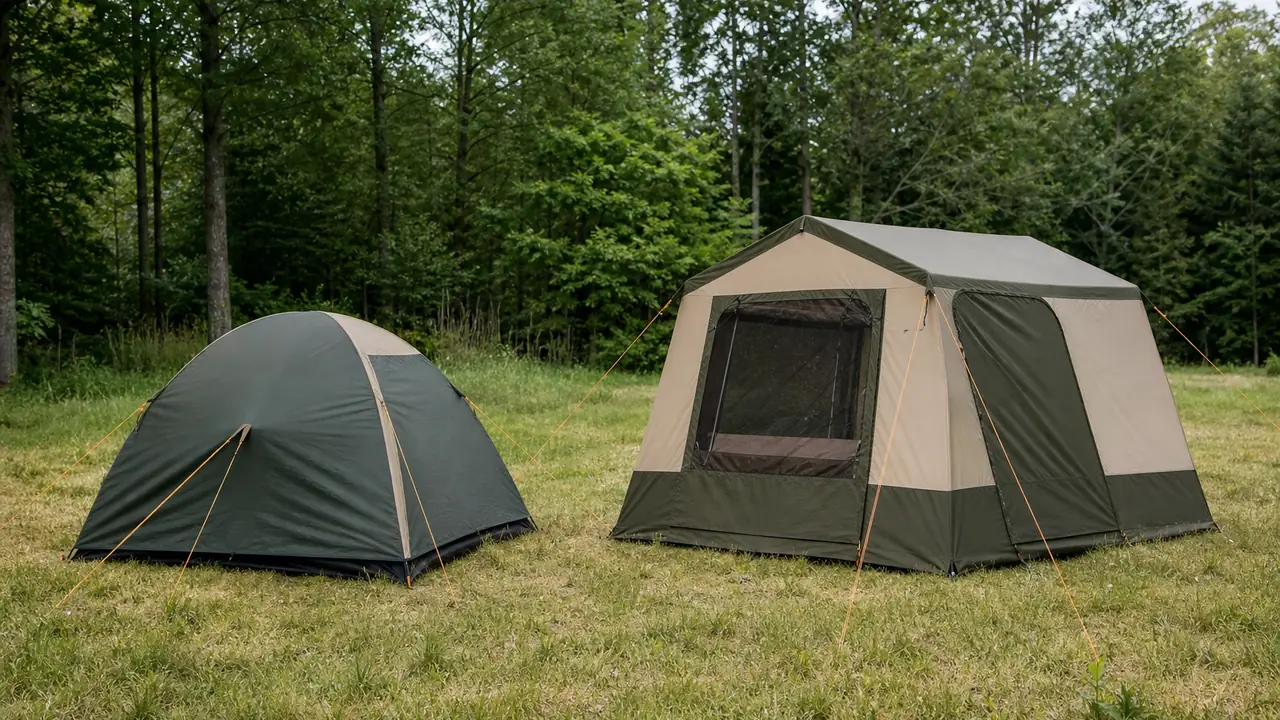
The fabric families
Canvas here means woven cotton or polycotton, a blend of cotton and polyester. It is used on bell tents, safari and glamping tents, some rooftop tents and traditional family tents. Synthetic means polyester and nylon, woven and then coated with PU or silicone, which covers almost every dome, backpacking, instant, air and beach tent. A third group, PVC and PE coated fabrics, covers party tents, floors and travel covers; it is synthetic too, but behaves differently enough to treat separately.
The figures below come from the reference models and category ranges on this site, from public listings and factory catalogues. Fabric weights are stated as published for the fabric, not as measured values for a given order.
Reference specifications
| Fabric | Typical specification | Where it is used |
|---|---|---|
| Cotton canvas | 285-360 gsm; 285 gsm on the 5 m bell tent reference | Bell and glamping tents |
| Polycotton | 285-360 gsm range; 280G on the rooftop tent reference | Bell, glamping and rooftop tents |
| Polyester | 68D/75D, 185T-210T, PU coated; 150D on instant tents | Dome, cabin, instant and air tents |
| Nylon ripstop | 20D-40D, silicone or PU coated | Backpacking tents |
| Oxford polyester | 150D-210D floors; 600D PU on canopy tops | Floors, canopy tops, rooftop bodies |
| PVC | 500-650 gsm commercial; 16 oz vinyl on the party tent reference; 540 gsm PVC bell tent floor | Party tents, floors, travel covers |
Weight and pack size
This is the clearest difference. A 285 gsm canvas weighs far more per square metre than a 68D polyester fly, and canvas tents need heavier poles to carry it. The five-metre bell tent reference model weighs about 35 kg and packs to about 96x33x33 cm; a four-person polyester dome weighs about 4-4.5 kg. The sizes differ, but even per square metre of floor, canvas is a product for vehicles, sites and platforms, not for carrying. Freight follows: canvas tents fill cartons fast and cost more to ship per unit.
Comfort: condensation, heat and noise
Canvas breathes. Water vapour from sleepers passes through the weave, so condensation on the inside of the roof is much lower than on coated synthetic fabric, and the thicker fabric shades better and stays cooler in sun. It is also quieter in wind. These are the reasons glamping operators and many family campers choose it, and they are real.
Coated synthetics do not breathe. A single-skin synthetic tent collects condensation on cold nights, which is why double-wall designs with a breathable inner and good ventilation exist. Synthetic tents heat up faster in direct sun, and nylon and polyester flap and rustle in wind. Design work on vents and inner tents narrows the gap, but does not close it. The ventilation and condensation note covers the details.
Water and drying
Synthetic fabric is waterproof-rated through its coating, with a hydrostatic head measured under ISO 811; seams are taped and the fabric sheds water from the first use. It also dries quickly, so a wet tent can be packed and dried later with less risk. Canvas resists water through its weave and a water-repellent finish; cotton fibres swell when wet and tighten the weave, which is why new canvas tents are usually pitched and wetted once before first use. Canvas holds water and takes far longer to dry. In both cases, the finished tent's performance depends on seams, zips and pitch, and listings should say waterproof-rated fabric with the hydrostatic head per test report where a test exists.
Care, mildew and UV
Canvas packed damp grows mildew quickly, and mildew stains and weakens cotton. That is the main reason canvas tents are replaced early. The manual must say, plainly, that the tent is dried fully before storage, and brands selling into wet climates should consider polycotton, which dries faster and resists mildew better than pure cotton. Synthetic fabrics resist mildew on the fabric itself, though dirty or damp synthetic tents can still grow mould on coatings and seams.
UV affects both. Nylon loses strength in sunlight faster than polyester, which is one reason polyester dominates family tents left pitched for days. Canvas fades and weakens over seasons of sun. Any UV protection claim needs a test report: UPF-rated fabric per AATCC 183 in the US, AS 4174 UVE in Australia and New Zealand. The mold and mildew note sets out the care routine.
Strengths and limits at a glance
| Factor | Canvas and polycotton | Polyester and nylon |
|---|---|---|
| Weight | Heavy, needs heavier poles | Light, carried or packed small |
| Condensation | Low, fabric breathes | Higher, needs vents and inner tent |
| Heat in sun | Cooler | Warms faster |
| Drying | Slow, mildew risk if packed damp | Fast |
| First use | Usually weathered once | Ready from the bag |
| Freight per unit | High | Low |
| Best climates | Dry, hot or cold sites with vehicle access | Wet, mobile and lightweight use |
Fire rules and coatings
Flame resistance depends on the market and use, not the fabric family. Event and commercial tents in the US often need NFPA 701 testing or California CSFM registration, and canvas for those uses is supplied as flame-resistant fabric tested per report. Small camping tents follow CPAI-84 or ASTM F3431 where a buyer or state requires it. Chemical rules for coatings and water-repellent finishes are changing, and the EU PFHxA restriction applies to non-clothing textiles from 10 October 2027, so ask for a fluorine-free DWR option verified by test report where the market requires it. See tent fabrics and coatings.
Choosing for a range
- Glamping operators and event rental choose canvas or polycotton for comfort and appearance; see bell glamping tents.
- Brand owners and retailers selling family and lightweight tents stay with polyester and nylon for weight, drying and price.
- DTC brands with a premium family story sometimes add one polycotton tent and should plan the care messaging carefully.
Existing styles with your logo and colours typically start at 300-500 tents per style, with samples in 7-15 days and bulk in 30-45 days, confirmed in writing; see MOQ and lead time. Send the fabric and climate you are building for through the quote form.