
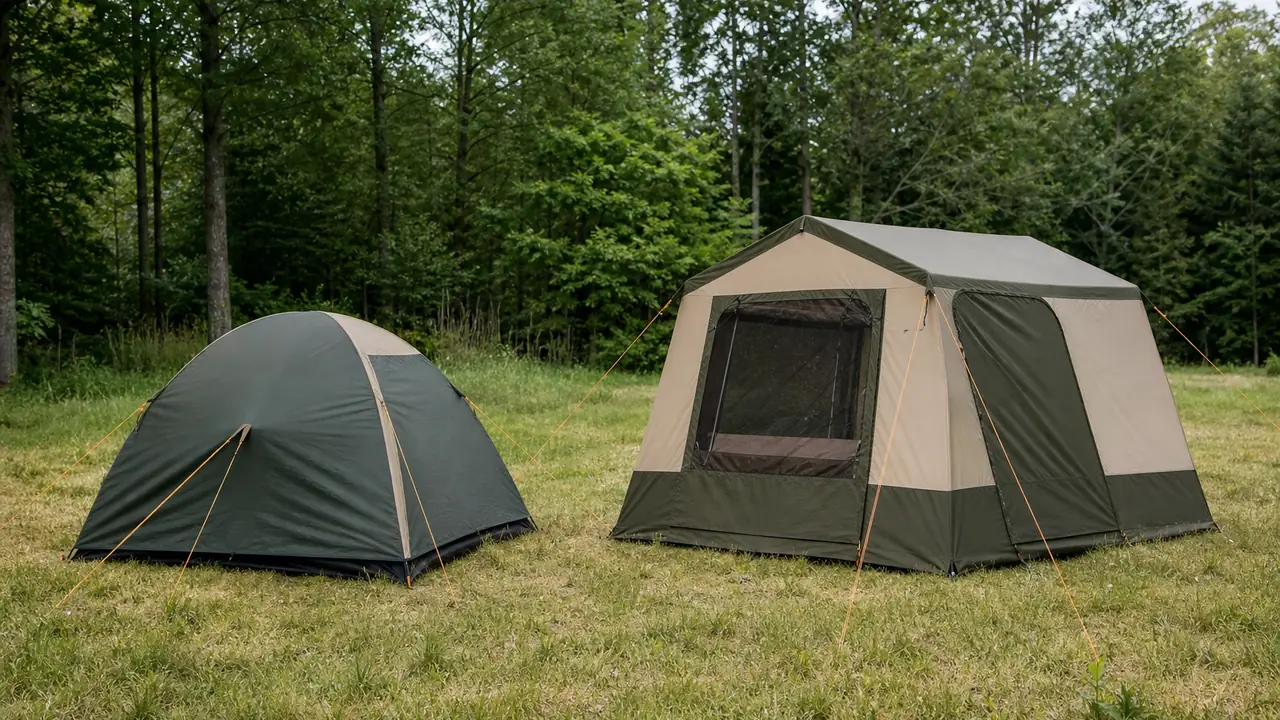
How each structure stands
A pole tent stands on flexible or rigid poles: fiberglass or aluminium arches on a dome, a steel frame on a cabin tent. The poles carry the load, and the fabric is tensioned over them. An air tent replaces the poles with inflatable beams. Each beam is a TPU bladder inside a fabric sleeve, inflated with a hand or electric pump through a valve. Once the beams are at pressure, the tent stands on its own and is then staked and guyed like any other tent.
Both structures appear in family ranges, so the fair comparison is between an air tent and a pole tent of similar size, not between an air tent and a two-person dome. This note uses the reference models on the inflatable air tents and cabin tents pages, both from public listings and factory catalogues, with weights as ranges or listed figures rather than measured values.
The reference models side by side
| Item | Air tent | Pole tent (cabin) |
|---|---|---|
| Reference model | 5-person, 465x320x195 cm | 10-person, 427x305x218 cm |
| Floor area | About 14.9 m2 | About 13 m2 |
| Fabric | 70D polyester | 68D polyester, PE floor |
| Structure | TPU bladders in fabric sleeves | Steel poles |
| Weight (reference) | About 16 kg | About 14-15 kg |
| Smaller variant | Factory catalogue model 390x250x150 cm, 210T PU, about 9.6 kg | Dome alternative: 4-person, about 4-4.5 kg |
| Category range | 2-8 persons, 2-6 beams by model | 6-12 persons (cabin) |
Two points follow. The air tent's person rating is lower for a similar floor area, because air tent floors usually include a large porch or living area outside the sleeping compartments. And the weight is comparable to a steel cabin frame, not lighter: inflatable beams remove the poles but add bladders, sleeves, valves and often a heavier fabric. Air tents are a car camping product, like cabin tents.
Setup: the main selling point
An air tent pitches in a different sequence. The user pegs out the corners, connects the pump, inflates each beam to the stated pressure and then tensions the guy lines. There are no poles to sort, no sleeves to thread and the beams cannot be fitted in the wrong place. One adult can pitch a large family air tent that would otherwise need two people with a pole frame. That is a real advantage and the reason the line exists.
The pump is part of the product. Hand pumps are cheaper and reliable; electric pumps are faster but add a battery or a vehicle socket and another component to fail. The spec sheet should fix the pump type, the valve type and the beam pressure stated in the manual, because over-inflation and under-inflation both cause complaints. The pole tent's pitch is slower, but every step is visible and familiar to experienced campers. The air beam structure note covers bladders, valves and pumps in detail.
Repairs: where the two differ most
A pole tent with a broken section can be splinted in the field and repaired later with a section of the same diameter. A steel cabin frame that bends can often be straightened or replaced part by part. Spare parts are simple, generic and cheap to ship.
An air tent fails differently. A punctured bladder or a leaking valve means the beam slowly loses pressure, often overnight. A patch kit for TPU bladders, a spare valve and clear repair instructions belong in the box, and the brand should hold spare bladders for each beam length in after-sales stock. Bladder sizes vary by model, so the order file must record beam count and length to allow reordering. The upside is that an air beam does not snap; a pole tent's most common return, a split or bent pole, simply does not occur.
Strengths and limits at a glance
| Factor | Air tent | Pole tent |
|---|---|---|
| Pitch | One person, pump and pressure | Poles and sleeves, often two people at family size |
| Weight | Comparable to a steel cabin, heavier than a dome | Light with dome poles, heavy with steel frames |
| Typical failure | Slow pressure loss, valve leaks | Split fiberglass, bent steel, sleeve tears |
| Field repair | Patch kit, spare valve | Pole splint, replacement section |
| Spare parts | Model-specific bladders and valves | Generic sections by diameter |
| Extra components | Pump, valves, bladders | Pole bag, hubs or connectors |
Weather: same rules, different behaviour
Neither type has an honest wind speed rating, and the desk does not publish one. Air beams flex under gusts and return to shape, which users often notice; pole frames stay rigid until they bend or break. Both need every stake and guy line in place and should be taken down in strong wind. The anchoring and wind page shows how the anchoring kit is written into an order.
Water works the same way on both. The hydrostatic head figure describes the fabric under ISO 811, and seams, zips and pitch decide whether the inside stays dry. Air tents add sleeve seams along each beam, which deserve a water spray check during inspection. Listings should say waterproof-rated fabric with the hydrostatic head per test report.
Which one to put in a range
- DTC brands often lead with an air tent, where a one-person pitch makes a strong story, but should budget for repair kits, spare bladders and a clear manual.
- Retailers and distributors usually carry a pole dome series for price points and one or two air tents at the top of the family shelf.
- Brand owners moving from domes into larger tents can choose either; the decision rests on whether the brand is ready to run model-specific after-sales.
Existing styles with your logo and colours typically start at 300-500 tents per style, with samples in 7-15 days and bulk in 30-45 days, confirmed in writing per order; see MOQ and lead time. Send the size, beam count and pump preference through the quote form.