
Two materials, two kinds of buyer
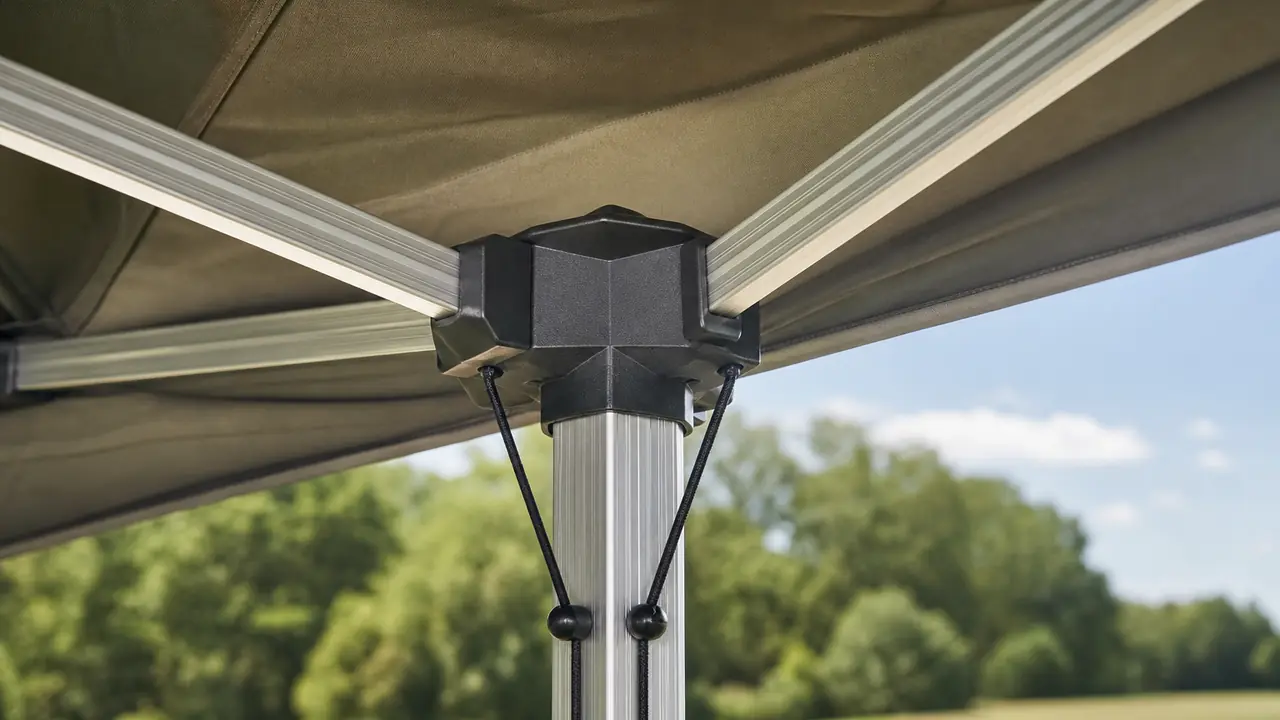
Pop-up canopies are made in steel and in aluminium, and the choice tracks the buyer more than the size. Steel frames, usually square tube with a powder coating, carry the consumer end of the market: garden shade, backyard parties, an occasional school fair. Aluminium frames, usually hexagonal extrusions, carry the commercial end: exhibitors, market vendors, promotional programs and rental fleets. Both are made in the Linhai outdoor leisure cluster in Taizhou and in other canopy regions, and the desk shortlists partner factories for each.
The decision is not simply cheap versus good. A steel frame is a sensible product for a buyer who sets it up a few times a year. An aluminium frame is the right product for a buyer who sets it up every week. The mistake is selling one into the other's use.
Weight
Steel is denser than aluminium, so for a frame of similar size and stiffness a steel frame is heavier. That matters for anyone who carries the canopy from a car park to a pitch, loads it into a van alone or sets it up several times a week. The commercial aluminium reference on the pop-up canopy tents page, a 10x10 ft frame with 40 mm hex legs, weighs about 16 kg for the frame and about 20-24 kg as a complete kit. Steel frames of the same footprint vary widely by tube size and wall, so their weight should be taken from the supplier's spec sheet for the exact model and printed honestly on the listing.
Weight also cuts the other way. A heavier frame is harder to lift by wind, but frame weight is no substitute for anchoring, and no canopy should be left standing in strong wind whatever it weighs.
Rust and corrosion
Steel rusts when its coating is broken. On a folding canopy that happens at predictable places: pin holes drilled through the leg, rivet points on the trusses, the inside of telescoping legs where coating wears as they slide, and the feet where they meet wet ground. Powder coating protects the surface well until it is chipped, and then rust spreads under it. Galvanised steel resists better and is common on larger frame tents, such as the 50 mm galvanised steel tube on European frame party tents described in party tent frame and pole types.
Aluminium does not rust in the same way; it forms a thin oxide layer that protects the metal. It can still corrode, especially in salt air, and an aluminium frame often carries steel parts: pins, springs, bolts and rivets. Where steel and aluminium touch in wet conditions, corrosion can start at the joint. Good frames use stainless or coated steel fittings and isolate them where possible. That is why the fittings belong on the spec sheet as much as the leg.
Storage decides much of the outcome for both materials. A canopy folded away wet and left in its bag holds moisture against the frame for days; steel rusts at every chip, aluminium fittings corrode and the top grows mildew. The manual and the listing should tell users to dry the frame and top before storage, and rental companies should build drying time into their returns process. During inspection the desk checks coating coverage at holes and joints, and on aluminium frames the condition and material of every steel fitting, against the approved sample.
The two side by side
| Factor | Steel frame | Aluminium frame |
|---|---|---|
| Typical profile | Square tube, powder-coated | 40 mm hex (commercial) or 50 mm hex (heavy duty) |
| Weight | Heavier for similar size | Lighter; commercial reference frame about 16 kg |
| Rust | Rusts where coating is chipped or worn | No red rust; watch steel fittings and salt air |
| Cost tier | Entry | Mid to upper |
| Typical use | Garden, backyard, occasional events | Exhibitors, vendors, promo programs, rental fleets |
| Service life drivers | Coating, dry storage, joint wear | Wall thickness, joints, fittings |
Price, without a price
The desk does not publish prices, but the cost drivers are clear. Steel tube costs less per frame than aluminium extrusion, and that is the main reason consumer canopies use it. Aluminium frames cost more for material and for the extrusion profile, and heavy-duty 50 mm frames more again. The joints matter as much: metal joints cost more than plastic ones on either material. Freight follows weight and carton volume; the commercial reference ships in an outer carton of about 158x27x27 cm per set, and freight is calculated from the actual carton for each order. The useful comparison for a buyer is cost per set-up over the expected life of the frame, not cost per unit. The note on tent cost factors covers the wider picture.
Which to choose
- Consumer and seasonal retail: steel frames are a fair product if the listing is honest about weight and use, and the manual tells users to dry and store the frame.
- Exhibitors and market vendors: aluminium, usually 40 mm hex with a stated leg wall; weekly set-ups wear out steel joints and coatings.
- Promotional distributors: aluminium for branded programs where the canopy represents the client brand at events.
- Rental fleets: aluminium, often 50 mm hex, with spare legs, trusses and joints ordered alongside.
- Coastal and beach use: aluminium with stainless or coated fittings, rinsed after use.
What to put in the order
For steel: tube size and wall, coating type, treatment at holes, joint material and feet. For aluminium: leg profile, wall thickness for outer and inner legs and trusses, alloy, joint material, fittings and feet. For both: the anchoring kit, with one stake and one guy line per leg on the reference kit and leg weights for hard surfaces at about 40 lb (18 kg) per leg as an industry convention. The canopy leg wall thickness note explains how to measure walls, and canopy frame rust and joints lists the inspection points.
10x10 canopies and printed kits typically start at 20-50 sets per style, confirmed in writing for each order; see MOQ and lead time, or send the frame choice through the quote form.