
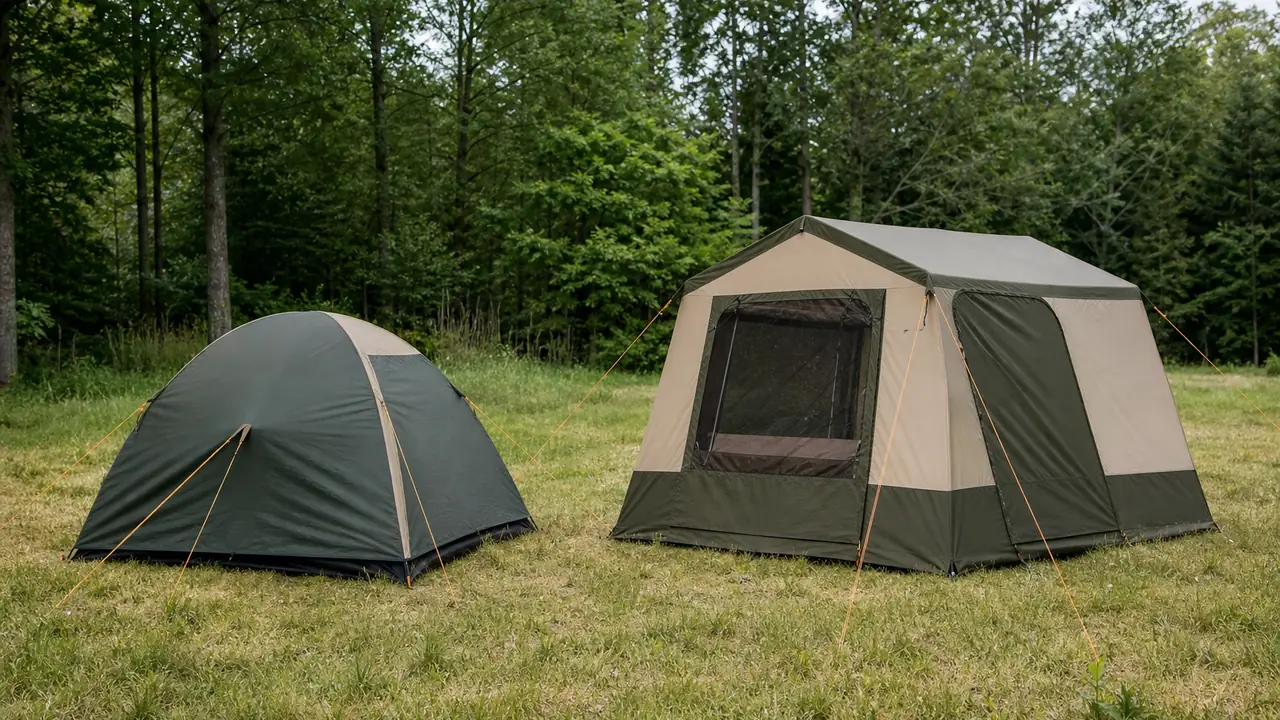
What each product is
A rooftop tent mounts on the roof bars of a vehicle. In the soft-shell designs that make up most of the category, a hinged base folds open over the side or rear of the vehicle, aluminium poles raise a fabric canopy and a ladder reaches the ground. A mattress lives inside the closed tent, and a PVC travel cover protects it on the road. A ground tent is any tent pitched on the ground beside the vehicle: a dome, a cabin tent, an instant tent or an air tent.
For overlanding buyers the question is not which product is more capable, but which one fits the vehicle, the trip and the budget for freight and after-sales. Vehicle tents such as rear and truck bed tents sit between the two and are treated as options on the rooftop and car tents line.
The reference models side by side
| Item | Soft-shell rooftop tent | Ground dome tent |
|---|---|---|
| Reference model | 3-person, open 241x140x130 cm | 4-person, 274x213x150 cm |
| Closed or packed size | About 140x124x30 cm | Short carry bag |
| Fabric | 280G polycotton or 600D oxford body, 420D fly, 1000D PVC travel cover | 68D 190T polyester fly, PE floor |
| Structure | Hinged base, aluminium poles, aluminium ladder | 8.5 mm fiberglass poles |
| Weight (reference) | About 48 kg | About 4-4.5 kg |
| Load | Static load rating per supplier spec, limited by the roof bars' rated load | Not applicable |
The weight gap is the headline. The rooftop reference model weighs about ten times the ground dome, and it rides on the roof of the vehicle for the whole trip. That weight decides whether a vehicle can carry it at all, how it changes the vehicle's handling and how much the tent costs to ship.
Load limits: the rooftop tent's first question
A rooftop tent's static load rating is a figure from the supplier's specification, and it is always limited by the rated load of the vehicle's roof bars, which is usually lower and is set by the vehicle and bar makers. A listing should say exactly that: static load rating per supplier spec, limited by the roof bars' rated load. It should not imply that any vehicle can carry the tent or that the sleeping load is covered by the dynamic roof load figure. Ground tents have none of this complexity.
Setup and daily use
The rooftop tent's selling point is speed once the vehicle is parked: remove the travel cover, unfold the base, extend the ladder, and the tent opens with the mattress already inside. There is no hunt for flat ground, no stakes in rocky soil and the sleeper is off wet or uneven ground. On multi-night trips where camp moves every day, many users value this above everything else.
The limits are just as real. Camp is tied to the vehicle: to drive anywhere, the tent folds away. Climbing a ladder at night is harder for some users, and the tent sits higher in the wind, so the fly and guy points need care. A ground tent takes longer to pitch, but it can stay pitched while the vehicle leaves, fits more people at lower weight and works on any vehicle. The overlanding and winter use page covers the setting.
Freight, cartons and after-sales
A rooftop tent ships in a large, heavy carton, often on a pallet, and its freight cost per unit is far above that of a ground tent, which packs into a carton a fraction of the size. Damage in transit is more expensive too: a crushed hinge or a cracked base is a costly return. The carton, the corner protection and a drop test to ISTA 1A where the format allows belong in the order. After-sales needs spare hinges, ladder parts, poles and travel cover zips. A ground tent's spare parts list is a few pole sections and stakes.
Strengths and limits at a glance
| Factor | Rooftop tent | Ground tent |
|---|---|---|
| Setup at camp | Fast, mattress stays inside | Slower, needs suitable ground |
| Weight | About 48 kg on the roof | About 4-4.5 kg (dome reference) |
| Vehicle fit | Limited by roof bar rated load | Any vehicle |
| Camp independence | Tied to the vehicle | Stays while the vehicle leaves |
| Capacity per kg | Low | High |
| Freight and damage risk | High, pallet or large carton | Low, small carton |
| Spare parts | Hinges, ladder, poles, cover zips | Pole sections, stakes |
Fabric, water and condensation
The rooftop reference model uses 280G polycotton or 600D oxford for the body, with a 420D fly. Polycotton breathes better and reduces condensation inside a closed tent with a mattress, but it is heavier and needs drying before storage to prevent mildew. Oxford is lighter and dries faster. In both cases hydrostatic head is a fabric test under ISO 811, and seams, zips and the fit of the fly decide whether the inside stays dry. The travel cover must close fully and its zip is a known weak point. Ground tents follow the same rules with lighter fabrics.
Where the partner factories are
There is no single rooftop tent cluster in China. Partner factories are spread across Shandong, Zhejiang and Guangdong, and the desk shortlists by construction: soft or hard shell, base material and ladder supply. Ground tents come from the established camping clusters in Jinhua and Ningbo in Zhejiang and Yangzhou in Jiangsu. Mixed orders can be consolidated into one shipment with one inspection plan.
Which one to stock
- DTC brands with a vehicle or overlanding story often lead with a rooftop tent, and should plan freight, cartons and spare parts from the first order.
- Distributors and retailers usually pair one or two rooftop models with a ground tent series, which carries volume.
- Brand owners new to vehicle tents can test demand with a rear or truck bed tent before committing to a rooftop line.
Quantities for rooftop tents are assessed per order and confirmed in writing; samples typically take 7-15 days and bulk 30-45 days, longer for custom builds. See MOQ and lead time and send your vehicle fit, capacity and fabric preference through the quote form.