
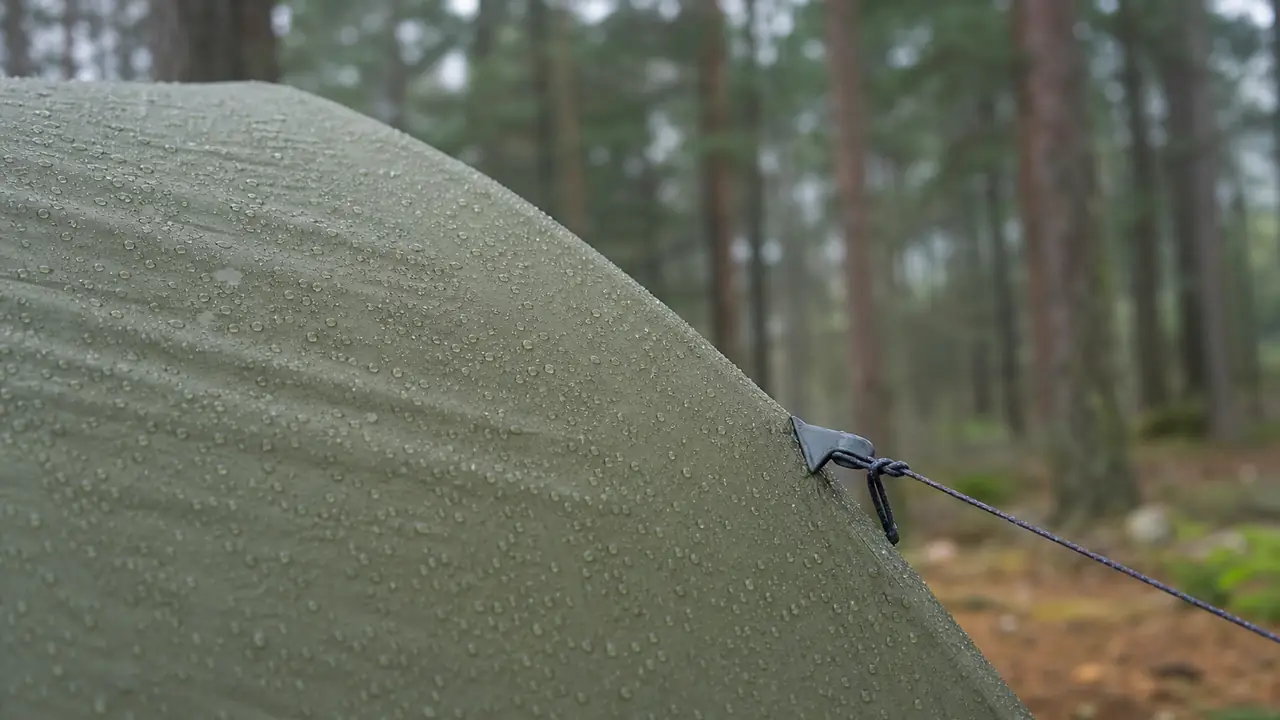
A different product for a different season
Most of the tent trade is built around spring and summer. Cold-weather tents run the other way: they sell in autumn and winter, into northern markets where lakes freeze and snow lies for months. The buyers are specialist retailers, outdoor distributors and brands with a winter line. For them the product has to pitch on ice, hold heat, manage moisture and stay anchored on a surface where ordinary stakes cannot be used.
The main product is the ice fishing tent, usually a hub shelter. Alongside it sit winter camping tents and canvas tents with stove jacks for overlanding and cold-weather camps; see overlanding and winter use.
The hub ice fishing tent
A hub shelter uses fiberglass poles joined by metal hubs at the centre of each wall. When the user pulls the hubs outward, the walls snap into shape and the shelter stands in minutes. That speed matters on a frozen lake in the cold. A three-person reference model from public listings measures 178x178 cm on the ice with a 203 cm peak (70x70x80 in), giving about 3.2 m2 of fishing area. It uses 300D fabric, with a cotton insulation layer on the insulated version, metal hubs and fiberglass poles, weighs about 10-12 kg and ships with 6 ice anchors. The category runs from one to eight people, insulated or not. See ice fishing tents and hub ice tents vs flip-over shelters.
Insulation and fabric
Insulated ice shelters are built in layers: an outer 300D shell, an insulating layer, and an inner lining. The insulation slows heat loss and reduces condensation on the inside of the walls. Non-insulated shelters are lighter, pack smaller and suit milder days or users who move often. Both versions benefit from a dark outer colour on at least some panels, which absorbs sunlight, and windows positioned for light without large heat loss.
| Feature | Insulated | Non-insulated |
|---|---|---|
| Wall build | 300D shell, insulation layer, lining | Single 300D shell |
| Weight and pack size | Heavier and bulkier; reference about 10-12 kg | Lighter and smaller |
| Condensation | Less on inner walls | More frost and drip inside |
| Typical buyer | Long sessions, colder regions | Mobile anglers, milder days |
| Spec points | Insulation type, lining, seam finish | Fabric coating, wind skirt |
Cold also affects materials. Some coatings stiffen and crack at low temperatures, zips can freeze, and fiberglass poles become more brittle. Ask the partner factory which fabric coating and zip size it uses for cold products, and include a cold-handling check at the sample stage, such as folding and unfolding the shelter after it has been left outside in winter conditions.
Ventilation and heaters
Ice anglers often use portable heaters inside their shelters. That makes ventilation a safety item, not a comfort feature. A shelter should have vents high and low that the user can open, and the instructions should state plainly that heaters must be used only according to the heater maker's instructions, with ventilation open, and never while sleeping. A carbon monoxide alarm is good practice. The desk recommends brands put this warning on a sewn-in label as well as in the manual. Vents also reduce frost build-up on the inner walls, which drips back down as the shelter warms. Floors matter too: many ice shelters are floorless so anglers can drill through the ice inside, while winter camping tents need a floor that stays flexible in the cold and a groundsheet to protect it from sharp ice and grit.
Anchoring on ice and snow
Ordinary stakes cannot be driven into ice, so ice shelters use screw-in ice anchors, often turned with a drill adapter. The reference model ships with 6. Guy lines tie off to the anchors on the windward side. A snow skirt, a flap of fabric around the base, can be covered with snow or slush to seal the gap under the walls and add hold. On snow-covered ground away from the ice, winter tents use wide snow stakes or buried anchors such as bags filled with snow.
No wind figure is given for ice shelters, any more than for other tents. The anchoring plan is what can be specified: anchor count and type, guy lines, a snow skirt, and instructions to pack up when conditions worsen. Ice safety is a separate matter for the user and local authorities; listings should tell users to follow local guidance on ice conditions. See anchoring and wind and tents in wind.
Winter camping tents and canvas with stoves
Beyond ice shelters, cold-weather camping uses two kinds of tents. Four-season synthetic tents have stronger pole layouts, more guy points, snow flaps and fewer mesh panels than summer tents; see three-season vs four-season tents. Canvas bell tents in 285-360 gsm cotton or polycotton can be fitted with a stove jack, a heat-resistant collar where a stove pipe passes through the wall or roof. Stove jacks, stoves and their use carry fire risk, and buyers should confirm with their test lab which fabric tests their market expects, and print clear stove instructions.
Timing the season
Ice and winter products follow a different calendar from summer tents. Retailers want stock on the shelf in autumn, before the first freeze, which shifts production and shipping away from the spring peak when most camping orders run. Samples typically take 7-15 days and bulk production 30-45 days, with custom builds 45-60 days, plus sea freight of about 15-25 days to the US West Coast or about 30-45 days to Europe. Working back from the shelf date, cold-weather orders are best placed in late spring or early summer. Existing styles with your branding typically start at 300-500 units per style, confirmed in writing per order; see MOQ and lead time.
Spec checklist
- Hub count, pole material and size, and the footprint and peak height.
- Insulated or non-insulated walls, with fabric and insulation details.
- Vents, windows, doors and zip sizes suited to gloved hands.
- Ice anchors, guy lines and snow skirt.
- Heater and ventilation warnings on a sewn-in label and in the manual.
- Carry bag, packed size and carton dimensions for the winter shipping window.
Send the checklist with your target market and shelf date through the quote form.