
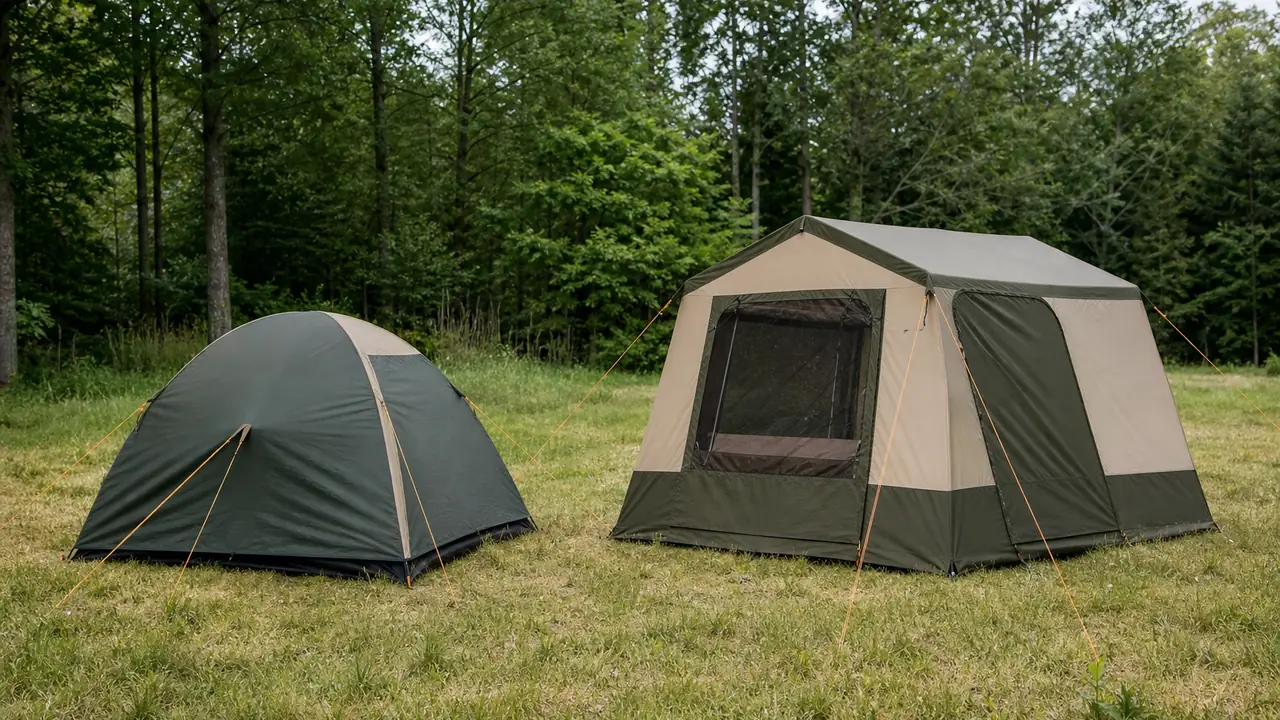
Two shapes, two kinds of site
A bell tent is a round canvas tent on a single steel centre pole, with an A-frame pole at the door and a low wall around the edge. It is staked and guyed to the ground, pitched by a small crew without tools and packed into a bag at the end of the season. A safari tent is a rectangular canvas tent with near-vertical walls on a steel or timber frame, usually set on a raised deck, often with a separate fly roof and sometimes with an en-suite area at the back. It is typically installed for a season or longer.
Many sites use both: bell tents for flexible capacity and events, safari tents for the premium units. This note compares them for operators. One caution on the data: bell tents are a reference line on this site with a full specification from public listings; safari tents are built to a wide range of sizes and frames, and we have no single reliable reference model, so their figures are quoted per project rather than stated here.
The bell tent reference model
The reference bell tent is five metres in diameter with a 300 cm centre pole and a 60 cm wall. It uses 285 gsm cotton canvas and a 540 gsm PVC tub floor, a 31 mm steel centre pole and an A-frame door pole, and weighs about 35 kg, packing to about 96x33x33 cm. It ships with 12 guy lines and about 24 stakes, and with the guy lines fully out it needs a circle of about 7 m. A five-metre circle gives about 19.6 m2 of floor, with full standing height only near the centre. Across the category, bell tents run from 3 to 7 m in 285-360 gsm cotton or polycotton canvas, with a stove jack as a common option. See bell glamping tents.
Side by side
| Factor | Bell tent | Safari tent |
|---|---|---|
| Structure | Single centre pole, A-frame door, guy lines | Steel or timber frame, vertical walls |
| Reference size | 5 m diameter, 300 cm centre pole, 60 cm wall | Per project |
| Headroom | Full height near the centre only | Standing height across most of the floor |
| Base | Sewn-in PVC tub floor on the ground, or a deck | Usually a raised deck or platform |
| Setup | Small crew, simple sequence once practised | Frame build and deck, a larger installation |
| Seasonal strike | Packs into a bag, stored indoors | Often stays up, or is a major strike |
| Furniture | Low beds and furniture around the pole | Full beds, wardrobes, sometimes a bathroom |
| Guest price point | Entry and mid tier | Mid and premium tier |
Space and guest experience
The bell tent's round floor feels generous, but the 60 cm wall means the outer ring of the floor sits under a sloping roof. Beds and furniture go low and around the centre pole. Guests like the shape and the atmosphere, and it photographs well, which matters for booking pages. The safari tent's vertical walls and high roof turn the floor into a room: a full bed, a wardrobe and a seating area fit, and a rear section can hold a washroom where the site has the services. That is why safari units usually sit at the top of a site's price list.
Weather, anchoring and fire rules
Neither shape has an honest wind speed rating. The bell tent relies on its full set of guy lines and stakes; a bell with slack or missing guys is the usual source of torn canvas and bent poles. Operators should agree a procedure for striking or securing tents in strong wind. Safari tents rely on the frame and its fixing to the deck, which is an installation question to settle with the installer. The anchoring and wind page covers the tent side.
Fire rules depend on the jurisdiction and on how the tent is used. In the US, many authorities ask for canvas tested to NFPA 701 or registered with California CSFM where tents are used commercially; the local fire authority decides. In the EU, EN 13782 applies to temporary tents over 50 m2, which can catch larger safari units used as temporary structures; semi-permanent units may fall under other rules. Confirm with your local fire authority before ordering, and ask for flame-resistant fabric tested per report where required. Stoves add their own rules for the jack and flue.
Canvas care and mildew
Both shapes are usually cotton or polycotton canvas, which breathes and reduces condensation compared with synthetic fabric, but must be dry before packing. Canvas stored damp grows mildew quickly, and that is the most common reason glamping canvas is replaced early. Bell tents are struck and stored each season, so drying and storage space belong in the site plan; safari tents stay up and need ventilation and regular cleaning instead. The mold and mildew note sets out the routine, and the canvas and polycotton note explains the gsm choices.
Sourcing, crews and cost drivers
Bell tents are a standard product: partner factories make them in volume, so specifications, colours and stove jacks can be ordered from existing styles, and a site can start with a handful of units and add more. Safari tents are closer to a project: frame material, deck interface, roof design and interior layout all need drawings, and the frame often ships as a separate kit. The desk does not publish prices; the cost drivers are canvas weight and area, frame material and the size of the installation crew. For a bell tent the crew is small and the skill is simple; for a safari tent the deck and frame decide the timetable.
Which one fits the site
- Seasonal sites and event glamping usually choose bell tents, which strike, store and redeploy easily.
- Year-round or premium sites lean toward safari tents on decks, which justify higher nightly rates.
- Mixed sites start with bell tents to prove demand, then add safari units on the best pitches.
Existing bell tent styles with your branding typically start at 300-500 tents per style; smaller site orders and safari tent projects are assessed per project and confirmed in writing. Samples take 7-15 days, bulk 30-45 days, custom builds 45-60 days; see MOQ and lead time. Send your site plan and unit count through the quote form.