
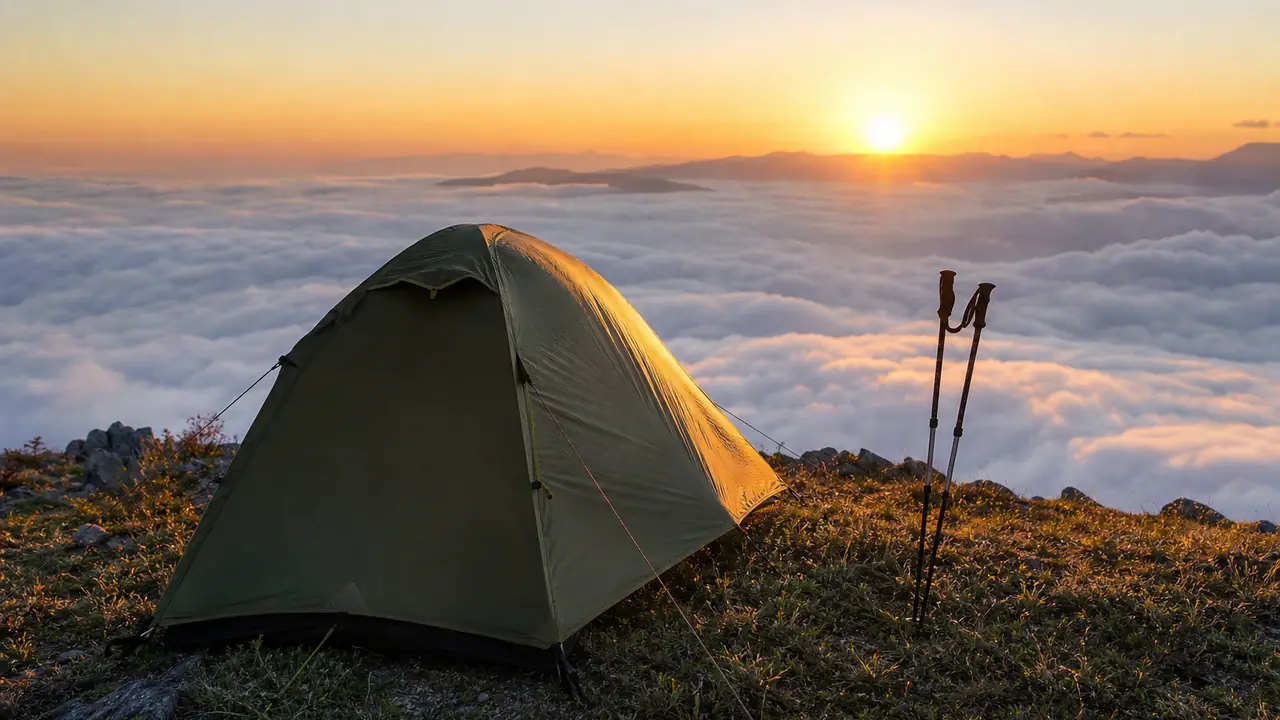
What a trekking tent has to survive
A trekking tent is carried for days and pitched every evening on whatever ground is available: thin soil over rock, a gravel pad, a meadow above the tree line. It meets wind on exposed sites, rain in the night and heavy dew at dawn, then gets packed wet and carried again. Over a season it may go up and down a hundred times, so zips, pole joints and coating take wear a family tent never sees.
The buyer in this segment checks everything. Weight is weighed, pack size is measured and the fabric is named in reviews. The most common causes of returns are a weight that does not match the listing, pole sections that crack, zip sliders that wear out, and coatings that peel at the seams. The specification has to close each of those gaps.
Recommended line and reference specs
The reference model for the backpacking line is a two-person lightweight tent from public listings: 210x185x100 cm including the vestibules, an inner of 210x125 cm with about 2.6 m2 of floor, 20D silicone-coated nylon and 7001 aluminium poles, at about 1.7-1.8 kg. Across the category, trekking tents run from one to three persons in 20D to 40D nylon ripstop with silicone or PU coatings, at about 1-2.5 kg.
| Component | Lighter option | Tougher option | Trade-off |
|---|---|---|---|
| Fly fabric | 20D nylon, silicone coating | 40D nylon ripstop, PU coating | Weight against abrasion and price |
| Floor | 20D-30D coated nylon | 40D nylon or a footprint | Weight against puncture resistance |
| Poles | 7001-T6 aluminium, fewer hubs | 7001-T6 aluminium, thicker diameter | Pack weight against stiffness |
| Stakes | Light aluminium pegs | Longer Y-section stakes | Weight against holding power in loose soil |
| Design | Single-wall or semi-freestanding | Double-wall freestanding | Weight against condensation and pitch ease |
Fiberglass poles are rare in this line; they are cheaper but heavier and can split, which reviewers notice. The poles and frames page compares alloys and diameters.
Coating, seams and condensation
Silicone-coated nylon is light and strong but hard to tape, so seams on silicone fabrics are often sealed by hand or by a different method than on PU-coated fabric. That detail belongs on the spec sheet and in the care instructions. State the fly as waterproof-rated fabric with hydrostatic head per ISO 811 report; the figure covers the fabric, not the finished tent. Nylon also stretches when wet, so the fly needs tensioners to stay taut. Double-wall designs handle condensation better; single-wall designs save weight but need good venting and an honest note in the listing.
Anchoring on exposed ground
A light tent depends on its stakes and guy lines more than a heavy one. The order specifies stake count and type, guy-out points on the fly with reflective lines, line lengths and tensioners, and the manual shows how to pitch the tent fly-first in rain if the design allows. The desk does not publish wind ratings; the listing describes the anchoring kit and advises users to choose sheltered pitches and guy out fully.
Repeated pitching also wears the small parts. Pole tips, grommets, shock cord and zip sliders take the load every evening, so the inspection plan checks them on every sampled tent, and many trekking brands ship a small repair kit with a spare pole section and a splint.
Reports and rules
EU sales follow EN ISO 5912 for camping tents and GPSR labelling with an EU responsible person. For the US, the desk confirms each buyer's and state's flame resistance requirement before testing to CPAI-84 or ASTM F3431, since several states amended their rules for small camping tents. Where a fluorine-free DWR is part of the claim, it is verified by test report where the market requires it. Reports are issued to partner factories or to your brand per order.
How to brief a trekking program
Send the target weight and how you will state it, capacity, fabric denier and coating, pole alloy and diameter, freestanding or not, pack size, colours and stuff sack, plus your markets. Existing styles with your logo and colours typically start at 300-500 tents per style; a new fabric or pole geometry is assessed per order. Samples take 7-15 days and bulk 30-45 days, confirmed in writing for each order. Start from the quote form.