
What this line covers
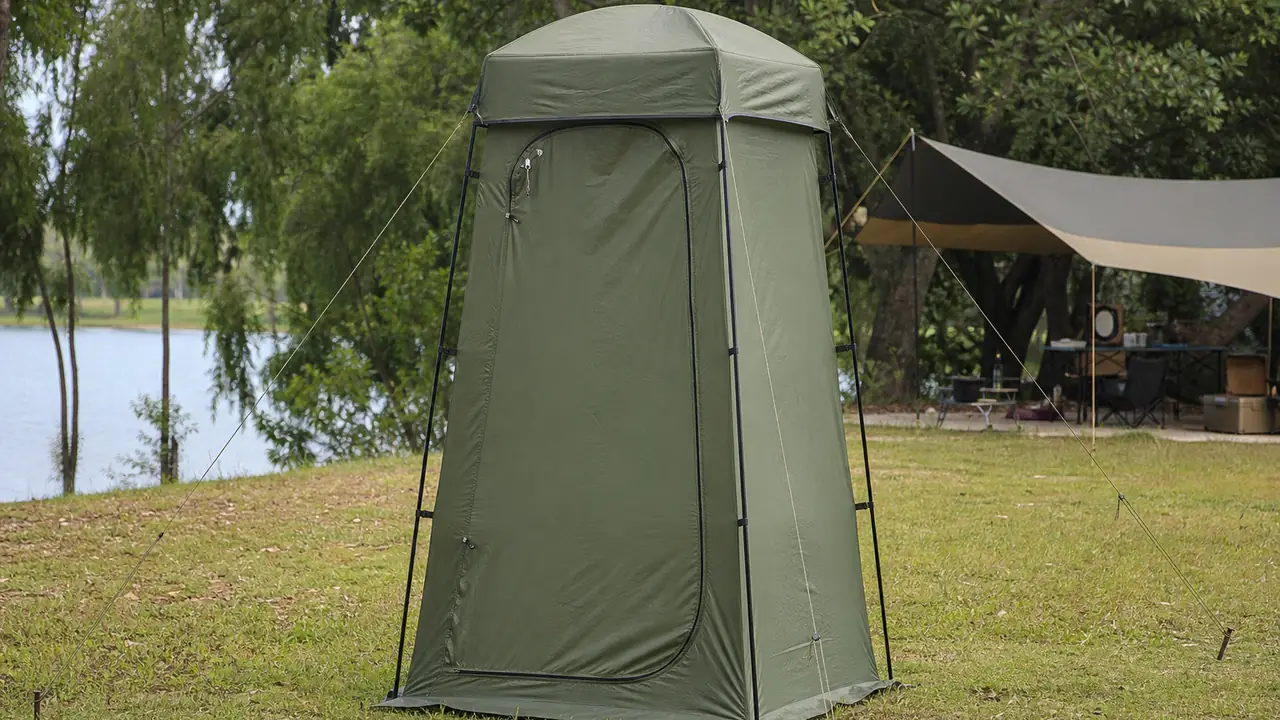
A shower or privacy tent is a tall, narrow room that springs open from a flat disc. Campers use it with a solar shower bag hung from the roof, with a portable toilet, or as a changing room at the beach, a festival or a sports event. It is one of the simplest tents in a range, which makes it a common add-on SKU for marketplace sellers and camping retailers: low weight, small carton, few parts.
The reference model on the pitch plate is a single-room shower tent from public listings: 120x120 cm on the ground, 190 cm tall, about 1.44 m2 of floor. It uses 190T silver-coated polyester on a spring steel wire frame of about 1.5x6 mm, weighs about 1.6-2.0 kg depending on the listing, and ships with eight stakes and four guy lines. Double-room versions add a second chamber, one for showering and one for changing. Weights and pack diameters differ between sellers of the same model, so the figures measured on your approved sample go into the order file and onto the listing.
Single or double room
| Option | Typical spec | What to fix on the spec sheet |
|---|---|---|
| Single room | 120x120x190 cm (reference) | Roof hanging point, vent, door zip |
| Double room | Two chambers with an inner divider | Divider door, second floor panel, pack diameter |
| Floor | Optional, removable or sewn in | Drainage for showers, material and colour |
| Fabric | 190T silver-coated polyester | Opacity check, colour, print area |
| Accessories | Towel loops, pockets, window | Count per unit, position |
Privacy depends on the fabric and the light
The main promise of the product is privacy, and that depends on the fabric being opaque when the sun or a lamp is on the far side. Silver-coated polyester is chosen for this reason as well as for reflecting sunlight. Light colours and thin coatings can show silhouettes, so the inspection plan should include an opacity check with a light source behind the wall. A roof vent lets steam out after a shower; without it, condensation runs down the walls. If the tent is sold for showers, the floor should either be removable or drain, so water does not pool inside.
The frame and the folding problem
The spring steel frame is what makes the tent quick: take it out of the bag and it opens on its own. The same frame is the main source of complaints, because folding it back into a disc takes a twist that many customers cannot repeat on the first try. The frame specification itself is rarely changed by brands, but the folding guide is. Print the folding steps on the carry bag and in the manual, and consider a short instruction card in the carton. Wire gauge and sleeve stitching belong on the spec sheet, and inspection should include open and fold cycles. See reducing tent returns.
Anchoring and labels
A tall, light tent catches wind easily. The reference kit includes eight stakes and four guy lines, and the manual should tell customers to stake every corner and guy out the tent before use, and to fold it away in strong wind. The desk does not publish wind speed ratings. Labels and instructions should also warn against using the tent near open flames or heaters and set out the folding steps. For the EU, GPSR labelling applies, with a responsible person in the EU named on the product or packaging. The note on labels and instructions and the compliance guide cover the details; confirm the final scope with your test lab.
Private label and ordering
Common customisations are fabric colour, logo print on the wall and bag, single or double room, floor option and accessory count. Shower tents pack flat and round, so carton size is small and they combine well with beach and instant tents in one shipment from the same cluster. Existing styles with your branding typically start at 300-500 units per style, with samples in 7-15 days and bulk in 30-45 days, or 45-60 days custom, confirmed in writing for each order. Send the room type, colours and market through the quote form, or read MOQ and lead time first.