
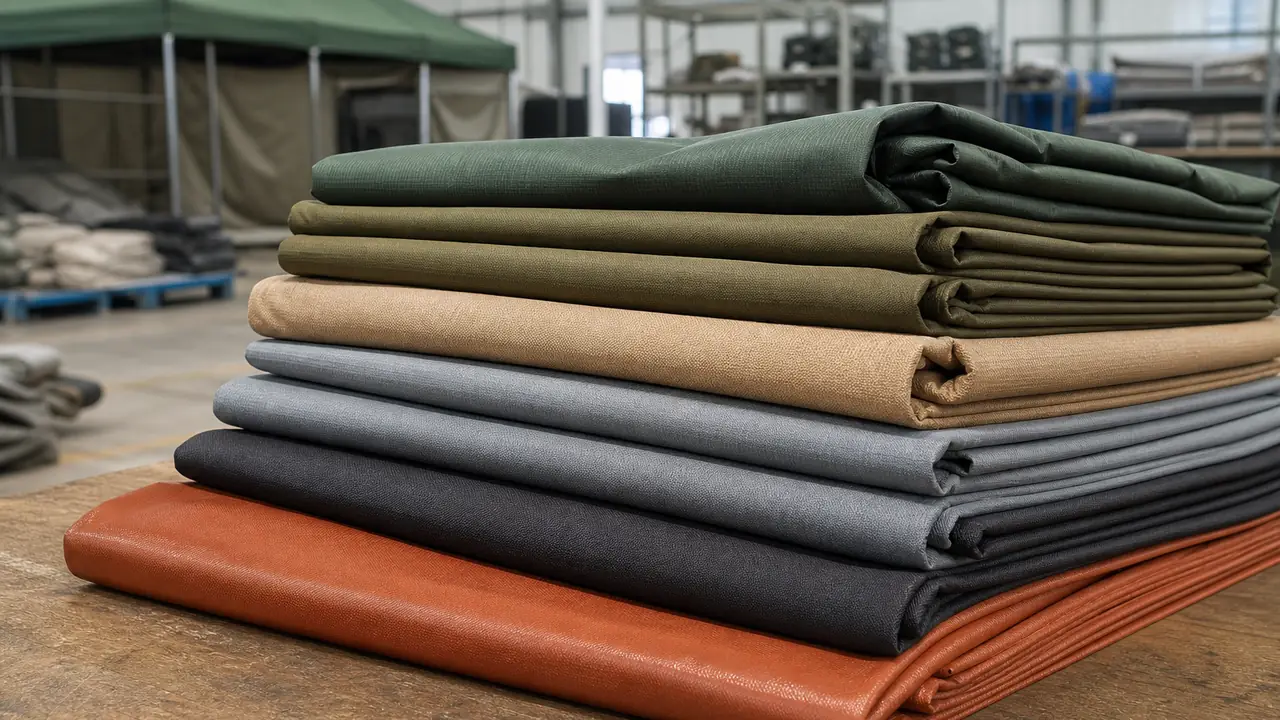
What the fabric is
The usual base is 190T polyester taffeta, the same family of fabric as a tent fly, with a thin metallic-look coating on one face. In the trade it is called silver-coated or silver-glue polyester. It is light, folds easily into the twisting spring frames of pop-up shelters and costs little, which is why it dominates the category.
On the beach tent line, pop-up shelters commonly use 190T silver-coated polyester and ship with four sandbags and eight stakes. Four-pole stretch shades are different: they use nylon or lycra stretch fabric on aluminium poles, anchored by sandbags at the corners, as on the 274x274 cm reference model from public listings. Shower and privacy tents use the same 190T silver-coated polyester, as on the 120x120x190 cm reference model, because the coating makes the walls opaque. See beach tents.
What the silver coating does
- Reflects sunlight. The coated face reflects part of the incoming light and heat, so the shaded area under it can feel cooler than under an uncoated fabric of the same colour. How much depends on the coating, colour, airflow and orientation.
- Increases opacity. Less light passes through, which helps shade and, on shower and changing tents, privacy.
- Adds some water resistance. Like any coating, it closes the weave. Any water resistance claim still needs a hydrostatic head figure to ISO 811 on the coated fabric.
What the coating does not do is turn a shade into a sealed shelter. A beach tent is open-fronted shade, and the user still needs sunscreen, water and breaks in the shade of a building or trees on very hot days. The listing should say so in plain words.
UV claims need a report
The most common listing claim on this fabric is UV protection. It is also the claim most often made without evidence. The rules are straightforward:
| Market | Test basis | How to state it |
|---|---|---|
| United States | AATCC 183 test on the fabric | UPF-rated fabric per AATCC 183 test report, with the figure from the report |
| Australia and New Zealand | AS 4174:2018 for shade structures | UVE figure per AS 4174 report; do not use UPF 50+ wording in this context |
| Other markets | Confirm with your test lab | State only what the report supports |
A UPF figure describes the fabric sample tested. It can change with colour, coating weight and wear, so the report should name the fabric code and colour of the bulk order. Without a report, the honest wording is simply shade fabric, with no number. The UPF and UVE claims note covers the two systems in detail. Reports are issued to partner factories or brands per order and verified by the desk.
Heat claims
Temperature claims, such as a number of degrees cooler, are hard to support. They depend on sun angle, wind, ground surface and how the shade is pitched, and there is no common test the desk can point a buyer to. The recommended wording is descriptive: silver-coated fabric that reflects sunlight. If a brand wants a temperature figure, it should come from its own documented test and be framed as an example, not a promise.
How the coating wears
The coating is thin and sits on the surface. Pop-up shelters fold by twisting a spring steel frame into a flat circle, and each fold creases the fabric. Over time the coating can crack or flake at the folds, especially in hot sun and salty, sandy conditions. That is normal wear, and it affects opacity and appearance more than structure. Care instructions should cover shaking out sand before folding, rinsing salt off with fresh water, drying before storage and keeping the tent out of a hot car boot.
At inspection, the coating should be checked for even coverage, pinholes and adhesion, and a sample tent should be folded and unfolded several times to check for flaking at the fold lines. Colour and coating weight should match the approved golden sample.
Colour, face and print
Buyers sometimes ask which face should carry the coating. On most pop-up shelters the silver face sits on the inside or the outside depending on the supplier's pattern, and both are seen in the market; what matters is that the face is fixed on the spec sheet and matches the UV report, because the report tests the fabric as supplied. Light colours look fresh on a shelf but show sand and sunscreen stains; mid and dark tones hide wear better. Logos are usually screen printed on the uncoated face, since ink adheres poorly to the silver coating. Ask for a printed sample before bulk and check the print after a few folds.
Anchoring and beach rules
Light fabric and an open front make beach shelters catch wind. They are anchored with sandbags filled on site, because stakes hold poorly in dry sand; the stakes in the kit are for firmer ground. Listings should show the anchoring and tell users to take the shelter down in strong wind. The desk does not publish wind ratings.
Several beaches limit size and placement or ban tents and shades. Ocean City, Maryland, has limited them to 10x10 ft since 2025, and Rehoboth Beach, Delaware, has banned tents and canopies on the beach since 2017. Listings should tell users to follow local beach rules; see beach tent rules by location and beach and pool use.
Silver coating or stretch fabric
For brands planning a beach range, the choice is usually between a silver-coated pop-up shelter, which is compact, cheap and quick to open, and a stretch shade, which gives more shade area, better airflow and a premium look at higher cost and weight. Many ranges carry both. See pop-up beach tent vs stretch sun shade.
Ordering
Write the fabric as 190T polyester with silver coating on the outer or inner face, colour, coating weight or finished gsm with tolerance, and the UV report required by each market. Existing beach styles with your logo and colours typically start at 300-500 units per style, with samples in 7-15 days, confirmed in writing; see MOQ and lead time. Send your markets and the UV wording you need through the quote form.