
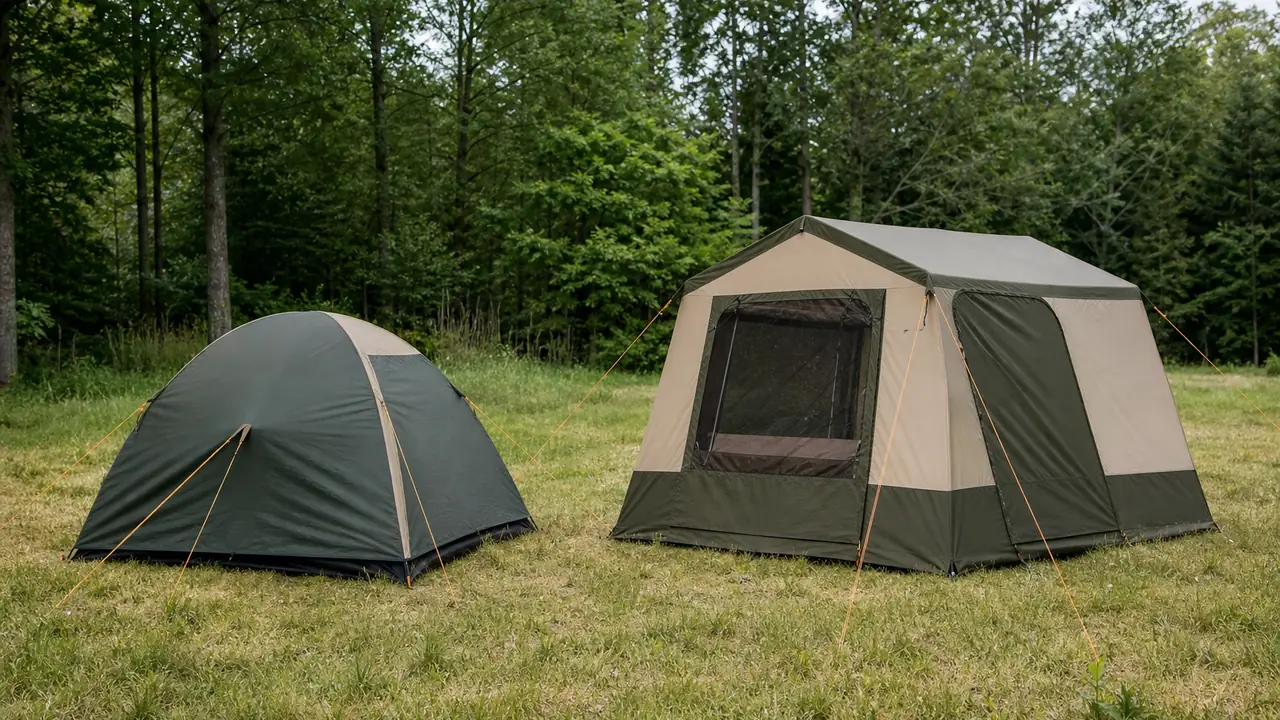
Two products under one search term
A pop-up beach tent is a small shelter on a spring steel or flexible frame that springs open when it leaves the bag. It usually has a floor, three closed or zipped sides and an open front, and it is anchored with sandbags and stakes. A stretch sun shade is a sheet of stretch fabric held up by four poles and pulled taut by sandbags at each corner. There is no floor and no walls; it is a roof that moves with the breeze.
Buyers searching for beach tents meet both, and many brands sell both. They are not interchangeable. The pop-up suits families with small children and anyone who wants a private corner on the sand; the stretch shade suits groups who want a large patch of shade with airflow underneath. Both belong on the beach tents line.
The reference specifications
| Item | Pop-up beach tent | Four-pole stretch shade |
|---|---|---|
| Footprint | Varies by model, 2-6 persons across the category | 274x274 cm (9x9 ft) reference model |
| Height | Varies by model | 208 cm poles; actual shade height lower once tensioned |
| Fabric | 190T silver-coated polyester, common | Nylon and spandex-type stretch fabric |
| Frame | Spring steel or flexible pop-up frame | Aluminium poles |
| Weight | Varies by model | About 2.9 kg (reference model) |
| Anchoring supplied | 4 sandbags and 8 stakes, common | Sandbags at each corner, no stakes on sand |
Our data holds a full reference model only for the stretch shade, so the pop-up column shows typical components rather than one model's dimensions. Pop-up footprints and weights vary widely between listings, and the desk records the measured figures from your approved sample in the order file.
Shade and airflow
The pop-up's closed sides give privacy and shelter from blown sand, and the floor keeps towels and bags off the ground. The cost is airflow: on a still, hot day the inside of a small pop-up warms up, which is why silver coatings and mesh windows matter. The silver coating reflects part of the sunlight; how much difference it makes depends on the fabric and coating, and any heat or UV claim needs a test report.
The stretch shade has no walls, so air moves freely under the fabric and the shaded area is large for its weight. The shade moves with the sun, though: by late afternoon the shadow falls beside the fabric rather than under it, and users reposition. Because the fabric stretches, a stretch shade tolerates gusts by flexing rather than catching like a sail, but it still needs every corner properly anchored.
Anchoring in sand
Stakes hold poorly in dry sand, so both products depend on sandbags. A stretch shade relies entirely on them: each corner bag is filled with sand on site and buried or set so the tension line runs to it. A pop-up uses sandbags on the corners plus stakes where the sand is firm enough. Neither has an honest wind speed rating, and the desk does not publish one. The manual and listing should show how to fill and place the bags, and tell users to take the shade down when the wind picks up. The anchoring and wind page sets out how this goes into an order.
Packing and carry
A pop-up packs into a flat round disc that is quick to open but takes practice to fold back. A folding sequence printed on the bag saves returns; a pop-up the customer cannot fold is a pop-up that comes back. A stretch shade packs into a small bag with the poles separate and is easy to carry to the sand, though tensioning four corners takes a few minutes and two people helps.
For both products the spec sheet should state the packed size, the carry bag fabric and strap, and the number and size of sandbags and stakes in the kit. Sand and salt water are hard on zips and pole joints, so corrosion-resistant fittings and a rinse-and-dry note in the manual are worth specifying on both.
Strengths and limits at a glance
| Factor | Pop-up beach tent | Stretch sun shade |
|---|---|---|
| Privacy and sand shelter | Good, closed sides and floor | None, open on all sides |
| Airflow | Limited, depends on windows | Open under the fabric |
| Shade area for weight | Smaller | Large |
| Setup | Springs open, folding needs practice | Four corners to tension |
| Anchoring | Sandbags plus stakes | Sandbags only |
| Typical complaints | Cannot fold back, heat inside | Torn sandbags, shade moves with the sun |
UV claims: test reports and markets
Both products sell on sun protection, and both need the claim backed by a report. In the US, the claim is UPF-rated fabric per an AATCC 183 test report. In Australia and New Zealand, shade structures are assessed under AS 4174, which reports UVE, so a UPF figure is not the right claim there. Without a report, no UV figure should appear on the listing. The UPF and UVE note sets out the difference.
Local beach rules
Beach rules affect these products differently. Several US beaches limit the size or position of shade structures, or ban tents outright. Ocean City, Maryland limits shade devices to 10x10 ft from 2025; Rehoboth Beach, Delaware has banned tents and canopies since 2017. A 9x9 ft stretch shade fits under the Ocean City size limit, and how a given beach treats each product type is decided by local rules. Listings for both should tell buyers to follow local beach rules. The beach rules note collects examples.
Which one to stock
- Marketplace sellers and DTC brands often carry both: a pop-up for families, a stretch shade for groups and active beach-goers.
- Retailers sell pop-ups as an impulse summer item, since the disc pack is easy to display; stretch shades sell better with a clear photo of the pitched shade.
- Wholesalers should note carton sizes: flat discs and pole bags pack very differently.
Existing styles with your logo and colours typically start at 300-500 units per style, with samples in 7-15 days and bulk in 30-45 days, confirmed in writing per order; see MOQ and lead time. Send your preferred type, size and UV report needs through the quote form.