
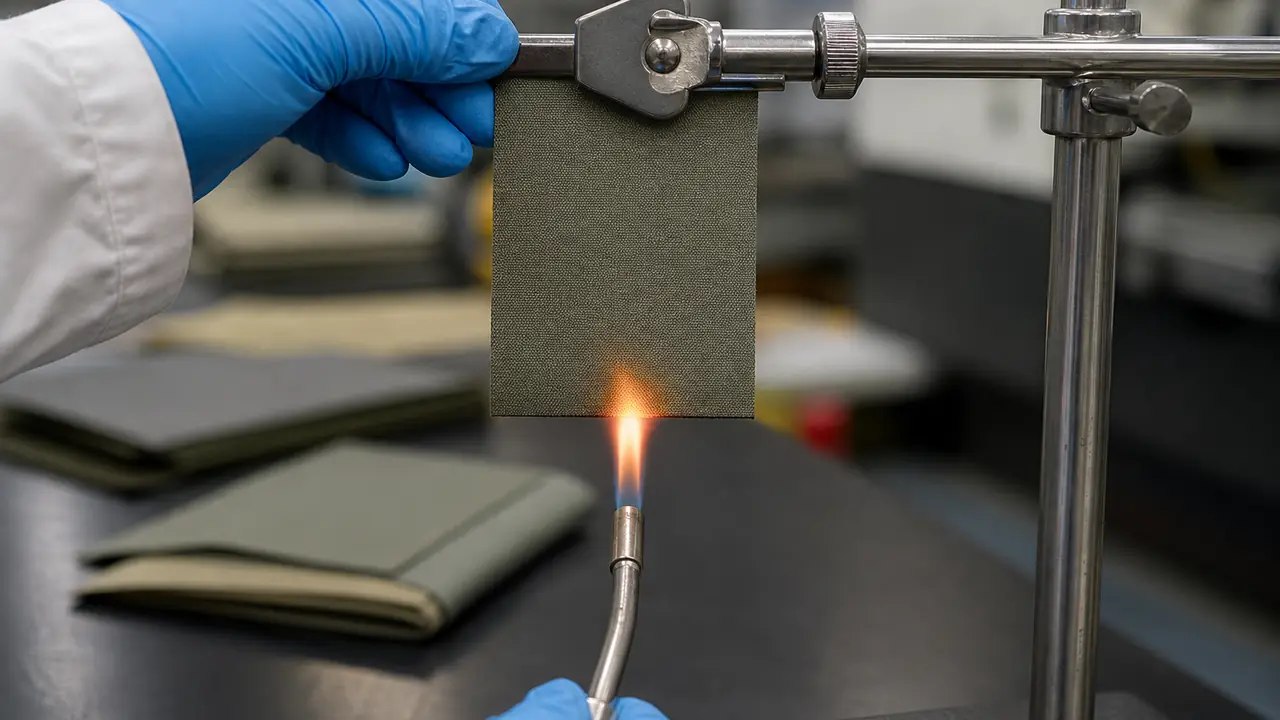
Why PFAS are in tents at all
PFAS, per- and polyfluoroalkyl substances, are a large family of fluorinated chemicals. In outdoor textiles their main use has been durable water repellent (DWR) finishes, which make water bead and roll off the face of a fabric, and some stain and oil repellent treatments. In a tent, a DWR finish sits on the outer face of the fly or canopy top, while waterproofing comes from the PU or silicone coating on the back and from taped seams. That distinction matters: removing a fluorinated DWR changes how water beads on the surface, but it does not by itself change the hydrostatic head of the coated fabric, which is measured to ISO 811.
Fluorine-free DWR finishes are widely available from fabric mills. They behave differently, especially with oil and dirt, and their performance should be checked on the actual fabric rather than assumed.
The EU: a dated restriction and a pending proposal
The clearest rule for tent sellers is in the EU. The restriction on PFHxA, its salts and related substances under REACH, Regulation (EU) 2024/2462, applies in stages. Clothing, footwear and consumer mixtures such as waterproofing sprays are in the first stage, which started on 10 October 2026. Other textiles for the general public, which is where consumer tents are expected to fall, follow from 10 October 2027. Confirm the classification of each product with your test lab against the regulation text.
Separately, a broad EU-wide restriction on PFAS as a group was proposed in 2023 by five national authorities and is still moving through the scientific committees. It is not law yet, and published expectations are that it would not apply before the end of the decade. Plans built on it should be treated as preparation, not compliance.
The US: state laws with an open scope question
There is no single US federal rule on PFAS in tents. Several states have passed laws on PFAS in textile articles, including California and Maine. Whether tents are covered by those definitions has not been confirmed in the sources we rely on: the definitions list examples such as clothing, bags and household textiles and do not name tents. Our working default is to treat a tent sold into those states as potentially in scope and to supply test reports when the market or the retailer asks for them. That is a sourcing practice, not a legal reading; confirm with your test lab or compliance adviser.
Status at a glance
| Rule | Status | What it means for a tent order |
|---|---|---|
| EU PFHxA restriction, clothing and footwear stage | Applies from 10 October 2026 | Relevant to apparel; tents expected in the next stage |
| EU PFHxA restriction, other consumer textiles | Applies from 10 October 2027 | Plan fabric choices and reports for tents shipped from late 2027 |
| EU universal PFAS restriction | Proposal under evaluation, not law | Track; prefer fluorine-free finishes on new builds |
| US state textile PFAS laws (for example California, Maine) | In force for textile articles; tent coverage unconfirmed | Supply reports where the market or retailer asks |
| Retailer and brand policies | Vary | Often stricter and earlier than law; read the buyer's chemical policy |
What can actually be verified
Statements about the absence of PFAS are claims about chemistry, and they need lab evidence. Two kinds of test are common: targeted analysis for specific PFAS substances, such as PFHxA and its related compounds, and total organic fluorine screening, which shows whether fluorine chemistry is present at all. Which one a buyer needs depends on the rule or policy being met. A mill's declaration that a finish is fluorine-free is useful, but it is not a test result on your fabric code and colour.
- Ask which finish is on each fabric: fluorinated DWR, fluorine-free DWR or none.
- Ask for test reports on the finished fabric, not the finish chemical alone.
- Remember coated parts beyond the fly: canopy tops, PU-coated floors, printed areas and webbing.
- Match the report to the fabric code, colour and finishing batch used in bulk.
Performance trade-offs to plan for
Switching finishes changes how a tent performs on the face, and buyers should expect it. Fluorine-free DWR can lose water beading faster under abrasion and dirt, so the fly may wet out on the surface sooner even though the coating still holds water out. Seams, zips and coating weight carry the waterproofing job. On canopy tops for markets and events, oil and food stains are the bigger concern. None of this needs a new structure, but it does mean the spec sheet should name the finish, and care notes should tell users how to clean and re-proof. See DWR and fluorine-free finishes and tent fabrics and coatings.
Timing for ranges that ship into 2027
Tents ordered in late 2026 and early 2027 for the following spring will often still be on shelves or in distributor stock when the October 2027 stage begins. Brands selling into the EU should look at the whole sell-through window, not only the ship date. The practical move is to confirm the finish on every fabric in the current range now, flag any fluorinated finishes, and plan the switch on the next reorder or colour change rather than mid-season. Distributors holding several brands should ask each supplier the same question, so one late fabric does not hold up a whole assortment.
How the desk handles PFAS on an order
- Record target markets and the buyer's chemical policy on the brief.
- Specify the finish per fabric on the spec sheet, with fluorine-free DWR as the default option for new builds where the market asks.
- Ask partner factories and their mills for existing reports on the exact fabric, or test the pre-production sample fabric.
- Approve listing and packaging wording against the report.
- Verify reports per order and keep them with the shipment file.
Reports are issued to partner factories or brands per order; the desk does not hold them. Fabric changes and new tests affect sample timing, typically 7-15 days plus the lab queue; see MOQ and lead time, the wider tent compliance guide, and send your market list through the quote form. Rules in this area are moving; confirm the current position with your test lab before fixing claims.