
Why a play tent is regulated like a toy
In the US, a product designed or intended primarily for children aged 12 or younger is a children's product under the Consumer Product Safety Improvement Act (CPSIA). An indoor teepee, a castle play tent or a pop-up play house fits that definition. That brings four obligations: content limits for lead and certain phthalates, compliance with the toy safety standard ASTM F963, third-party testing by a CPSC-accepted laboratory, and a Children's Product Certificate (CPC) backed by those tests. Permanent tracking labels are required on the product and its packaging.
The reference model in our range is an indoor teepee of 120x120x140 cm in cotton canvas, with ten pine poles and five connectors, about 3.5 kg, for one or two children. Every one of those parts is in scope.
The US requirements in one table
| Requirement | What it says | What it means for a play tent |
|---|---|---|
| Lead in substrate | Accessible parts no more than 100 ppm | Poles, connectors, zips, eyelets, toggles |
| Lead in paint and coatings | No more than 90 ppm | Painted or lacquered poles, printed coatings |
| Phthalates | Eight listed phthalates, each no more than 0.1% in toys and child care articles | Plastic parts, PVC prints, coated floors, window film |
| ASTM F963 | Mandatory toy safety standard (16 CFR 1250); F963-23 applies from 20 April 2024 | Mechanical hazards, small parts, cords, labelling and other sections that apply |
| Third-party testing | By a CPSC-accepted laboratory | Sample from the production build, not a showroom piece |
| Children's Product Certificate | Issued by the importer or domestic manufacturer, citing the tests | One CPC per product, updated when materials change |
| Tracking labels | Permanent marks on the product and packaging | Sewn-in label plus carton and retail box marks |
The CPSC has determined that certain materials, including untreated textiles and CMYK printing inks, do not exceed the lead limits, so they can be excluded from lead testing. A plain cotton canvas cover may therefore need less lead testing than its painted poles. The determination is narrow, so let the lab decide what is exempt for your exact materials.
Part by part: where the risk sits
- Cover fabric. Cotton canvas or polyester, often printed. Untreated textile may be excluded from lead testing; coatings, glitter, foil prints and PVC transfers are not.
- Poles and connectors. Wooden poles are often stained or lacquered, and plastic connectors are a phthalate question. Ask for the finish and resin type on the spec sheet.
- Small parts and cords. Toggles, pom-poms, bunting and tie cords are where ASTM F963 mechanical tests apply. Cord length and loop size deserve attention in design review.
- Floor mats and cushions. Often sold as a bundle; each item becomes part of the product and the testing scope.
- Window film and mesh. Plastic film is another phthalate check point.
Flame resistance and flame retardants
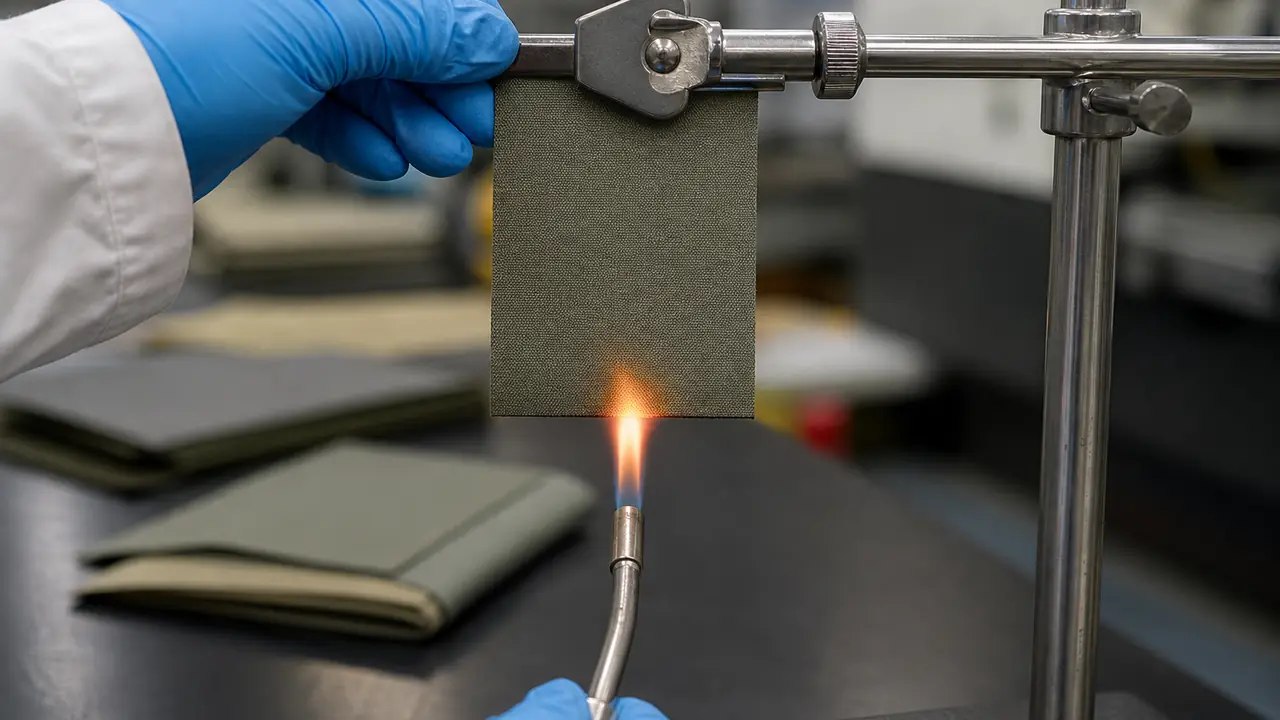
Play tents sit between two pressures. Older state laws treated them like camping tents for flame resistance, while chemical rules restrict certain flame retardants in children's products. California's AB 267, in effect from 1 January 2024, exempts children's play tents from the state's flame resistance requirement. Washington State restricts flame retardants such as TDCPP and TCEP in children's products; in a 2024 study by the state's Department of Ecology, one play tent fabric out of 40 fabric samples exceeded the limit for TDCPP. For most play tents the cleaner route is an untreated fabric, with the flammability requirements of ASTM F963 checked by the lab. Confirm the approach for each market with your test lab.
Canada: permanent warning labels
Canada regulates tents, including play tents, under its tent regulations, which adopt the CAN/CGSB-182.1 standard for flammability and labelling. Play tents need a permanent warning label with a warning symbol at least 6 mm high. Published sources differ on when the latest version took full effect, so check the current text with your lab before printing labels. A label that works for the US will usually not satisfy Canada on its own, so plan the label languages, wording and placement for each market with the lab before artwork is fixed.
Where play tent orders go wrong
Most compliance problems on play tents are not failed tests. They are changes after the test. A new print colour, a different lacquer on the poles, a cheaper plastic connector or an added pom-pom trim can all fall outside the tested sample. Bundles cause the same issue: a floor mat, a string of lights or a storage pocket added for a marketplace listing becomes part of the product. Write the tested bill of materials into the purchase order, ask partner factories to flag any substitution in writing, and re-check the scope with the lab whenever the build changes.
Labels to plan before production
Tracking labels must let a buyer or a regulator trace the product to its maker, production date and batch. Typical content is the brand or importer name, the place and date of production, and a batch or cohort number. Put the tracking information on a sewn-in label on the cover, on the retail box and on the shipping carton. Add care instructions, fibre content and country of origin as each market requires. Our note on tent labels and instructions covers the full label set.
How the desk runs a play tent order
- Fix the bill of materials: cover fabric, prints, pole wood and finish, connectors, accessories.
- Agree the test plan with a CPSC-accepted lab: lead, phthalates, ASTM F963 sections, plus Canada if needed.
- Test a pre-production sample from the production materials, and approve the golden sample against the report.
- Approve tracking label, warning label and packaging artwork.
- Verify reports per order at inspection; the importer issues the CPC.
Reports are issued to partner factories or brands per order; the CPC is issued by the importer of record. Any change of fabric, print or pole finish after testing needs a fresh look at the report. See the kids play tents line, compliance and certifications and the notes for marketplace sellers. Typical starting quantities for existing styles with your branding are 300-500 per style, confirmed in writing per order; see MOQ and lead time or send your brief through the quote form.