
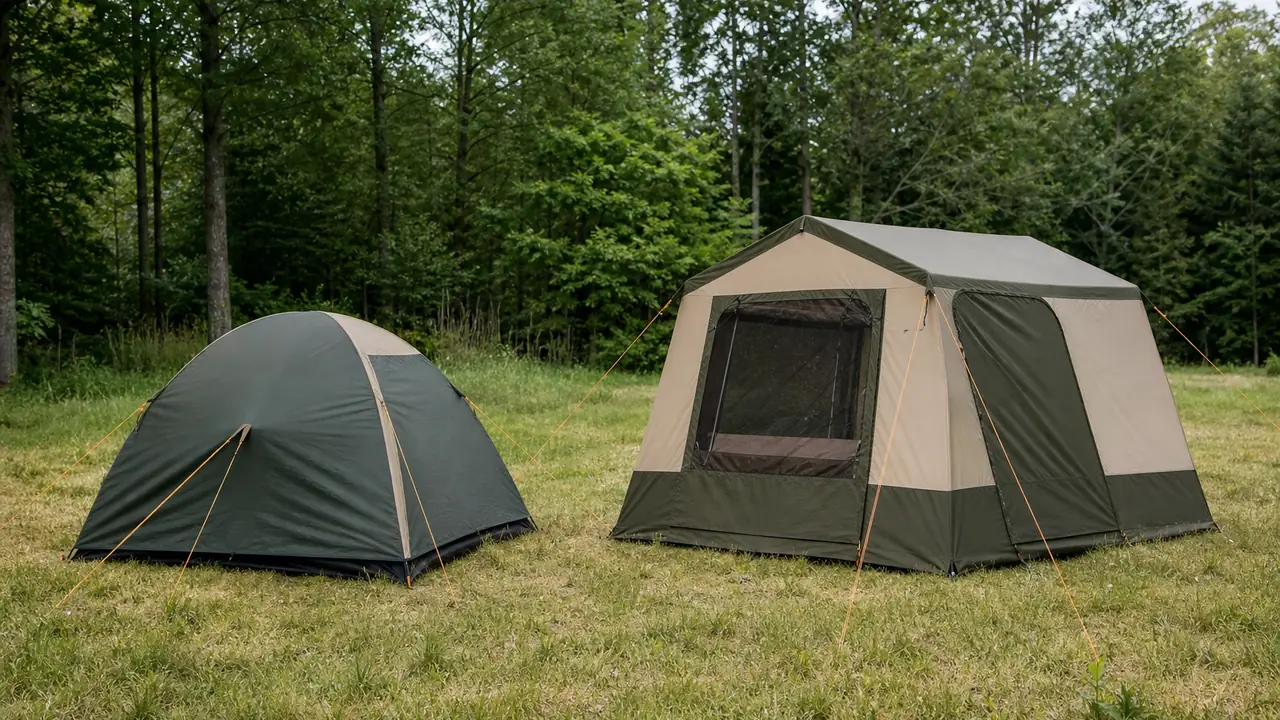
Two products, one word
A pop-up canopy has a folding scissor frame that opens in one movement, a fabric top that stays on the frame and legs that telescope to set the height. It is built to travel: markets, trade shows, sports days, events. A gazebo has a frame assembled from separate tubes and joints, usually bolted or pinned, with a fabric or hard top and often curtains or insect netting. It is built to stand in one place for weeks or months, on a patio, lawn or terrace.
Some sellers call a pop-up canopy a gazebo, especially in the UK and Europe, and some call a garden gazebo a canopy. For sourcing, the useful distinction is folding and portable against assembled and semi-permanent. The two come from overlapping partner factories, but their specifications, cartons and buyers differ.
The canopy reference model
The reference pop-up canopy is a commercial 10x10 ft model, 300x300 cm with a 330 cm peak and about 9.3 m2 of cover. It uses 40 mm hexagonal aluminium legs with a wall thickness of 1.1-1.2 mm and a 600D PU-coated polyester top, weighs about 20-24 kg in total, of which the frame is about 16 kg, and ships in a carton of about 158x27x27 cm. Each leg has one stake and one guy line, and the industry convention is about 40 lb (18 kg) of weight per leg. Across the category, sizes run 10x10, 10x15 and 10x20 ft, with steel square tube frames at consumer grade, 40 mm hex aluminium as the commercial standard and 50 mm hex for heavy-duty use. See pop-up canopy tents.
Gazebos vary too widely for one reference model in our data, so this note compares them by construction rather than by figures. Specifications are quoted per project.
Side by side
| Factor | Pop-up canopy | Gazebo |
|---|---|---|
| Frame | Folding scissor frame, steel or hex aluminium | Assembled tubes and joints, steel or aluminium |
| Setup | Opens in one movement, two people | Assembled with fittings, longer first build |
| Top | 600D PU polyester (commercial reference), printable | Polyester top, often vented double roof; hard-top variants exist |
| Walls | Optional sidewalls and half walls | Curtains and netting common |
| Anchoring | Stakes, guy lines, leg weights | Fixed to the ground or patio per installation |
| Duration | Up for hours or days, then packed | Up for a season or longer |
| Carton | One long carton, about 158x27x27 cm (reference) | Several flat cartons by model |
| Main buyers | Vendors, exhibitors, event rental, promo brands | Garden retail, homeowners, hospitality terraces |
Portability and setup
The canopy's strength is that it moves. Two people unfold the frame, raise the legs and are under cover quickly, and the frame packs into a single wheeled bag. That is why vendors and exhibitors use it every weekend, and why frame grade matters: a commercial frame opens and closes many times every season, so the leg profile, wall thickness and joint material decide its life. The frame grades note covers the options.
A gazebo gives up portability for permanence. Assembly takes longer, it needs the manual and sometimes tools, and taking it down is a job rather than a routine. In return the frame can be heavier per square metre, the top can be vented and the structure can be finished like garden furniture. Nobody wants to carry one to a market.
Anchoring and weather
Neither product has an honest wind speed rating, and the desk does not publish one. A canopy is light for its area and catches wind like a sail, so the anchoring plan is part of the product: a stake and guy line per leg on soft ground, and weights on hard surfaces, with about 40 lb (18 kg) per leg as an industry convention rather than a regulation. Users should take canopies down in strong wind. The weights per leg note compares sandbags, plates and anchors.
A gazebo is fixed for longer, so its anchoring is an installation question: ground spikes, bolts into decking or patio plates, per the manual. Because it stays up, it also meets weather it was not watched through, and buyers should state in the listing that tops come off or the structure is secured before storms. Vented roofs reduce lift but do not remove the need for anchoring.
Tops, water and UV
Both use coated polyester tops in most models. The hydrostatic head figure describes the fabric under ISO 811, not the finished roof; seams, the valance joint and how the top drains decide whether water pools or drips. Canopies used for events may need flame-resistant fabric tested to CPAI-84 or NFPA 701 per report, depending on the event and the local fire authority. UV claims need a report: UPF-rated fabric per AATCC 183 in the US, AS 4174 UVE in Australia and New Zealand.
Tops wear differently on the two products. A canopy top is folded with the frame after every use, so creasing, abrasion at the frame contact points and print fading are the usual problems. A gazebo top stays up through sun and rain for months, so UV fading and seam aging dominate, and a replacement top should be available as a spare part for both.
Where they are made
Linhai in Taizhou, Zhejiang is the centre for canopies, gazebos and outdoor leisure products, with more than 1,000 firms and an industry output above 30 billion yuan (Zhejiang Online, 2025). Many partner factories there make both product types, which helps buyers who want a garden range and a commercial canopy range from one region. Larger aluminium frame and event structures come from Changzhou, Zhuhai and Shanghai. See industry clusters.
Which one to stock
- Vendors, exhibitors and event rental companies need pop-up canopies, ideally commercial 40 mm hex aluminium frames with printed tops; see trade show and market use.
- Garden and home retailers need gazebos, with clear assembly instructions and honest weather notes.
- Distributors covering both should keep the names straight on listings, so buyers do not receive the wrong product.
10x10 canopies and printed kits typically start at 20-50 sets per style; gazebo quantities are assessed per order. Samples take 7-15 days and bulk 30-45 days, all confirmed in writing; see MOQ and lead time. Send your size, frame grade and print needs through the quote form.