
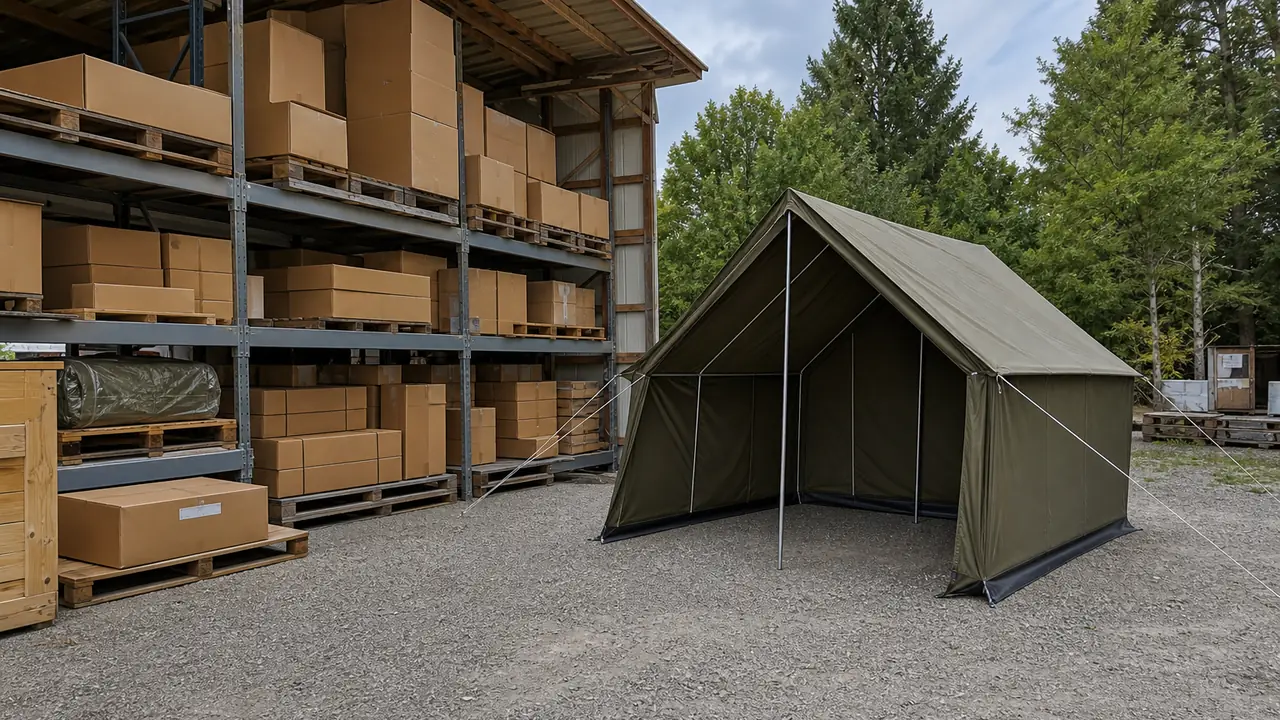
Most tent claims are small and predictable
Tent claims cluster around a short list of parts. Poles crack or bend, zips split or jam, seams let water in, stakes go missing, canopy legs bend or joints break, air tent valves leak, printed tops fade. Many claims are not defects at all but set-up problems: a fly pitched inside out, a canopy leg not locked, a tent pitched slack so water pools. Knowing this list in advance is the basis of a good after-sales routine. The seller stocks the parts that fail, writes instructions that prevent the set-up errors and keeps the evidence that separates a defect from misuse.
A clear routine also protects the relationship with the partner factory. Claims backed by batch numbers and photos can be traced to a production lot and discussed on facts; vague complaints cannot.
Spare parts by line
The least costly replacement is the part, not the tent. Spare parts ordered with bulk cost far less than parts made later, once the line has moved to another product. The table lists the usual spares per line; quantities are agreed per order and confirmed in writing.
| Line | Parts that fail most | Spares to stock |
|---|---|---|
| Dome and backpacking tents | Pole sections, zip sliders, stakes | Pole sections with shock cord, pole repair sleeves, zip sliders, stakes, guy lines |
| Cabin and instant tents | Steel or pre-attached pole joints, hubs | Joint pieces, leg sections, hub parts, stakes |
| Inflatable air tents | Valves, TPU bladders | Bladders, valves, repair patches, pump parts |
| Pop-up canopies | Legs, truss bars, feet, top corners | Legs, truss bars, feet, slider locks, replacement tops |
| Beach shelters and shades | Poles, sand pockets, fabric tears | Pole sections, sandbags, fabric patches |
| Bell tents | Door zips, groundsheets, guy lines | Zip panels, groundsheets, guy lines, stakes |
Label spares by style and batch, and keep a parts diagram for each style so customers can name the part they need. The repair kits note covers what to put in the box with the tent itself.
A claim routine that traces causes
Every claim should collect the same evidence, so that patterns become visible:
- Order or purchase reference and the batch number from the carton or sewn-in label.
- Photos of the fault, of the whole pitched tent and of the label.
- A short description: when it happened, how the tent was pitched, the weather.
- Classification by part and by likely cause: defect, wear, set-up error or misuse.
- The fix: a spare part, a repair, a replacement or a refund.
Each month or season, group claims by part and batch. A pattern in one batch, for example several cracked pole sections, is evidence to take back to the partner factory with the inspection report. A pattern across batches points to the spec: a pole diameter too small, a zip size too light, untaped seams in the wrong place. The broken poles note and the leak causes note help classify the two most common claims.
Warranty terms you can keep
A warranty is a promise the seller makes to its own customers, under the consumer law of the market it sells in. Write terms that match what the product and the parts stock can support: a defined period, a clear list of what counts as a defect, exclusions for wear, misuse and storm damage, and the remedy, usually a part first and a replacement where a part cannot fix the fault. Avoid open-ended promises and words that suggest the tent cannot fail. The consumer rules in each market set minimum rights, so confirm the wording with your own legal adviser. The desk can supply the defect history and parts list that make the terms realistic, but it does not write consumer terms for you.
What sits with the factory and what sits with the seller
Responsibility should be agreed in writing before bulk. A common split is that defects found at pre-shipment inspection are reworked by the partner factory before loading; defects traced to a production lot after delivery are handled as agreed in the order, often by free replacement parts in the next shipment; wear, misuse and set-up errors sit with the seller's own after-sales. Inspections are sampled to ISO 2859-1 at general inspection level II, with major defects at AQL 2.5 and minor at 4.0 as a stated working default, so a small share of defects can still pass in an accepted lot; the agreement should say what happens to those. See quality control.
Preventing the next claim
Most set-up claims can be designed out. Number pole sections and colour-code them to their sleeves. Print the pitch sequence as numbered steps with pictures. Tell users to pitch the fly taut, to dry the tent before storage and to take canopies down in strong wind. Describe the anchoring kit honestly, including about 40 lb, roughly 18 kg, of weight per canopy leg as an industry convention. Describe water resistance as waterproof-rated fabric with the hydrostatic head per ISO 811 test report, so customers know taped seams and pitch matter too. Each change reduces claims more cheaply than any spare part.
Support channels and response times
Customers judge after-sales by speed as much as by outcome. Publish one contact route for claims, ask for the evidence list on the first message and reply within a set number of working days. Keep spares in the market where the customer is, not in the factory, so a pole section ships by domestic post rather than international courier. For retailers and distributors, agree who handles the end customer: some prefer to swap parts at the counter from their own spares stock, others pass every claim to the brand. Write the choice into the program so nobody waits for an answer. A short set of video-free, text-and-drawing guides for the common fixes, such as replacing a pole section or a canopy foot, lets customers solve small problems themselves and frees support time for real defects.
Building after-sales into the order
When you brief a new order, include the spares list, the batch labelling, the parts diagram and the claim split alongside the spec sheet. Existing styles with branding typically start at 300-500 tents per style, with spares added as a share of each order, confirmed in writing; see MOQ and lead time. Send your current claim history through the quote form and the desk will turn it into spec changes for the next run.