
Why tent listings go wrong
Tents are hard to judge online. The buyer cannot feel the fabric, count the stakes or see how tall the door is, so they rely on the title, the images and a handful of figures. Sellers under pressure to stand out stretch those figures: the capacity goes up by two, the waterproof wording grows stronger, a wind claim appears that no lab ever tested. The product then arrives and meets a real family in real rain. Most tent returns we see in order files trace back to a gap between the listing and the kit, not to a manufacturing defect.
The fix is simple and dull: measure the approved sample, photograph the actual kit and write only what a report or a tape measure can support. That discipline also makes document requests from a marketplace far easier, because the evidence already sits in the order file.
Sizes and capacity, measured not copied
Take every dimension from the golden sample, not from the factory catalogue or a competing listing. State the floor size, the peak height and, for tents with sloping walls, the height at the sides. Give the packed size and the weight as measured on your sample, and say whether the weight includes stakes and guy lines. For capacity, say how it is measured: a person rating normally assumes standard sleeping pads side by side with no gear inside. Families who keep bags inside usually need one size up, and a short line saying so prevents a large share of 'too small' returns. The capacity note and the sizing guide explain the method.
| Listing field | Source | Common mistake |
|---|---|---|
| Floor size and peak height | Tape measure on the approved sample | Copying the fly footprint as the floor |
| Capacity | Pad count on the measured floor | Rounding up to match competitors |
| Weight and packed size | Scale and tape on the packed sample | Leaving out stakes, poles or the bag |
| Water resistance | Hydrostatic head per ISO 811 test report | Absolute waterproof wording for the whole tent |
| Stability | Stakes, guy-out points and leg weights supplied | A wind speed rating nobody tested |
| UV protection | AATCC 183 report, or AS 4174 for Australia and New Zealand | UPF figures with no report |
| Flame resistance | CPAI-84, ASTM F3431 or NFPA 701 report, per market | Calling the tent certified |
Claims that survive a document request
Water first. Hydrostatic head is a fabric test to ISO 811, reported in millimetres. It says nothing on its own about taped seams, covered zips or a taut pitch, so the honest wording is 'waterproof-rated fabric, hydrostatic head per ISO 811 test report'. Absolute promises about the finished tent invite returns from the first wet weekend. The hydrostatic head note sets out what the figure does and does not mean.
Wind next. There is no common wind test for consumer tents or canopies, so the desk never supplies a speed figure. Describe the anchoring kit instead: the number of stakes, the guy-out points, sandbags or leg weights, and an instruction to take canopies down in strong wind. For pop-up canopies the industry convention of about 40 lb, roughly 18 kg, of weight per leg is worth stating, framed as a convention rather than a rule.
Flame and UV last. State flame resistance only as 'flame-resistant fabric tested to CPAI-84 per report', or to the standard actually tested, and only when the report exists for that fabric. State UPF only per an AATCC 183 report, and use UVE wording under AS 4174 for Australia and New Zealand. Chemical wording deserves the same care: say 'fluorine-free DWR option, verified by test report' rather than broad purity claims.
Photos of the real kit
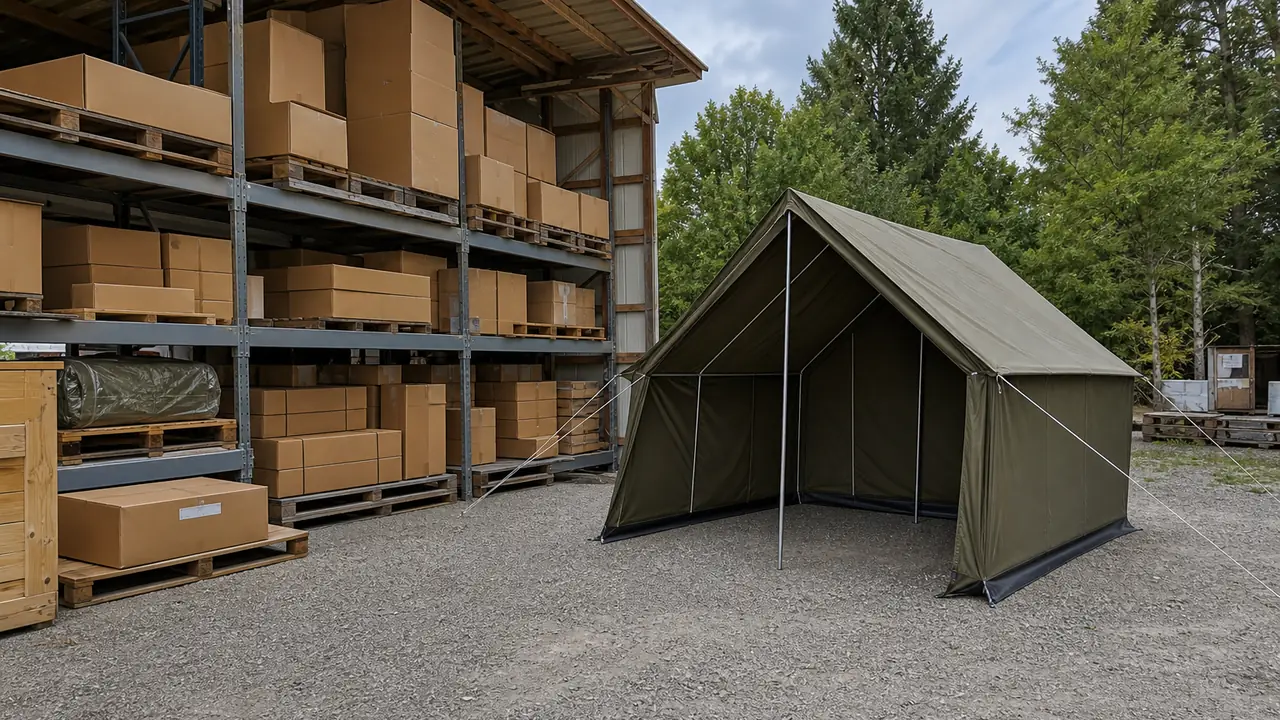
Shoot the approved sample, pitched properly with every stake in and every guy line out. Buyers forgive a plain photo; they do not forgive a missing vestibule or a fly that looked a different colour online. A useful image set covers the pitched tent from the front and side, the inside with pads laid out to show capacity, the door and vents, the full kit laid flat with stakes counted, the packed bag next to a known object, and a dimension drawing. Keep faces out of product images and keep any print on the fabric the same as the bulk order.
Children's products and other regulated lines
Kids play tents are toys in the US and need CPSIA work: lead and phthalate testing, ASTM F963, a Children's Product Certificate and tracking labels. Canada asks for permanent warning labels. Marketplaces routinely request these documents before or after listing, so plan them into the sample stage rather than after a takedown. Beach shades raise local rules: several US beaches limit shade size or ban tents, so a listing should tell buyers to follow local beach rules. See kids play tents for the document list.
Cartons that survive a fulfilment centre
Tents ship by volume and get handled hard. Specify cartons that pass an ISTA 1A drop test, put the barcode and size on two faces, and pack poles so they cannot pierce the bag. A canopy carton is long, typically about 158x27x27 cm for a 10x10 ft set, so check fulfilment centre size limits before choosing the frame. Every carton should match the listing: same colour, same kit, same manual.
Ordering with listings in mind
Marketplace sellers often run several sizes and colours of one structure. Existing styles with your logo and colours typically start at 300-500 tents per style, confirmed in writing for each order, and colours of one style can sometimes share a fabric order. Build the listing from the approved sample before bulk starts, so the inspection plan can check exactly what the listing promises: measured dimensions, stake count, carton markings and the colour of the fly against the golden sample. After launch, read every return reason and review for patterns. Three complaints about the same zip or the same missing stake are a spec change for the reorder, not bad luck. The marketplace sellers page lists the checkpoints the desk adds for this channel. Timing and quantities are on MOQ and lead time; send your size and colour plan through the quote form.